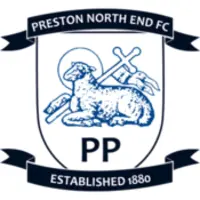
While many clubs have repeatedly changed their badges over the years, Preston’s crest has remained centred around a single enduring symbol: the Paschal Lamb. Like the club’s traditional white colours, the lamb has become an inseparable part of Preston North End’s identity and heritage.
The club’s earliest official badge was derived from the coat of arms of the Borough of Preston. This crest combined two important local symbols: the red roses of Lancashire and the Paschal Lamb. The lamb originates from the arms of St. Wilfrid, the Patron Saint of Preston, and has long been associated with the town’s religious and historical traditions.
One of the most distinctive features of the badge is the inscription “PP,” which stands forPrinceps Pacis, a Latin phrase meaning “Prince of Peace.” The motto has accompanied the Paschal Lamb for generations and remains one of the most recognisable elements of Preston North End’s visual identity.
Throughout the twentieth century, Preston North End continued to use variations of the borough arms while simplifying and refining the overall appearance of the badge. The red roses of Lancashire, originally an important component of the design, became less prominent over time as the club increasingly focused on the Paschal Lamb as its primary symbol.
Preston North End FC Club History
Preston North End Football Club is one of the most historic clubs in English football. Originally formed as a cricket club, Preston had been based at Deepdale since 1875 before adopting football in 1878 as a winter fitness activity for its cricketers. The sport quickly grew in popularity and, in May 1880, Preston North End Football Club was officially founded.
Deepdale remains one of the most significant stadiums in football history. As the home of Preston North End since before the club’s official formation, it is recognised as the oldest football ground in continuous use by a major professional league club anywhere in the world.
Preston played a crucial role in the formation of organised league football. In 1888, the club became one of the twelve founding members of the Football League and immediately established itself as the dominant force in the new competition. During the inaugural 1888–89 season, Preston won the first-ever Football League championship and also lifted the FA Cup, becoming the first club in English football history to achieve the Double.
Their achievement was made even more remarkable by the fact that they completed the entire season unbeaten in both league and cup competitions. This extraordinary accomplishment earned the team the nickname “The Invincibles,” a title that remains one of the most famous in football history.
Preston successfully defended their league title in 1889–90, confirming their status as the leading club of football’s earliest era. Although the club remained competitive in the decades that followed, it never again dominated the game in quite the same way.
The club’s last major trophy arrived in 1938 when Preston defeated Huddersfield Town in the FA Cup Final. The victory remains the most recent major honour in the club’s history and is remembered as one of the greatest moments ever experienced by Preston supporters.
Preston North End’s principal rivalry is with Blackpool. Matches between the two clubs are known as the West Lancashire Derby and have been contested across all four divisions of the Football League since 1901. The rivalry remains one of the oldest and most fiercely contested regional derbies in English football. Other traditional rivals include Blackburn Rovers, Burnley, Bolton Wanderers and Wigan Athletic.