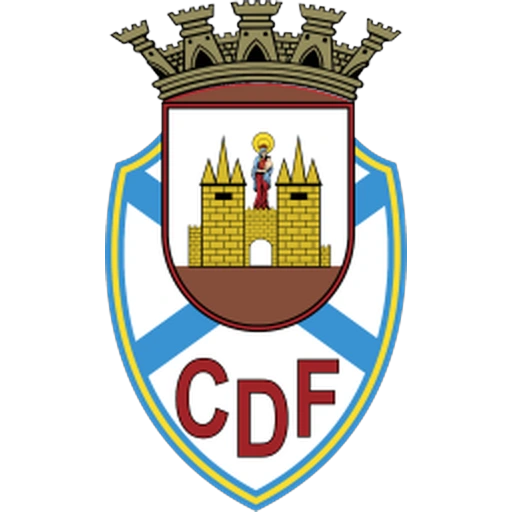
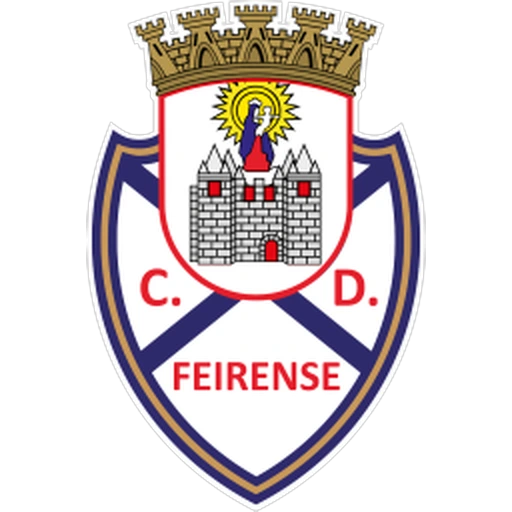
Clube Desportivo Feirense adopted in 1918 a shield-shaped crest inspired by the municipal coat of arms of Santa Maria da Feira. The badge featured the town's famous medieval castle beneath a mural crown, symbolising the city's rich history, while blue-and-white diagonal stripes represented the club's traditional colours. The initials "CdF" were prominently displayed in red at the base of the shield.
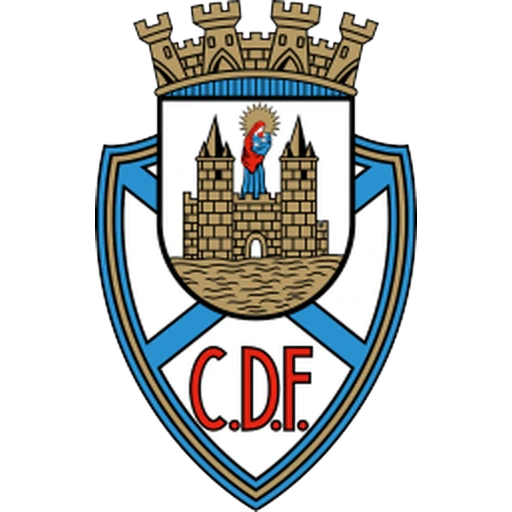
In 1960, the crest received its first major redesign. The shield became more pointed, the castle illustration was modernised and additional details were added to the municipal coat of arms. The club initials were updated to "C.D.F.", creating a cleaner and more balanced appearance while preserving the historic symbolism.
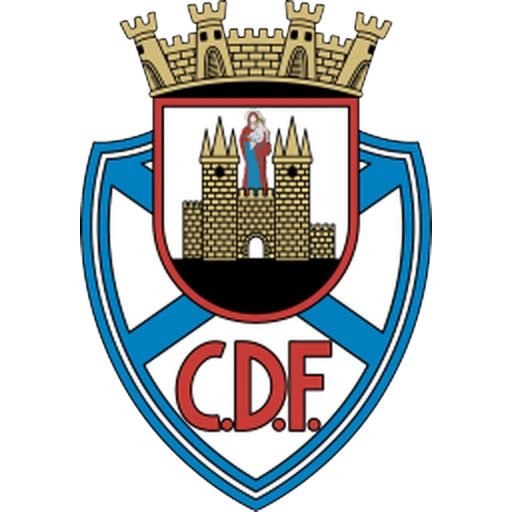
A further refinement followed in 1970, with darker outlines, stronger colour contrasts and a simplified shield. Although the overall design remained familiar, the updated badge improved visibility and became closely associated with the club during the 1970s.
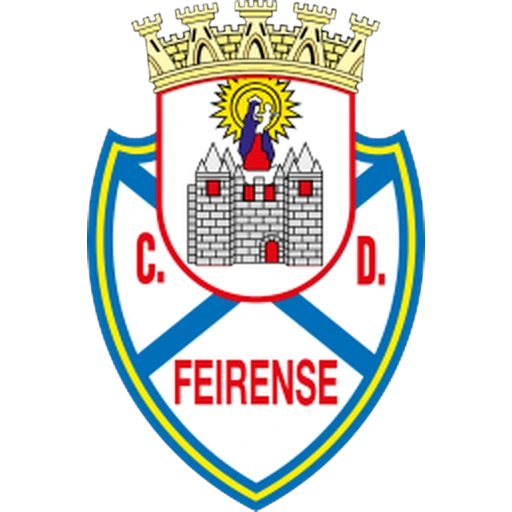
In 1980, Feirense introduced a more contemporary interpretation of the crest. The initials were replaced by the full name "Feirense", while "C.D." was positioned on either side of the shield. The castle and the municipal coat of arms remained at the top, ensuring the club retained its strong connection with the city of Santa Maria da Feira.
The current crest was introduced in 2009. The redesign refined the proportions of the shield, simplified the outlines and adopted darker blue tones for a cleaner, more modern appearance. The municipal coat of arms, featuring the castle and mural crown, remains the focal point, while the club name continues to be displayed prominently across the lower section of the badge.
CD Feirense Club History
Founded in 1918, Clube Desportivo Feirense is one of the oldest football clubs in northern Portugal. Based in the historic city of Santa Maria da Feira, the club was established to promote sport within the local community and quickly became an important part of the region's sporting identity. The club takes its nickname, "Fogaceiros," from the traditional Fogaça, a sweet bread that has been the symbol of Santa Maria da Feira for centuries.
During its early decades, Feirense competed mainly in regional competitions before gradually establishing itself in the national leagues. The club earned promotion to the Primeira Divisão for the first time in 1962, marking the beginning of a successful era. Throughout the 1960s and 1970s, Feirense became a familiar name in Portugal's top flight, earning a reputation as a difficult opponent despite operating with more limited resources than the country's biggest clubs.
A new period of success began in the early 2010s. Feirense won promotion to the Primeira Liga in 2011, returned again in 2016, and enjoyed several competitive seasons in Portugal's highest division. During this period, the club established itself as a well-organised professional side capable of competing with some of the country's strongest teams despite one of the league's smaller budgets.
Feirense plays its home matches at the Estádio Marcolino de Castro, which has been the club's home since 1962. Named after one of the club's most influential figures, the stadium has witnessed many of Feirense's greatest achievements and remains an important landmark in Santa Maria da Feira.
Matches against nearby rivals such as Oliveirense, Beira-Mar and Paços de Ferreira remain among the highlights of the season.