Stadium:KGHM Zagłębie Arena(formerly Stadion Zagłębia Lubin)
Capacity:16,068
1949-1953
1953-1961
1966-1973
1973-1990
1990-1995
1995-2002
2002-2021
2022-Present
2016
2021-2022
2026
Zaglebie Lubin S.A. Crest History
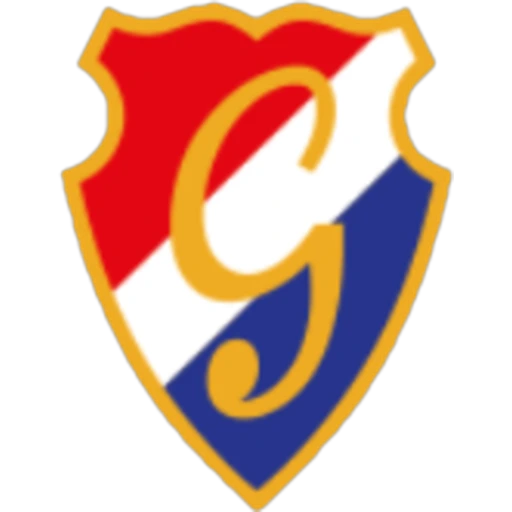
The club originally competed under several local names before adopting the identity of Zagłębie Lubin in 1966. The earliest documented crest, used from 1949, featured an elegant gold "G" on a red, white and blue shield, reflecting one of the club's predecessor organisations during the post-war rebuilding of Polish football.
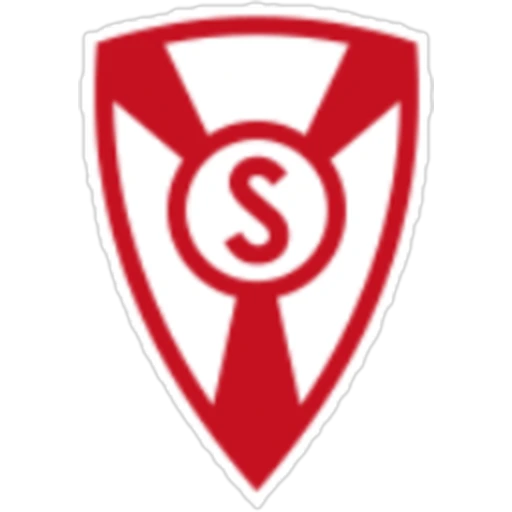
Following another organisational restructuring in 1953, a new red-and-white shield was introduced, displaying a stylised "S" at its centre. Like many Polish clubs during the communist era, the redesign reflected the changing sports associations under which the club operated before establishing its permanent identity.
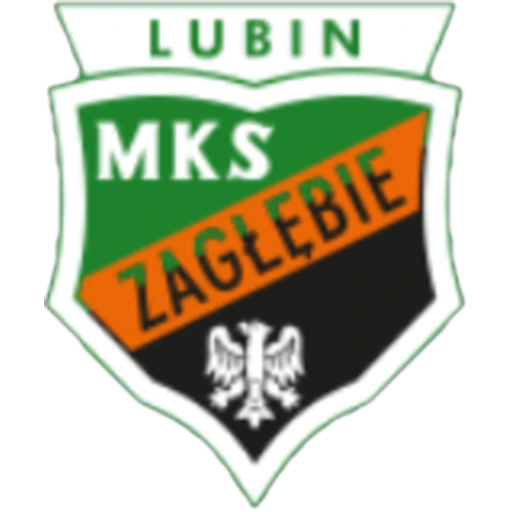
A defining moment came in 1966, when the club officially adopted the name MKS Zagłębie Lubin. The new crest introduced a shield bearing the club name above diagonal green, orange and black sections, accompanied by the Polish eagle. The colours represented the region's mining heritage and marked the beginning of the visual identity that would become closely associated with Zagłębie Lubin.
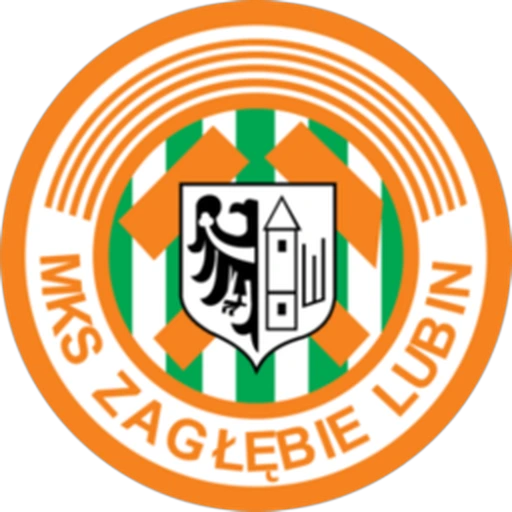
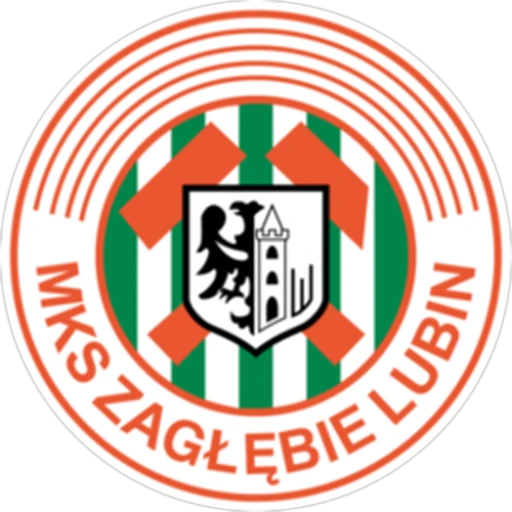
In 1973, the club introduced a completely new circular crest that has remained the foundation of its identity ever since. The badge featured the coat of arms of Lubin at its centre, surrounded by green-and-white vertical stripes and an orange ring bearing the club name. The redesign emphasised the club's connection to the city while introducing the colours that continue to define Zagłębie today.
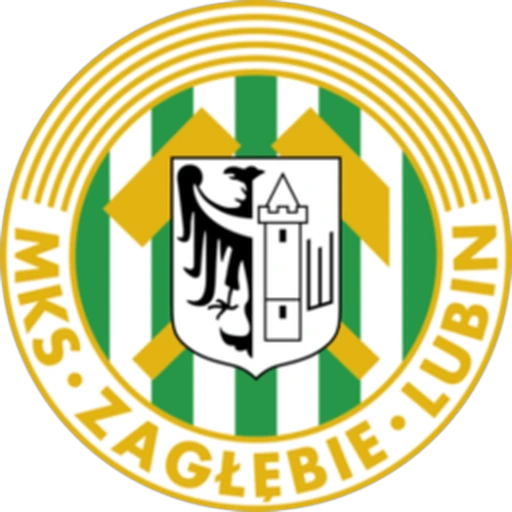
The crest was refined in 1990, with a cleaner layout and a gold outer ring replacing the orange border. Although the overall composition remained unchanged, the update gave the badge a more modern and balanced appearance while preserving the city's coat of arms and the traditional green-and-white stripes.
A further update followed in 1995, when the outer ring returned to orange and the proportions were subtly adjusted. The redesign improved legibility without altering the club's well-established identity, and this version accompanied Zagłębie during one of the most successful periods in its history.
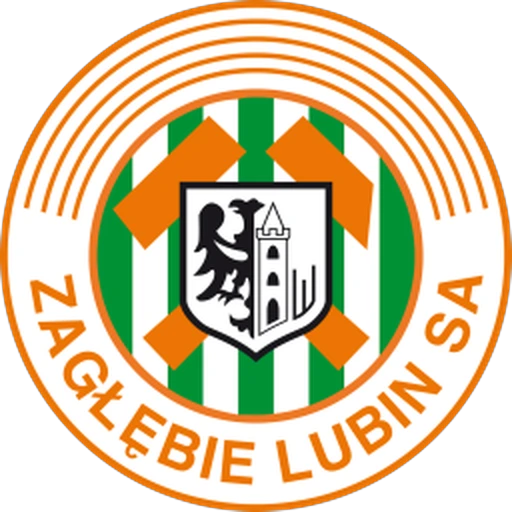
In 2002, the club simplified the crest once again. The words "MKS" were removed, leaving "Zagłębie Lubin SA" around the outer ring to reflect the club's transformation into a joint-stock company. Apart from this change, the traditional circular layout, city coat of arms and mining-inspired colours remained intact.
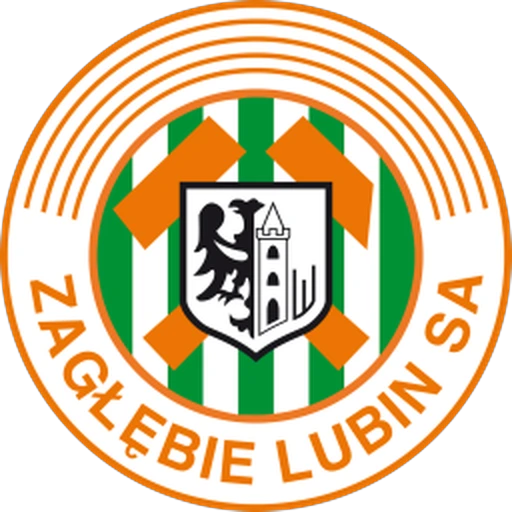
The badge underwent another subtle refinement in 2022. The typography was modernised, spacing improved and the outer ring slightly simplified, while preserving every historic element that supporters associate with the club. The current crest therefore remains a direct descendant of the iconic design first introduced in 1973.
Several commemorative logos have also been used alongside the official crest, including a special 70th anniversary emblem in 2016, a 75th anniversary logo in 2021–22, and an 80th anniversary crest introduced in 2026. These celebratory designs honour important milestones in the club's history but do not replace the official club badge.
Today, Zagłębie Lubin's crest combines more than five decades of tradition. Featuring the coat of arms of Lubin, the club's distinctive green-and-white stripes, and colours representing the region's rich mining heritage, it remains one of the most recognisable and enduring emblems in Polish football.
Zaglebie Lubin S.A. Club History
Founded in 1945, Zagłębie Lubin is one of Poland's most successful provincial football clubs and the leading team from the Lower Silesian Copper Basin (Zagłębie Miedziowe). The club was established in the post-war years through the merger and reorganisation of several local teams before officially adopting the name MKS Zagłębie Lubin in 1966. Closely linked to the region's rapidly expanding copper mining industry, the club has long been supported by the state-owned mining company KGHM Polska Miedź, giving rise to its famous nickname, "Miedziowi" (The Copper Men).
After decades of competing in the lower divisions, Zagłębie earned promotion to the Polish top flight for the first time in 1985. The club quickly established itself among the country's elite and, just a few years later, enjoyed the greatest success in its history by winning its first Ekstraklasa championship in 1990–91. The title secured qualification for the European Cup, marking the club's debut in Europe's premier club competition.
The early 1990s brought further domestic success as Zagłębie became a regular contender in the Ekstraklasa. Although the club experienced periods of inconsistency later in the decade, it remained a respected force in Polish football, supported by one of the country's strongest financial backers through the copper industry.
A second golden era arrived during the 2006–07 season when Zagłębie Lubin captured its second Polish Championship, finishing ahead of traditional powers such as Legia Warszawa and Wisła Kraków. The title qualified the club for the UEFA Champions League qualifiers and confirmed its status as one of Poland's leading football institutions.
The years that followed were marked by both success and setbacks. Relegation in 2014 was followed by an immediate return to the Ekstraklasa, demonstrating the club's resilience and strong organisational structure. Since then, Zagłębie has established itself as a stable top-flight club while placing increasing emphasis on youth development through one of Poland's most highly regarded football academies.
The club's fiercest rivalry is the Lower Silesian Derby against Śląsk Wrocław, one of Poland's most passionate regional rivalries. Matches against Miedź Legnica, known as the Copper Derby, have also become increasingly significant due to the clubs' shared mining heritage.