Cusco FC Crest History
The crest history of Cusco FC reflects one of the most significant identity changes in modern Peruvian football. The club spent the first decade of its existence as Real Garcilaso, using a badge strongly influenced by the visual traditions of Real Madrid, before adopting an entirely new name and identity as Cusco Fútbol Club in 2020.
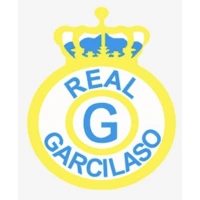
The club was originally established in 2009 as Asociación Civil Real Atlético Garcilaso, commonly known as Real Garcilaso. Its original identity was closely connected with the Inca Garcilaso de la Vega educational institution in Cusco. The crest shown here for 2008–2019 belongs to this Real Garcilaso period. However, because the club itself was founded in 2009, I would change the timeline in your graphic to 2009–2019. The original badge was circular and used predominantly white, light blue and gold. At the centre appeared a large blue letter “G”, representing Garcilaso. Around it were the words REAL GAR CILASO, identifying the club under its original name. The entire circular emblem was surrounded by a gold border. Above the badge appeared a large royal crown, reinforcing the use of the word Real in the club's identity.
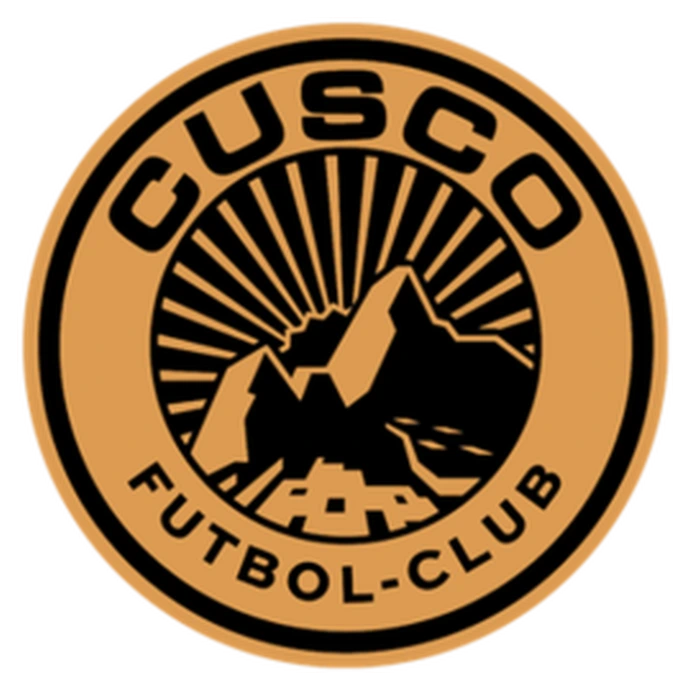
A fundamental transformation was announced ahead of the 2020 season. Real Garcilaso became Cusco Fútbol Club, and the previous royal-style identity was abandoned completely. In its place came an entirely new black-and-gold circular emblem centred on the landscape and cultural identity of Cusco. The modern crest takes the form of a gold circle surrounded by bold black outlines.The word CUSCO dominates the upper section in large black capital letters. This is significant because the city itself now forms the central element of the club's identity. Inside the circle appears a stylised Andean mountain landscape. The mountains provide an immediate visual connection with the geography surrounding Cusco and the Peruvian Andes. Behind them is a series of radiating lines resembling sun rays. The sun imagery is especially appropriate for Cusco because of the city's historic importance as the capital of the Inca Empire, in which the sun held enormous religious and cultural significance. At the base of the mountains appears a simplified representation of the local landscape and architecture, further strengthening the relationship between the badge and the region. Beneath the central image are the words FÚTBOL-CLUB, completing the new institutional name. The use of gold and black also represented a dramatic departure from the Real Garcilaso period. Gold became particularly important to the new identity and helped produce the nickname Los Dorados, The Golden Ones. The modern badge therefore attempts to communicate the club's geographical identity immediately.
Cusco FC Club History
Cusco Fútbol Club, commonly known as Cusco FC, is a professional football club from Cusco, one of Peru's most historic cities. Founded in 2009 as Real Garcilaso, the club experienced an extraordinarily rapid rise from regional football to the highest level of the Peruvian game and subsequently became a regular participant in South American competition.
The club was originally established as Asociación Civil Real Atlético Garcilaso and developed from a football project connected with the Inca Garcilaso de la Vega educational community in Cusco. During this period, the team became widely known simply as Real Garcilaso and played in the distinctive light-blue colours associated with its original identity.
Like many provincial Peruvian clubs, Real Garcilaso began its route toward professional football through the Copa Perú system. The competition provided the young club with a pathway from district and regional football into the national divisions. Real Garcilaso progressed rapidly through the competitions in the Cusco region and soon emerged as an ambitious challenger for national promotion.
The decisive breakthrough came in 2011, when Real Garcilaso produced an outstanding Copa Perú campaign. The Cusco club reached the national final and defeated Pacífico FC, becoming Copa Perú champion. Victory secured promotion to the Peruvian Primera División and transformed a club only a few years old into a member of the country's professional elite.
Real Garcilaso made its Primera División debut in 2012, and its first season became one of the most remarkable debut campaigns in modern Peruvian football. Instead of concentrating merely on avoiding relegation, the newly promoted club immediately challenged for the national championship.
Real Garcilaso reached the championship final against Sporting Cristal. Although the Cusco side was ultimately defeated and finished as Peruvian runner-up, the achievement was extraordinary. Within a very short period, the club had progressed from regional football through Copa Perú to competing for the national title.
The result also earned Real Garcilaso qualification for the 2013 Copa Libertadores, introducing the young club to South America's most prestigious club competition. Once again, expectations were exceeded.
Real Garcilaso successfully negotiated the group stage and then eliminated Nacional of Uruguay in the Round of 16. The victory over one of South America's historic clubs represented a major achievement for an institution that had only recently entered professional football.
The club's Libertadores campaign eventually reached the quarter-finals, where it was eliminated by Independiente Santa Fe of Colombia. Reaching the last eight of the Copa Libertadores remains one of the defining achievements in the club's history and established Real Garcilaso internationally far earlier than could have been expected after its foundation.
Domestic success continued during 2013. Real Garcilaso again challenged for the Peruvian championship and reached the title decider, this time facing Universitario de Deportes. The championship required a deciding match after the teams exchanged victories, with Universitario ultimately prevailing on penalties. Real Garcilaso therefore finished as national runner-up for the second consecutive season.
The club's home in Cusco became an important part of its competitive identity. Playing at the Estadio Inca Garcilaso de la Vega, located at more than 3,300 metres above sea level, provided the team with a distinctive high-altitude home environment that could be particularly challenging for visiting sides.
Real Garcilaso remained competitive throughout the remainder of the 2010s and regularly fought for places in CONMEBOL competitions. Further appearances in the Copa Libertadores and Copa Sudamericana helped establish the club as a familiar representative of Peru in continental football.
Another strong domestic campaign came in 2017, when Real Garcilaso again competed near the top of the national standings. Although the club was unable to convert its strong performances into a first Primera División championship, it continued to demonstrate that the rapid successes of 2012 and 2013 had not simply been temporary.
Despite its sporting achievements, the institution increasingly sought to establish a stronger identity directly connected with the city it represented. The name Real Garcilaso reflected the club's origins, but it did not identify the team as immediately with Cusco as its management desired.
This led to a fundamental institutional transformation ahead of the 2020 season. Real Garcilaso was renamed Cusco Fútbol Club, commonly shortened to Cusco FC.
The change represented considerably more than a new name. The traditional light-blue identity and crowned Real Garcilaso crest were replaced by a completely new black-and-gold visual identity incorporating Andean mountains and imagery associated with Cusco.
The objective was to position the club more clearly as a football representative of Cusco itself, one of the most culturally important cities in South America and the historic capital of the Inca Empire.
The gold identity subsequently became closely associated with the club, producing nicknames such as Los Dorados, The Golden Ones and La Máquina Dorada, The Golden Machine.
The transition to Cusco FC nevertheless coincided with a more difficult sporting period. The club competed through the disrupted seasons of the early 2020s before suffering a major setback at the end of 2021. Cusco FC was relegated from Liga 1, ending the uninterrupted top-flight presence that had begun with promotion as Real Garcilaso a decade earlier. The setback proved relatively brief. Competing in Liga 2 during 2022, Cusco FC immediately became one of the principal promotion contenders. The club produced an excellent campaign and won the 2022 Liga 2 championship, securing promotion back to Peru's highest division at the first attempt.
Cusco FC therefore returned to Liga 1 for the 2023 season. The rapid recovery demonstrated that the institution retained much of the competitive structure that had allowed it to become an established professional club during the Real Garcilaso era. Since returning to the top flight, the club has again sought to establish itself among the stronger provincial teams in Peru and compete for qualification to South American tournaments.
The most significant relationship is with Cienciano, Cusco's historic and internationally successful club. Meetings between the two sides create a direct contest between major professional representatives of the same city and are commonly treated as a Cusco derby.
The contrast between the clubs adds interest to the fixture. Cienciano was founded in 1901 and possesses more than a century of history, while Cusco FC represents a much younger football institution that rose extraordinarily quickly during the twenty-first century.