Historical Crests Parma Calcio 1913
Name: Parma Calcio 1913
Nickname(s): I Crociati (The Crusaders), I Ducali (The Duchy Men)
Founded: 1913 (Refounded 2015)
Stadium: Stadio Ennio Tardini
Capacity: 22,359
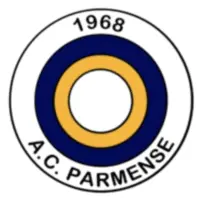
1968-1989
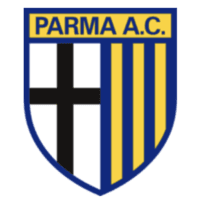
1989-2000
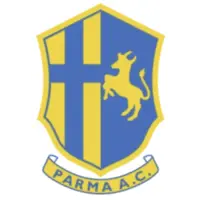
2000-2001
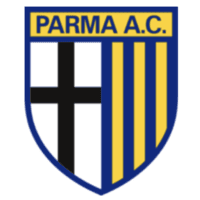
2001-2004
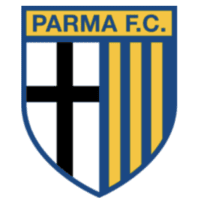
2004-2013
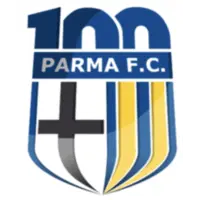
2013-2014
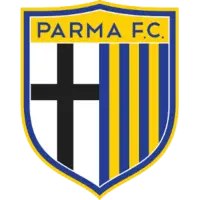
2014-2015
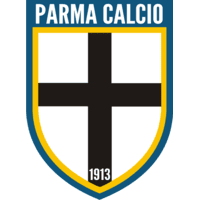
2015-2016
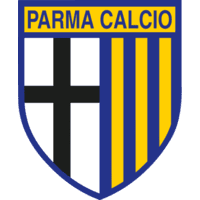
2016-Present
Parma Calcio 1913 Crest History
The origins of Parma's crest can be traced back to the club's earliest years following its foundation in 1913. The black cross on a white background was inspired by the city's heraldry and quickly became the most recognisable symbol associated with the club.
During the 1960s and 1970s, the club experimented with cleaner and more modern designs. The cross remained central, while yellow and blue became increasingly prominent. These badges reflected the graphic trends of the period while preserving the traditional symbols most closely associated with the club.
A major redesign arrived in 1968, when Parma adopted a distinctive shield that clearly separated the black cross from the yellow-and-blue sections. This format would heavily influence future versions of the crest and established the basic structure that many supporters still associate with Parma today.
Throughout the 1980s and 1990s, the crest was refined rather than radically altered. The familiar shield featuring the black cross and the yellow-and-blue colours accompanied the club through the most successful period in its history. This badge became synonymous with Parma's golden era, when the club won multiple domestic and European trophies and established itself among the strongest teams in Italy.
One of the most unusual episodes in the club's visual history arrived during the 2000–01 season, when Parma dramatically abandoned its traditional badge in favour of a modern emblem featuring a prancing bull. The redesign was intended to create a more contemporary identity but was met with significant criticism from supporters, who felt it lacked any meaningful connection to the club's heritage. After only one season, the experiment was abandoned and Parma quickly returned to a crest based on its traditional symbols.
In 2004, following the official name change from Parma A.C. to Parma F.C., the crest was updated accordingly. Although the club's name changed, the badge itself remained largely unchanged, preserving the traditional structure that featured the city's yellow-and-blue colours alongside the historic black cross on a white background. During this period, yellow and blue became increasingly prominent throughout the club's branding and were frequently used in alternate shirt designs, including vertical stripes, hoops, crosses and solid-colour combinations.
For the 2013–14 season, Parma introduced a special centenary crest celebrating one hundred years since the club's foundation. The commemorative badge honoured the club's long history while retaining the iconic crociata symbolism at its core.
Following the centenary celebrations, a new crest was introduced for the 2014–15 season. While broadly similar to previous versions, the badge featured updated proportions and modernised graphic elements. The familiar combination of the black cross and yellow-and-blue colours remained central, ensuring continuity with Parma's historical identity.
A major turning point arrived in 2015, when Parma was declared bankrupt and forced to restart from Serie D. The newly formed club adopted a completely new crest as part of its rebirth under the name Parma Calcio 1913. While inspired by the club's traditions, this temporary badge reflected the realities of a newly established organisation that did not yet possess the rights to the historic symbols and trademarks.
The situation changed one year later. In 2016, Parma successfully reacquired the rights to a number of historic club assets, including the traditional crest, for approximately €250,000. This allowed the club to restore the familiar crociata shield and reconnect directly with its pre-bankruptcy history. The return of the traditional emblem was widely celebrated by supporters and symbolised the restoration of the club's identity.
Parma Calcio 1913 Club History
Founded in 1913 as Verdi Football Club, Parma was created to celebrate the centenary of the birth of the famous composer Giuseppe Verdi, who was born in the province of Parma. Shortly after its foundation, the club adopted the city's traditional yellow and blue colours, which date back to 1545, when the Duchy of Parma was established. These colours remain deeply associated with the club and explain why Parma is still commonly known as I Gialloblù ("The Yellow and Blues").
In its earliest years, Parma wore yellow-and-blue chequered shirts that reflected the city's colours. Following the First World War and a reorganisation of the club, the famous white shirt with a black cross on the chest was introduced. Inspired in part by Juventus' colours, the design created one of the most distinctive kits in Italian football and gave rise to the nickname I Crociati ("The Crusaders").
For much of its history, Parma competed in the lower divisions of Italian football, spending decades moving between Serie B and Serie C. Although respected as an important provincial club, it was not until the late twentieth century that Parma emerged as a major force in the Italian game.
The turning point arrived during the 1980s, when the dairy giant Parmalat acquired the club. Backed by the resources and ambition of one of Italy's largest companies, Parma began a rapid rise through the football pyramid. Under coach Nevio Scala, the club achieved promotion to Serie A in 1990, marking the beginning of the most successful era in its history.
Parma immediately established itself among Italy's elite. During the 1990s, the club became one of the strongest teams in Europe despite representing a relatively small city. The squad featured world-class players such as Gianfranco Zola, Tomas Brolin, Faustino Asprilla, Dino Baggio, Gianluigi Buffon, Fabio Cannavaro, Lilian Thuram, Juan Sebastián Verón, Hernán Crespo and many others.
The club's first major trophy arrived in 1992, when Parma won the Coppa Italia. One year later, the Crociati lifted the UEFA Cup Winners' Cup, defeating Royal Antwerp in the final and announcing themselves on the European stage. Further success followed with the UEFA Cup in 1995, another Coppa Italia triumph in 1999, the UEFA Cup again in 1999, the UEFA Super Cup and the Italian Supercoppa.
During this extraordinary period, Parma regularly challenged Italy's traditional giants and developed a particularly fierce rivalry with Juventus. Numerous title races, cup finals and European qualification battles between the clubs transformed the fixture into one of the most significant rivalries of the era.
The influence of Parmalat also affected the club's visual identity. Although the white shirt with the black cross remained the traditional symbol of Parma, the club increasingly embraced its yellow-and-blue heritage. Between 1998 and 2004, Parma wore yellow-and-blue hooped shirts as its primary home kit, while dark blue frequently served as a third colour. These designs became closely associated with the club's golden era and remain popular among supporters today.
The dream began to unravel in 2003, when the Parmalat scandal erupted. The collapse of the parent company became one of the largest corporate scandals in European history and plunged the football club into financial uncertainty. Parma entered controlled administration and spent several years fighting for survival despite remaining competitive on the pitch.
In 2004, the club was reorganised as Parma F.C., allowing professional football to continue in the city. While Parma remained a regular participant in Serie A for much of the following decade, the financial strength that had fuelled its rise was gone.
The crisis finally reached its peak in 2015, when Parma was declared bankrupt. The collapse shocked Italian football, bringing an end to one of the most remarkable stories of the modern era. Forced to restart from Serie D, the newly established Parma Calcio 1913 inherited the club's traditions and began rebuilding from the amateur ranks.
The recovery proved extraordinary. Parma achieved three consecutive promotions, rising from Serie D to Serie A between 2015 and 2018. The achievement represented one of the fastest and most impressive recoveries ever seen in Italian football and restored the club to the level where many believed it belonged.
Parma plays its home matches at the Stadio Ennio Tardini, one of Italy's most historic football stadiums. Opened in 1923, it witnessed both the club's rise to European glory and its remarkable rebirth following bankruptcy.
The club maintains several fierce rivalries. The most bitter is with Reggiana in the Derby dell'Enza, a rivalry rooted in centuries of competition between the cities of Parma and Reggio Emilia. Other important local derbies include the Derby dell'Emilia against Bologna, the Derby del Ducati against Modena, and the Derby del Ducato against Piacenza. Rivalries also exist with Cremonese and Carrarese, while matches against Juventus continue to carry particular significance because of the intense battles between the two clubs during the 1990s.
Parma Calcio Pins
Your Dynamic Snippet will be displayed here... This message is displayed because you did not provide enough options to retrieve its content.