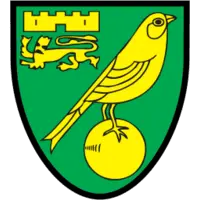
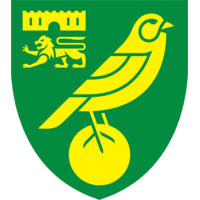
Historical Crests Norwich City FC
Name: Norwich City FC
Nickname(s): The Canaries
Founded: 1902
Stadium: Carrow Road (Norwich)
Capacity: 27,244
Norwich City FC Crest History
The club crest of Norwich City FC has long been influenced by its famous nickname, “The Canaries,” which originated from the historic practice of breeding canaries and other songbirds in Norwich and the surrounding Norfolk area. This connection has shaped both the club’s colours and its badge for more than a century.
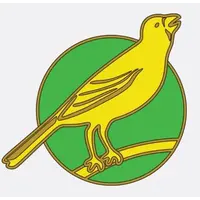
A significant development came in 1922 when a simple canary badge was first adopted. The canary had already become closely associated with the club through its nickname and yellow-and-green colours, making it a natural symbol for Norwich City. The introduction of the bird established a visual identity that remains central to the club today.
As the club evolved, the canary became increasingly prominent in successive badge designs. Various versions featured the bird in different poses and artistic styles, but the underlying theme remained consistent: celebrating Norwich’s unique connection to canary breeding and the nickname that had become synonymous with the club.
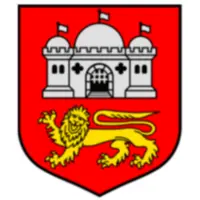
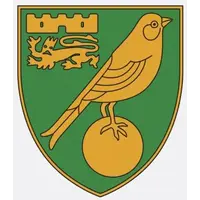
The modern crest developed from these earlier designs and combines the canary with important elements of the city’s heritage. The current badge features a canary perched on a football, symbolising the club’s footballing identity. In the top left corner appears a stylised version of the City of Norwich coat of arms, including a castle and lion, reflecting the club’s close connection to the city it represents.
The inclusion of civic symbols alongside the canary successfully blends local heritage with football tradition. The castle references Norwich’s historic importance, while the lion is derived from the city's heraldic imagery. Together with the canary, these elements create one of the most recognisable crests in English football.
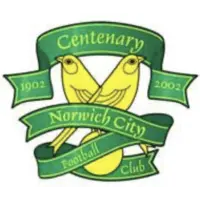
In 2002, Norwich City celebrated its centenary with a special commemorative badge. The design featured two canaries facing in opposite directions and incorporated a ribbon marking the club’s one-hundredth anniversary. The special crest paid tribute to the club’s history while retaining the bird that had become the defining symbol of Norwich City.
Norwich City FC Club History
Norwich City Football Club was founded in 1902 and has grown to become one of the most recognisable clubs in East Anglia. Based in Norwich, Norfolk, the club quickly established itself within the local sporting community and earned the nickname “The Canaries,” inspired by the region’s long association with canary breeding. The nickname would go on to define the club’s identity, colours and traditions.
During its early years, Norwich competed in regional football before joining the Football League in 1920. The club steadily developed its reputation and built a loyal supporter base throughout Norfolk and the wider East Anglia region.
Since 1935, Norwich City has played its home matches at Carrow Road. Located close to Norwich city centre, the stadium has become synonymous with the club and has witnessed many of its greatest achievements. Despite occasional redevelopment, Carrow Road remains one of the most iconic football grounds outside England’s traditional major cities.
The club enjoyed increasing success during the second half of the twentieth century. Norwich won its first major trophy in 1962 when it lifted the League Cup, defeating Rochdale over two legs. A second League Cup triumph followed in 1985 when the Canaries defeated Sunderland at Wembley Stadium. These victories remain among the most significant achievements in the club’s history.
The late 1980s and early 1990s are often regarded as one of Norwich’s most successful periods. The club became an established top-flight side and achieved its highest-ever league finish in the 1992–93 season, finishing third in the inaugural Premier League campaign. The following season, Norwich enhanced its reputation in Europe by becoming the first English club to defeat Bayern Munich at the Olympiastadion, winning 2–1 during a memorable UEFA Cup run.
Throughout the modern era, Norwich has frequently moved between the Premier League and the Championship, earning a reputation as one of English football’s most successful “yo-yo clubs.” Despite these fluctuations, the club has consistently remained competitive and has often challenged for promotion to the top flight.
One of the most distinctive aspects of Norwich City is its supporter culture. The club’s anthem, “On the Ball, City,” is widely recognised as the oldest football song in the world still sung regularly by supporters. Written in 1890, more than a decade before the club itself was founded, it remains a unique part of Norwich’s matchday tradition and identity.
Norwich City’s fiercest rivalry is with Ipswich Town. Matches between the two clubs are known as the “Old Farm Derby,” a play on Scotland’s Old Firm rivalry, and represent one of the most passionate rivalries in English football. The fixture reflects the historic competition between Norfolk and Suffolk and is the defining match in Norwich’s football calendar.
Norwich City FC Pin
Your Dynamic Snippet will be displayed here... This message is displayed because you did not provide enough options to retrieve its content.