Historical Crests NAC Breda
Name: NAC Breda
Nickname(s): The Pearl of the South, The Yellow Army
Founded: 1912
Stadium: Rat Verlegh Stadion (Breda)
Capacity: 19,000
NAC Breda Crest History
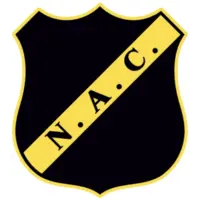
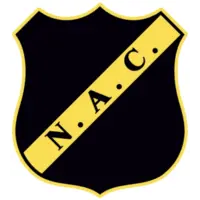
The original NAC crest, introduced following the club's foundation in 1912, consisted of a black shield crossed by a yellow diagonal band containing the letters N.A.C. The simple but distinctive design reflected the club's official colours and quickly became an enduring symbol of NAC. This badge accompanied the club through many of its early successes and remained in use for more than half a century.
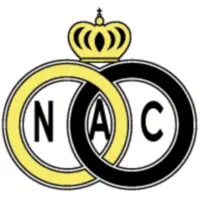
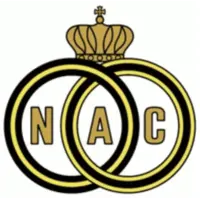
In 1968, the club adopted a new crest, replacing the original shield. The exact reason for this redesign has never been fully documented, but it marked the first significant change to NAC's visual identity. The new badge represented a departure from the traditional shield that supporters had known since the club's formation.
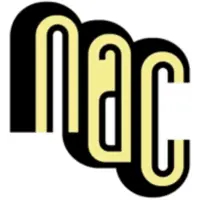
Another major transformation arrived in 1974. Following a turbulent period that saw the dismissal of the club's board, NAC sought to signal a fresh start. A new crest featuring the letters NAC in a bold black-and-yellow design was introduced. According to club tradition, the badge was designed by the daughter of a newly appointed board member. The crest became closely associated with the club throughout the 1970s, 1980s and early 1990s.
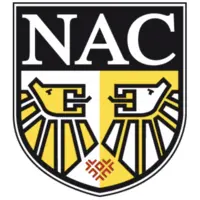
A fourth crest was introduced in 1996, coinciding with NAC's move to the newly built Rat Verlegh Stadion. This redesign represented the most elaborate badge in the club's history. The crest incorporated two lions, three crosses, the letters NAC, and the club's traditional black-and-yellow colours. The lions and crosses were derived directly from the coat of arms of Breda, strengthening the visual connection between the club and the city it represents. This badge accompanied NAC through one of the most memorable periods in its modern history and became highly popular among supporters.
In 2012, during the club's 100th anniversary celebrations, NAC paid tribute to its origins by reintroducing the original 1912 shield crest. The return of the classic badge was warmly received by supporters, many of whom regarded it as the most authentic representation of the club's identity.
The enthusiasm for the historic crest ultimately led to a permanent change. Through an initiative organised and financed by supporters, the original 1912 crest was officially reinstated as NAC Breda's permanent badge. The decision reflected the strong emotional attachment fans felt toward the club's earliest symbol and reinforced the importance of tradition within NAC's culture.
Today, NAC Breda once again uses the same distinctive black shield with a yellow diagonal band and the letters N.A.C. that first appeared in 1912. More than a century after its creation, the badge remains one of the most iconic and recognisable crests in Dutch football.
NAC Breda Club History
Founded on 19 September 1912, NAC Breda was created through the merger of two clubs from Breda: ADVENDO (Aangenaam Door Vermaak En Nuttig Door Ontspanning) and NOAD (Nooit Opgeven Altijd Doorzetten). The new club adopted the combined name NOAD ADVENDO Combinatie, which is still reflected in the initials NAC used today.
From its earliest years, NAC quickly established itself as one of the leading clubs in Dutch football. The club enjoyed immediate success and reached the pinnacle of the Dutch game in 1921, when it won the Dutch national championship. The title remains one of the most important achievements in the club's history and secured NAC's place among the historic champions of Dutch football.
One of the club's greatest triumphs arrived in 1973, when NAC won the KNVB Cup for the first and only time in its history. The cup victory remains one of the defining moments in the club's existence and earned NAC qualification for European competition.
NAC's identity has always been strongly linked to its supporters. The club was the first football club in the Netherlands to establish a supporters council, a body created to protect the club's culture, traditions and identity. This initiative reinforced the close relationship between the club and its fanbase and became an example later followed elsewhere in Dutch football.
A major milestone arrived in 1996, when NAC moved from the historic Beatrixstraat stadium to the newly built Rat Verlegh Stadion, named after club legend and Dutch international Antoon "Rat" Verlegh. The move provided the club with a modern home while preserving its strong local identity.
The club's greatest rivalry is with Willem II of Tilburg. Known as the Derby of Brabant, the rivalry dates back to the 1920s and is one of the oldest and most intense rivalries in Dutch football. Breda and Tilburg are located only around twenty kilometres apart, creating a fierce local competition fuelled by civic pride.
Another long-standing rivalry exists with Feyenoord. Although not a traditional local derby, matches between NAC and Feyenoord have often been fiercely contested due to decades of competitive encounters and strong supporter cultures.
NAC Breda
Your Dynamic Snippet will be displayed here... This message is displayed because you did not provide enough options to retrieve its content.