Historical Crests Leeds United FC
Name: Leeds United FC
Nickname(s): The Peacocks
Founded: 1919
Stadium: Elland Road (Leeds)
Capacity: 37,890
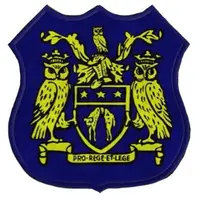
1908-1960
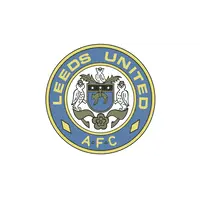
1960-1964
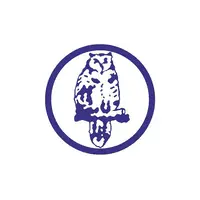
1964-1965
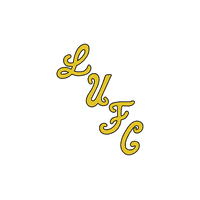
1965-1973

1973-1974

1975-1976

1976-1977

1977-1978
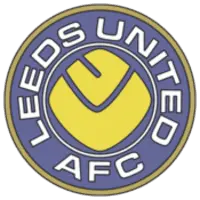
1978-1979
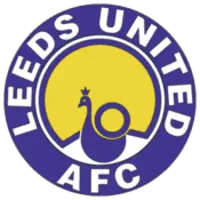
1979-1984
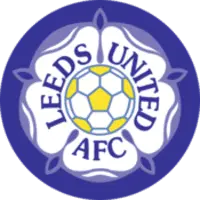
1984-1998
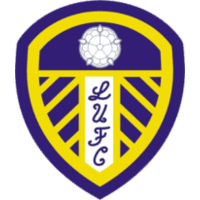
1998-1999
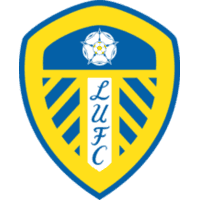
1999-Present
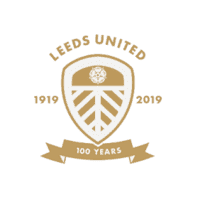
2019-2020 100 Year
Leeds United FC Crest History
Founded in 1919, Leeds United Football Club has used a number of distinctive badges throughout its history. While several different crests have represented the club over the years, the most enduring symbols of Leeds United’s identity are the White Rose of York and the famous “LUFC” monogram.
The club’s first official badge appeared in 1908. Like its predecessor Leeds City, Leeds United adopted the coat of arms of the City of Leeds, establishing a strong connection between the football club and the local community.
A new emblem was introduced in 1964 featuring a perching owl, a symbol long associated with the city of Leeds. The owl appeared on the club’s shirts during a period when many English clubs were beginning to adopt more distinctive football-specific badges rather than relying solely on civic heraldry.
Between 1965 and 1973, Leeds adopted a minimalist crest featuring the letters “LUFC” arranged vertically. This simple monogram would prove highly influential and remains incorporated into the club’s modern badge today.
One of the most famous and unusual badges in English football arrived in 1973. Inspired by the club’s successful and innovative image during the Don Revie era, Leeds introduced the iconic “smiley” badge. The design consisted of the letters “L” and “U” in stylised bubble writing, creating a circular emblem that reflected the bold design trends of the 1970s. In 1975, the badge was rotated by 45 degrees and the club’s traditional blue and yellow colours were reversed.
For the 1978–79 season, Leeds unveiled another distinctive crest. The new design featured the words “Leeds United AFC” surrounding a stylised peacock, a reference to one of the club’s historic nicknames, “The Peacocks.” The peacock symbol had strong links to the Old Peacock public house located near Elland Road, where the club’s early teams were closely associated.
In 1984, Leeds introduced a new badge that would become the longest-serving crest of the modern era. The design combined the White Rose of York, a football and the club’s name within a shield-shaped emblem. Using the traditional blue, gold and white colours, the badge successfully blended regional identity with football symbolism and remained in use until 1998.
A major redesign followed in the 1998–99 season when Leeds adopted a more modern European-style shield. The new crest retained the White Rose of York together with the distinctive “LUFC” monogram, creating a cleaner and more contemporary identity while preserving the club’s most important traditional symbols.
On 20 February 2019, Leeds United revealed a special predominantly gold-coloured badge to commemorate the club’s centenary season. The design retained the existing shield shape but replaced the “LUFC” script with the words “Leeds United” above and “100 Years” below. The crest also featured the dates 1919 and 2019, celebrating one hundred years since the club’s foundation.
Leeds United FC Club History
Leeds United Football Club was founded in 1919 following the dissolution of Leeds City FC. The newly formed club took over Elland Road as its home ground and was elected to the Football League in 1920. Since then, Leeds United has grown into one of the most successful and best-supported clubs in English football.
During its early decades, Leeds experienced periods of success and struggle, moving between the First and Second Divisions. However, the club’s most transformative era began in 1961 with the appointment of manager Don Revie. Revie rebuilt Leeds from a struggling Second Division side into one of the dominant forces in English and European football. Under his leadership, Leeds won promotion in 1964 and went on to secure two First Division titles, the FA Cup, the League Cup and two Inter-Cities Fairs Cups. The Revie era remains the most celebrated period in the club’s history.
The 1960s and 1970s established Leeds United as one of England’s leading clubs. The team became renowned for its competitiveness, attracting legendary players such as Billy Bremner, Jack Charlton, Norman Hunter and Eddie Gray. Leeds also reached the 1975 European Cup Final, narrowly losing to Bayern Munich in one of the most controversial finals in football history.
Following the departure of Don Revie in 1974, Leeds continued to enjoy success but gradually declined during the 1980s. The club returned to prominence under Howard Wilkinson, winning the Second Division title in 1990 and then becoming champions of England in 1991–92, the final season before the creation of the Premier League. This remains Leeds United’s most recent top-flight league title.
Leeds enjoyed another successful spell during the late 1990s and early 2000s under David O’Leary. A talented young side featuring players such as Harry Kewell, Mark Viduka, Alan Smith and Rio Ferdinand reached the semi-finals of the UEFA Champions League in 2001, one of the greatest achievements in the club’s modern history.
Financial problems soon followed, however, and Leeds entered a period of decline. The club was relegated from the Premier League in 2004 and spent several years outside the top flight, including a spell in League One. Despite these difficulties, Leeds maintained one of the largest fanbases in English football and regularly attracted substantial crowds at Elland Road.
A revival began under Argentine manager Marcelo Bielsa, who transformed the club and guided Leeds back to the Premier League in 2020 after a sixteen-year absence. Bielsa’s attacking style of football revitalised the club and restored Leeds United’s reputation as one of the most exciting teams in England.
Elland Road has been Leeds United’s home since the club’s formation in 1919 and remains one of the most iconic stadiums in English football. In recent years, plans have been approved to expand the ground from around 38,000 seats to approximately 53,000, reflecting the club’s ambition and the enormous demand for tickets among supporters.
Leeds United’s principal rivalry is with Manchester United, a fixture often regarded as one of the biggest rivalries in English football. Strong rivalries also exist with Chelsea F.C., Millwall F.C. and fellow Yorkshire clubs Huddersfield Town A.F.C., Bradford City A.F.C. and Sheffield United F.C..
Leeds United FC Pin
Your Dynamic Snippet will be displayed here... This message is displayed because you did not provide enough options to retrieve its content.