Ferencvárosi TC Crest History
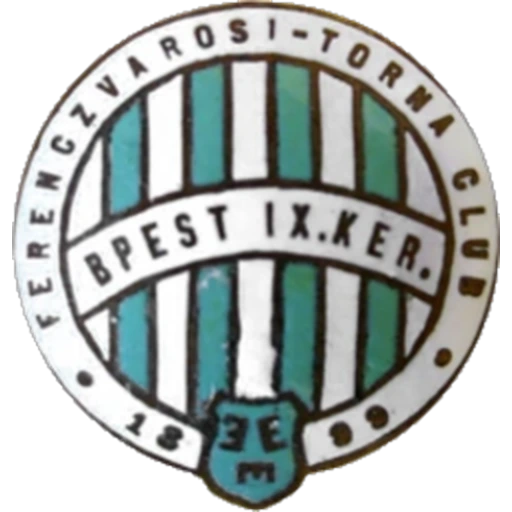
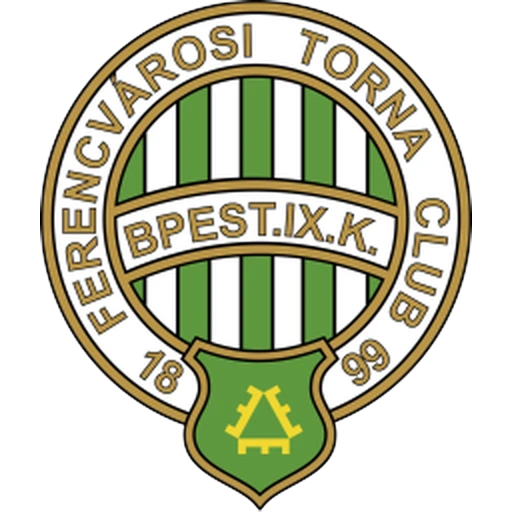
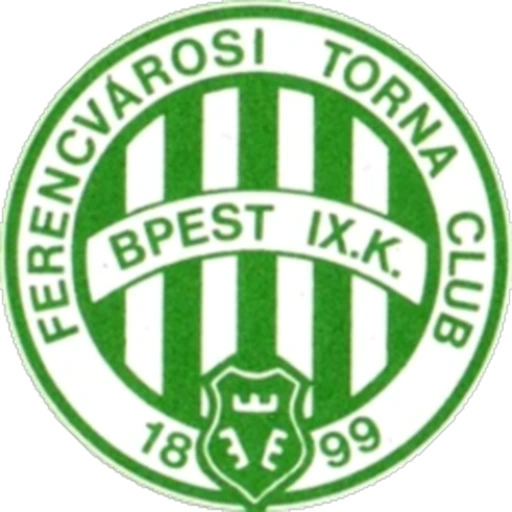
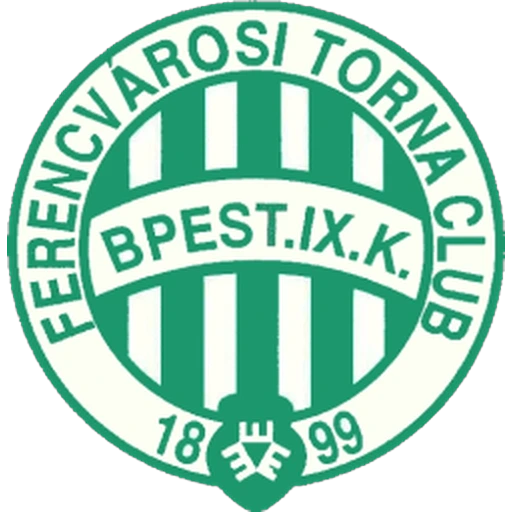
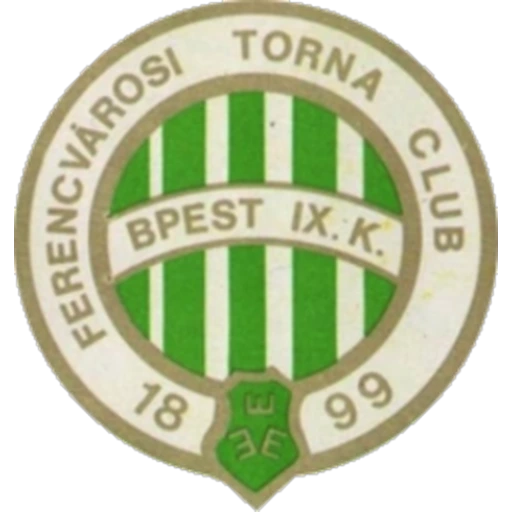
The first known crest, introduced in 1899, was an oval badge featuring green-and-white vertical stripes, the traditional colours of Ferencváros. Around the outer ring appeared the club's full name Ferenczvárosi Torna Club, while the centre contained the inscription BPest IX. Ker., referring to Budapest's 9th district (Ferencváros). This simple yet distinctive emblem established the striped identity that has remained central to the club's visual tradition for more than a century.
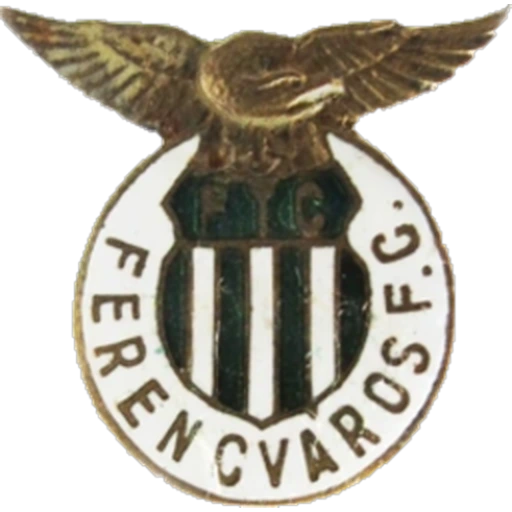
In 1920, the club adopted a dramatic new badge featuring a golden eagle with outstretched wings perched above the familiar green-and-white striped shield. The eagle, symbolising strength, pride, and freedom, quickly became one of the club's defining symbols. The club's name encircled the lower part of the emblem, creating one of the most iconic crests in Hungarian football history.
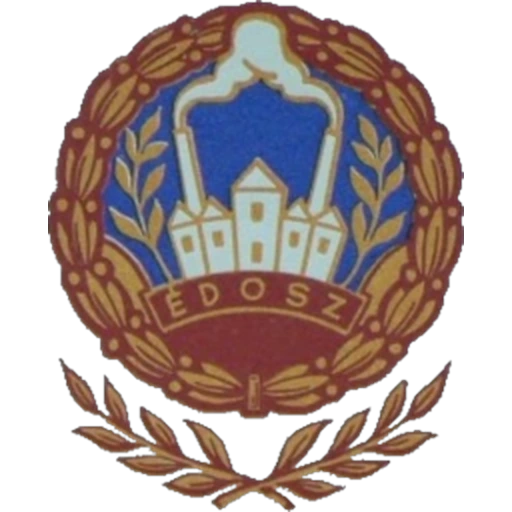
In 1950, following the communist government's reorganisation of Hungarian sport, Ferencváros briefly used a simplified badge combining the traditional green-and-white shield with a stylised eagle. Later that same year, after the club was renamed ÉDOSZ, a completely different state-sponsored emblem was introduced. The badge featured a red star, wheat wreaths, and industrial symbolism surrounding a blue shield, reflecting the political influence of the era rather than the club's own traditions.
Also during 1950–1951, another ÉDOSZ pennant-style emblem was used, displaying the name ÉDOSZ, the year 1950, and a small gold football. This was another politically imposed design associated with the club's temporary identity.
Between 1951 and 1956, when the club was renamed Kinizsi SE, the crest became a red-and-white shield featuring a red star and the diagonal inscription Kinizsi S.E.. The traditional green colours disappeared completely during this period, symbolising the government's attempt to distance the club from its historic identity.
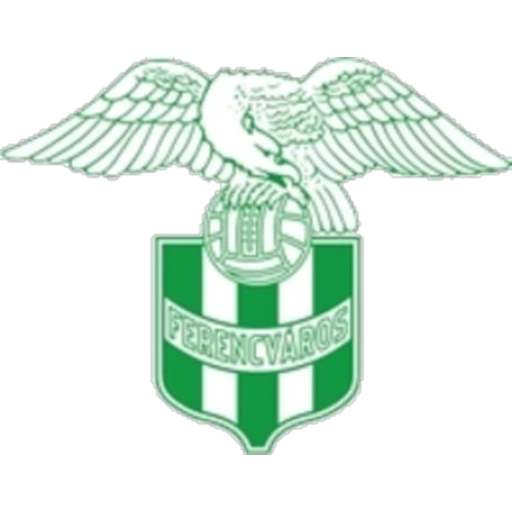
Following the Hungarian Revolution of 1956, Ferencváros regained its historic name and colours. From 1956 to 1960, the club introduced a striking crest featuring the golden eagle perched above a green cross, with the initials FTC incorporated into the design and a banner reading Ferencváros across the front. This badge symbolised the restoration of the club's traditions after years of political interference.
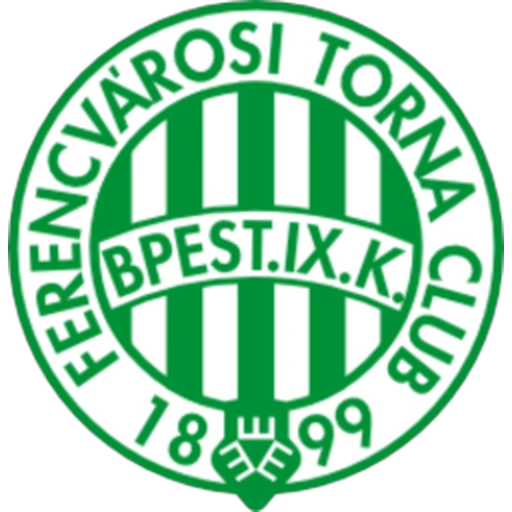
In 1960, Ferencváros returned to a crest closely resembling its pre-war identity. The badge featured the familiar green-and-white striped shield, surrounded by the club's full name and the founding year 1899, with the historic three green "E"s at the bottom. These three E letters stand for Erkölcs, Erő, Egyetértés ("Morality, Strength, and Unity"), the club's traditional motto established at its foundation.
Between 1980 and 1984, the badge was refined with a gold outline, while the three E emblem at the bottom was redesigned in gold. The overall appearance became cleaner and more modern without altering the club's traditional symbolism.
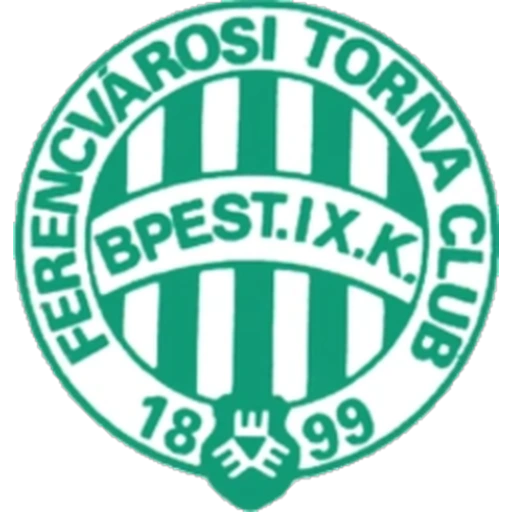
From 1985 to 1989, the crest adopted a simpler green-and-white colour scheme by removing the gold outline. The familiar striped shield, club name, founding year, and three E symbol remained unchanged, creating a cleaner visual identity.
Between 1989 and 1995, only minor refinements were made to the typography and proportions, preserving the traditional design that had become synonymous with Ferencváros.
From 1995 to 1999, the crest received another subtle update with slightly darker outlines and improved typography while maintaining all of its historic elements.
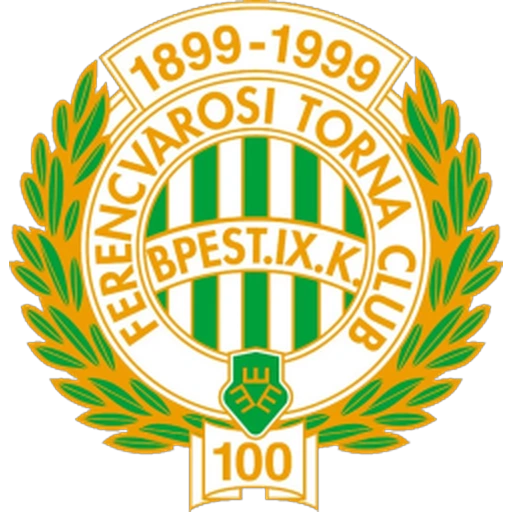
To celebrate the club's 100th anniversary, a special centenary crest was introduced for the 1999–2000 season. The traditional badge was surrounded by gold laurel branches, with the dates 1899–1999 displayed at the top, commemorating a century of Ferencváros history.
Between 2000 and 2003, the club returned to its standard badge with cleaner, brighter colours and simplified artwork, preserving the classic striped shield and the three E symbol.
From 2003 to 2008, further graphic refinements modernised the crest while keeping its traditional composition unchanged.
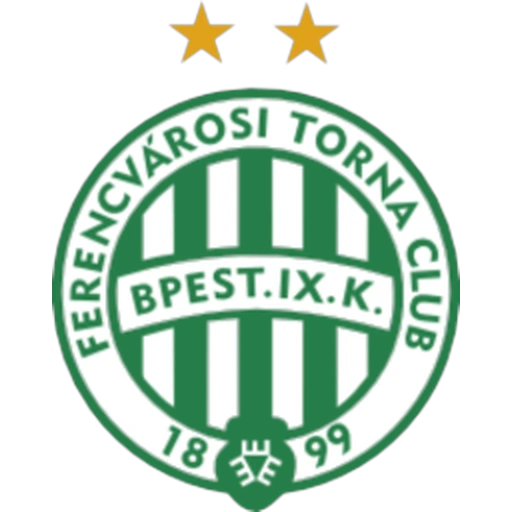
Between 2008 and 2019, two gold stars were added above the badge to recognise the club's growing collection of Hungarian league championships. The classic green-and-white shield remained untouched beneath the stars.
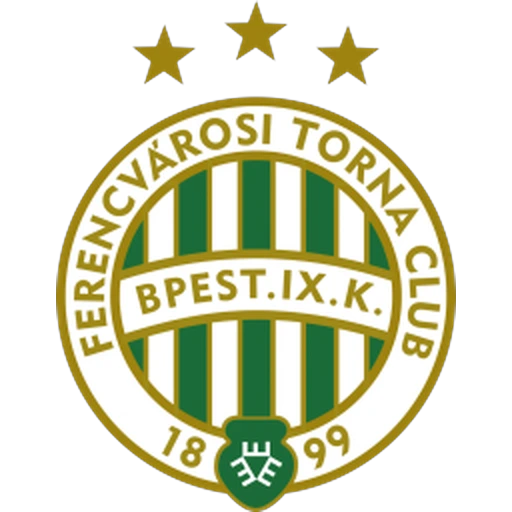
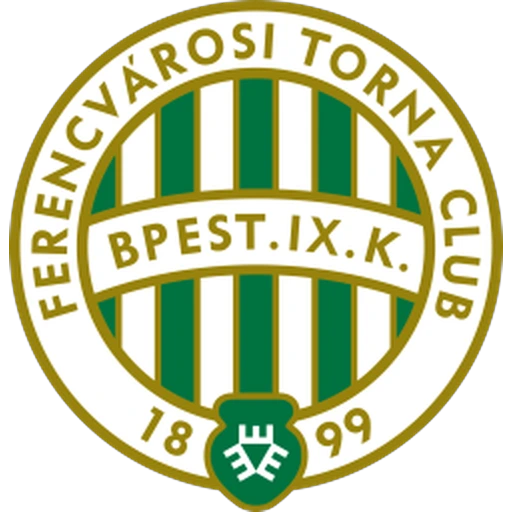
Since 2019, Ferencváros has used a refined version of its traditional crest featuring three gold stars above the badge, each representing ten Hungarian league championships. The emblem retains the iconic green-and-white stripes, the club's full name, the founding year 1899, and the three green "E"s symbolising Morality, Strength, and Unity. A gold-outlined version is used as the club's primary crest, while a simpler green-and-white version also appears on certain kits and official materials.
Ferencvárosi TC Club History
Ferencvárosi Torna Club (Ferencvárosi TC) was founded on 3 May 1899 in the Ferencváros district, the 9th district of Budapest. Established as a multi-sports club, football quickly became its flagship section. The club adopted the green and white colours, while its famous motto—Erkölcs, Erő, Egyetértés ("Morality, Strength, Unity")—has remained at the heart of its identity ever since. Affectionately known as "Fradi," Ferencváros has grown into Hungary's most successful and most widely supported football club.
Ferencváros quickly became a dominant force in Hungarian football during the early twentieth century, winning numerous national championships before the Second World War. The club established a reputation for attractive, attacking football and became one of the founding pillars of professional football in Hungary, producing many of the country's finest players.
Following the Second World War, the club endured a turbulent period under Hungary's communist regime. Between 1950 and 1956, Ferencváros was forced to change its name several times, first becoming ÉDOSZ, and later Kinizsi SE, while its traditional green colours and historic crest were temporarily abandoned. Following the Hungarian Revolution of 1956, the club regained its historic name, colours, and identity, much to the delight of its supporters.
Ferencváros enjoyed one of the greatest periods in its history during the 1960s. In 1965, the club won the Inter-Cities Fairs Cup, defeating Juventus 1–0 in the final in Turin. The victory remains the greatest international achievement by a Hungarian club, making Ferencváros the only Hungarian team to win a major European club competition. The club also reached the Inter-Cities Fairs Cup Final again in 1968, further enhancing its continental reputation.
Throughout the following decades, Ferencváros remained one of Hungary's leading clubs, regularly winning Nemzeti Bajnokság I championships and Magyar Kupa titles while consistently representing Hungary in European competitions. The club became renowned for producing outstanding Hungarian internationals, including legends such as Flórián Albert, the only Hungarian footballer to win the Ballon d'Or after the era of Ferenc Puskás. Albert remains one of the greatest players in the club's history, and the club's stadium was later named in his honour before the construction of the modern Groupama Aréna.
The club experienced financial difficulties during the early 2000s, culminating in relegation to Hungary's second division in 2006 due to licensing and financial issues rather than sporting performance. Ferencváros responded by rebuilding the club's finances and infrastructure, returning to the top flight in 2009 and laying the foundations for a new era of success.
Since the 2010s, Ferencváros has dominated Hungarian football. The club has won numerous NB I championships, regularly completing league and cup doubles, and has become a consistent participant in UEFA competitions. In 2020, Ferencváros qualified for the UEFA Champions League group stage for the first time in 25 years after eliminating Celtic, Dinamo Zagreb, and Molde. The club returned to European prominence again by reaching the UEFA Europa League knockout stages in 2022–23, confirming its status as Central Europe's leading club in the modern era.
Ferencváros' greatest rivalry is with Újpest FC in the Eternal Derby, the oldest and most famous rivalry in Hungarian football. Fierce matches against MTK Budapest, Honvéd, Debreceni VSC, and Fehérvár FC are also among the highlights of every season.