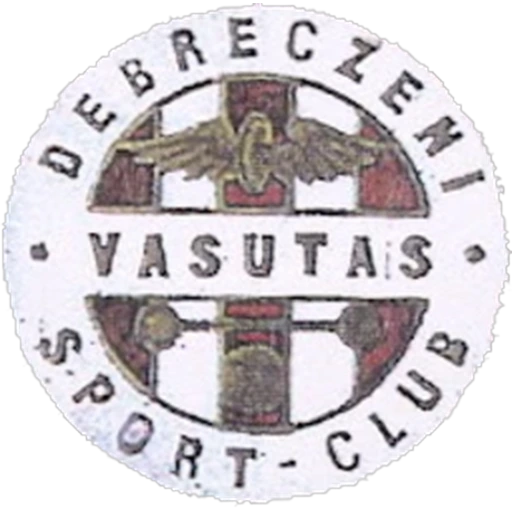
From 1912 to 1948, Debreceni VSC used its first known crest, a circular black-and-white badge displaying the words Debreczeni Vasutas Sport-Club around the outer ring. At the centre appeared a winged railway wheel, the traditional symbol of European railway organisations, representing the club's origins as the sports club of railway workers. The simple design reflected both the club's identity and its close association with Hungary's railway network.
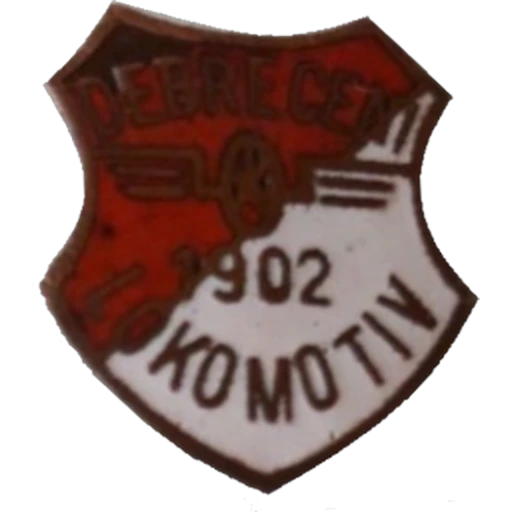
Between 1949 and 1955, the club adopted a shield-shaped crest during a period of post-war reorganisation. The badge featured the name Debreceni Lokomotív, reflecting the club's official name at the time, together with the founding year 1902. The winged railway emblem remained incorporated into the design, maintaining the connection to the club's railway heritage while introducing the red-and-white colours that would later become synonymous with Debreceni VSC.
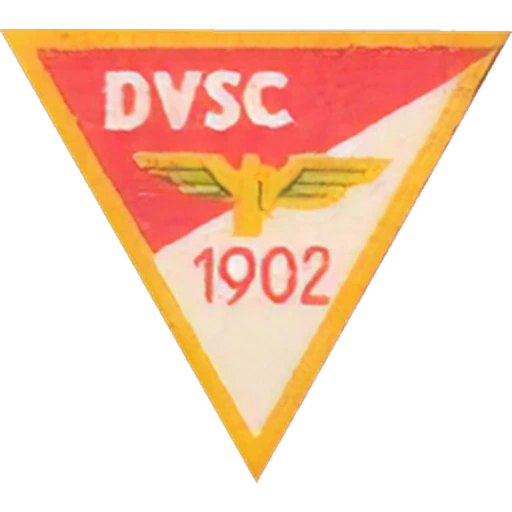
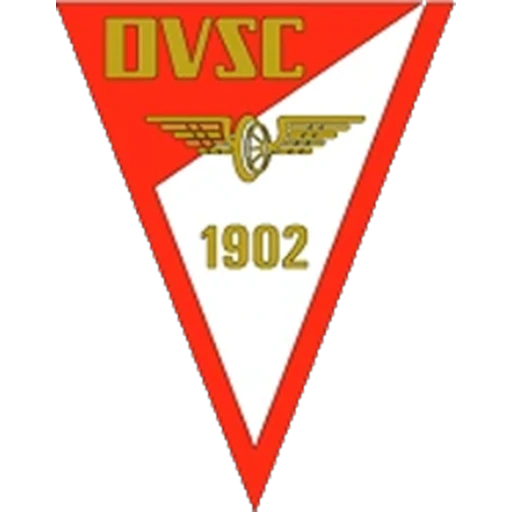
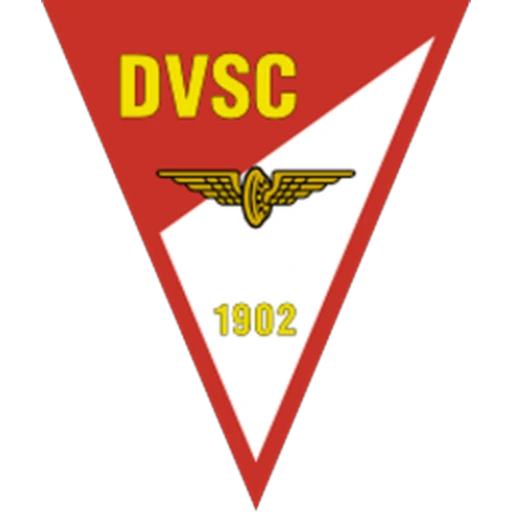
From 1957 to 1960, the crest changed to a triangular badge, a style that would become closely associated with the club. The red-and-white triangle displayed DVSC at the top, the winged railway wheel in the centre, and 1902 at the bottom. The minimalist design reflected the club's traditional colours while emphasising its railway roots.
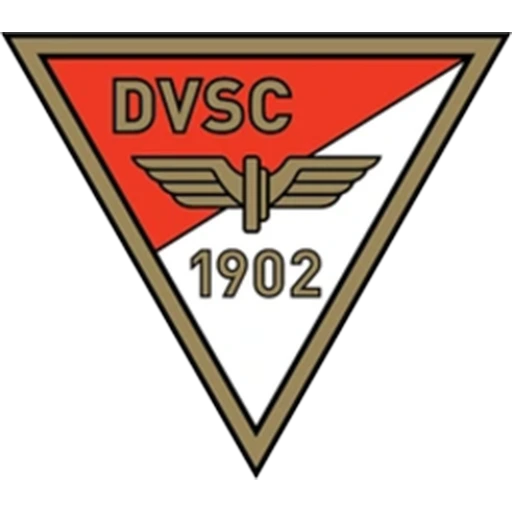
Between 1960 and 1979, the triangular badge was refined with darker outlines and cleaner typography. The winged railway emblem remained the central feature, reinforcing the club's identity as one of Hungary's leading railway sports clubs. This version accompanied Debrecen through an important period of consolidation in Hungarian football.
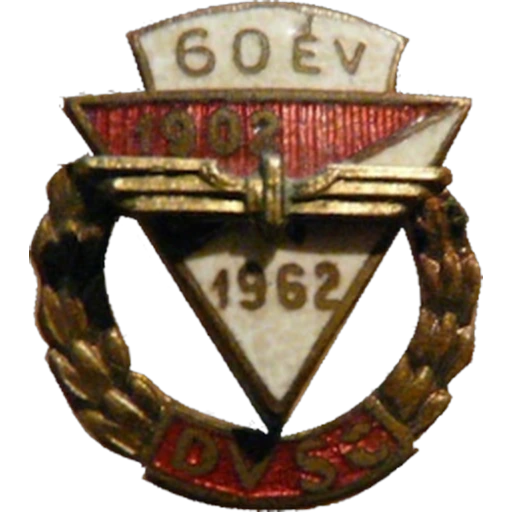
In 1962, the club celebrated its 60th anniversary with a special commemorative badge. The emblem retained the triangular DVSC crest at its centre but surrounded it with a laurel wreath, symbolising sporting achievement and the club's six decades of history. This anniversary emblem was used only during the celebrations.
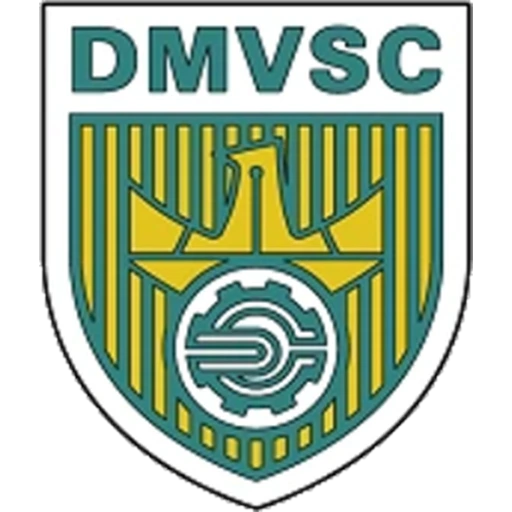
From 1979 to 1985, following the club's merger and temporary name change to DMVSC, a completely new crest was introduced. The badge took the form of a green-and-yellow shield featuring stylised vertical stripes, the winged railway wheel, and the initials DMVSC across the top. The redesign reflected the club's new identity while preserving its historic railway symbolism.
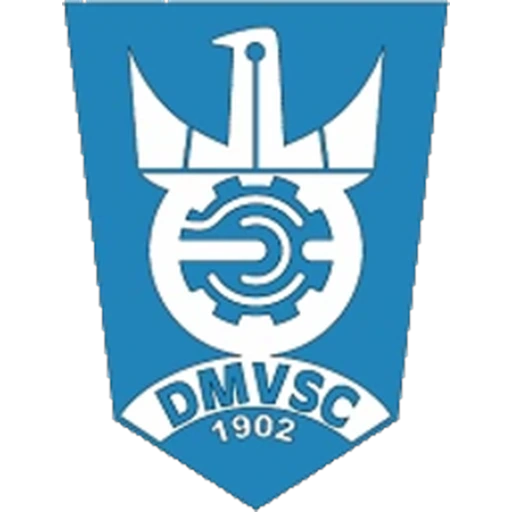
Between 1985 and 1989, another redesign introduced a blue shield featuring a large white bird above the familiar railway wheel. The initials DMVSC and the founding year 1902 appeared at the bottom. This modern design departed from the club's traditional red-and-white colours but retained references to its railway heritage.
In 1989, after returning to the name DVSC, the club revived the classic red-and-white triangular crest. The winged railway wheel once again occupied the centre, with DVSC above and 1902 below. This marked a return to the club's traditional visual identity after a decade of experimentation.
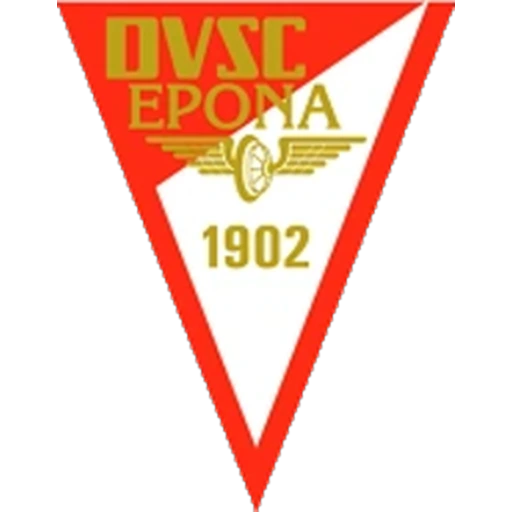
From 1995 to 1999, the badge was modified to display the sponsor name DVSC Epona across the upper section. While the club's name temporarily changed for sponsorship reasons, the triangular shape, railway emblem, and founding year remained unchanged, ensuring continuity with previous designs.
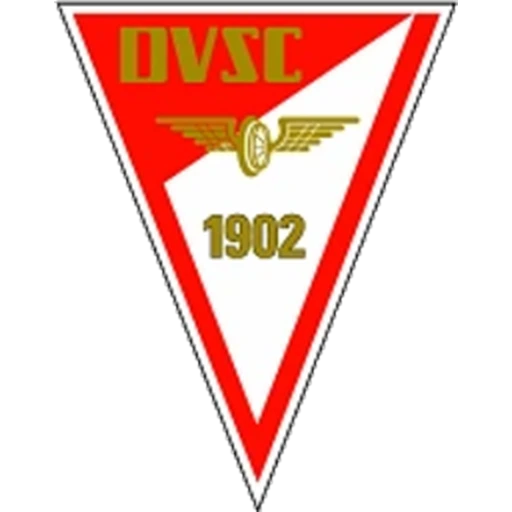
Between 1999 and 2002, the sponsor's name was removed and the club returned to the standard DVSC wordmark. Minor refinements to the outline and typography modernised the crest while preserving its traditional appearance.
From 2002 to 2016, the triangular badge received another graphical update with cleaner lines and a simplified winged railway emblem. This version became strongly associated with the most successful era in the club's history, during which Debreceni VSC dominated Hungarian football and enjoyed memorable appearances in European competitions.
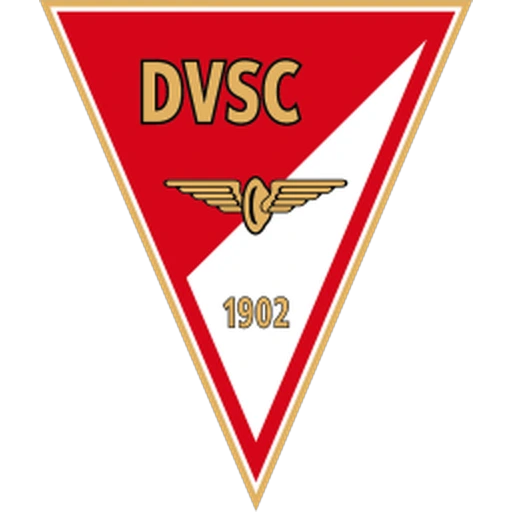
Since 2016, Debreceni VSC has used a refined version of the classic triangular crest. The badge retains the familiar red-and-white triangle, DVSC lettering, the winged railway wheel, and the founding year 1902, with a gold outline added to give the emblem a more modern and prestigious appearance.
Debreceni VSC Club History
Debreceni VSC (Debreceni Vasutas Sport Club) was founded on 12 March 1902 in Debrecen, Hungary, as the football club of the city's railway workers. The word "Vasutas" means "Railway", reflecting the club's origins, while its famous nickname "Loki" is derived from Lokomotív, another reference to its railway heritage. Throughout its history, Debreceni VSC has grown from a local workers' club into one of Hungary's most successful football institutions.
For much of the first half of the twentieth century, Debrecen competed in regional leagues before gradually establishing itself in the national championship. The club spent many years moving between Hungary's top two divisions, but by the late twentieth century it had become a regular member of the Nemzeti Bajnokság I (NB I), Hungary's highest league.
The club's golden era began in the early 2000s. Under a period of stability and strong investment, Debreceni VSC won its first Hungarian league title in 2004–05, ending the long dominance of clubs from Budapest. This success marked the beginning of an extraordinary period in which Debrecen established itself as the leading force in Hungarian football.
Between 2005 and 2014, Debreceni VSC won seven Hungarian league championships (2005, 2006, 2007, 2009, 2010, 2012 and 2014), as well as several Magyar Kupa (Hungarian Cup) titles and Hungarian Super Cups. The club became renowned for its attractive attacking football and regularly supplied players to the Hungarian national team. During this era, Debrecen firmly established itself as Hungary's dominant club.
Debrecen also achieved significant success in European competitions. In 2009, the club became the first Hungarian team to reach the UEFA Champions League group stage under the modern format, facing Liverpool, Lyon, and Fiorentina. Although they failed to progress, qualification itself was a landmark achievement for Hungarian football. In 2010, Debrecen reached the UEFA Europa League group stage, competing against PSV Eindhoven, Sampdoria, and Metalist Kharkiv, further enhancing the club's international reputation.
After the departure of many key players, the club experienced a decline during the second half of the 2010s. League titles became harder to win, and in 2020 Debreceni VSC suffered the shock of relegation from NB I for the first time in 27 years. The setback proved short-lived, however, as the club immediately won promotion back to the top division by finishing first in NB II during the 2020–21 season.
Since returning to the top flight, Debreceni VSC has re-established itself as one of Hungary's strongest clubs, regularly competing for places in the upper half of the league and qualification for European competitions. Playing at the modern Nagyerdei Stadion, the club continues to combine experienced players with graduates from its respected youth academy.
Debreceni VSC's biggest rivalry is with Nyíregyháza Spartacus FC in the Eastern Derby, one of Hungary's fiercest regional rivalries.