Skip to Content

Historical Crests Hibernian FC

Name: ​Hibernian FC
Nickname(s): ​Hibs
Founded: 1875
Stadium: Easter Road (Edinburgh)
Capacity: 20,421

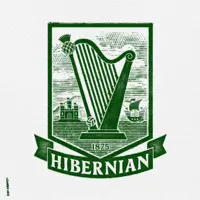
????-1979
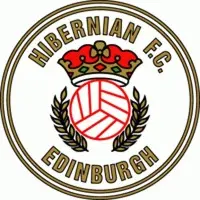
1979
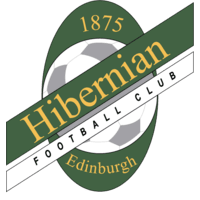
1987-2000
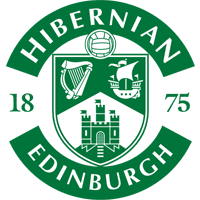
2000-Present

Hibernian FC Crest History
Hibernian Football Club possesses one of the most distinctive crests in Scottish football, reflecting the club’s Irish roots, its connection to Edinburgh and the rich history of the Leith area from which the club emerged. Unlike many clubs that adopted a badge early in their existence, Hibernian spent much of its history without an official crest appearing on its playing shirts.
For more than a century after its foundation in 1875, Hibernian generally played without a badge on its kits. Despite the absence of an official shirt crest, the club used a variety of symbols and emblems in its off-field identity. Among the most common were the harp and shamrocks, reflecting the club’s Irish Catholic origins and the heritage of the Irish immigrant community that founded Hibernian in Edinburgh.
During the twentieth century, a circular badge featuring a thistle and the letters “HFC” became increasingly popular. Variations of this design appeared on club correspondence, match programmes, membership materials and memorabilia. Although it was not consistently worn on playing shirts, it helped establish a recognisable visual identity for supporters.
A major milestone occurred in 1979 when Hibernian introduced the first crest to appear regularly on the team’s kits. The new design featured a football surrounded by a laurel wreath and topped by a crown. Inspired by the style of contemporary European football badges, the crest represented a more modern and professional identity and marked the beginning of regular badge use on Hibernian shirts.
In 1987, the club adopted a completely new and more modern crest. The design featured a large football set within a green oval, crossed by a diagonal banner bearing the word "Hibernian". The club's foundation year, 1875, appeared at the top, while "Edinburgh" was displayed at the bottom.
This badge remained in use throughout one of the club's most recognisable modern eras and became closely associated with Hibernian during the late 1980s and 1990s.
In 2000, Hibernian introduced the crest that remains in use today. The new design returned to the club's historical roots by combining four key symbols: a harp representing the club's Irish origins, Edinburgh Castle representing the Scottish capital, the ship of Leith reflecting the club's birthplace, and a football at the centre. This heraldic-style badge successfully united the club's cultural and geographical heritage in a single emblem.

Hibernian FC Club History
Hibernian Football Club, commonly known as Hibs, was established in 1875 by Edinburgh’s Irish Catholic community. The club was founded through the efforts of Canon Edward Joseph Hannan of St Patrick’s Church in the Cowgate area of Edinburgh and was intended to provide recreation, community and opportunity for Irish immigrants living in the Scottish capital. The club’s name, Hibernian, derives from Hibernia, the Latin name for Ireland, reflecting the strong Irish heritage that remains a defining part of the club’s identity.
Hibernian’s earliest symbol was the harp, a traditional emblem of Ireland, which appeared on the club’s first jerseys. Initially, players wore white shirts adorned with the harp before adopting the famous green and white colours in 1876. Those colours have remained synonymous with Hibernian ever since and continue to reflect the club’s Irish roots.
Hibs quickly became one of the leading clubs in Scottish football. The club was among the founding members of the Scottish Football League in 1890 and played a significant role in the development of the professional game in Scotland. In 1887, Hibernian became the first club from the east of Scotland to win the Scottish Cup, a landmark achievement that established the club as a major force in the national game.
Since 1893, Hibernian has played its home matches at Easter Road, located in the Leith district of Edinburgh. The stadium has been home to generations of Hibs supporters and remains one of the most famous football grounds in Scotland.
One of the greatest periods in the club’s history came during the late 1940s and early 1950s with the legendary “Famous Five” forward line of Gordon Smith, Bobby Johnstone, Lawrie Reilly, Eddie Turnbull and Willie Ormond. Their remarkable attacking football helped Hibernian win the Scottish League Championship in 1948, 1951 and 1952, establishing the club as one of Scotland’s dominant teams of the era.
Hibernian also occupies a unique place in European football history. In 1955, the club became the first British team to participate in the inaugural European Cup. Although they were not Scottish champions at the time, Hibs were invited due to their reputation and the quality of their floodlit facilities at Easter Road.
The club demonstrated its innovative spirit again in 1977, when Hibernian became the first Scottish club to feature commercial sponsorship on their shirts. While controversial at the time, the decision proved groundbreaking and helped pave the way for modern football marketing throughout Scotland and beyond.
Like many historic clubs, Hibernian has faced difficult periods. One of the most significant challenges came in 1990, when the club narrowly avoided bankruptcy following an attempted takeover that threatened its future and even the existence of Easter Road. Through the efforts of supporters, local stakeholders and the wider Hibernian community, the club survived and emerged stronger. This episode remains a powerful example of the resilience and community spirit that define Hibs.
The club has enjoyed success in domestic cup competitions throughout its history, but one of the most emotional moments came in 2016 when Hibernian defeated Rangers 3–2 in the Scottish Cup Final. The dramatic victory ended a 114-year wait to win the Scottish Cup and sparked celebrations among supporters that are still remembered as one of the greatest days in the club’s history.
Hibernian’s fiercest rivalry is with fellow Edinburgh club Heart of Midlothian. Matches between the two sides, known as the Edinburgh Derby, are among the oldest football rivalries in the world and remain one of the highlights of every Scottish football season. The rivalry reflects the history, pride and sporting traditions of Scotland’s capital city.

Hibernian FC Pins

Your Dynamic Snippet will be displayed here... This message is displayed because you did not provide enough options to retrieve its content.