Skip to Content

Historical Crests Girona FC

Name: ​Girona FC
Nickname(s): Los Albirrojos (White and Reds)
Founded: 1930
Stadium: ​Estadio Municipal de Montilivi (Girona)
Capacity: 14,624

1930-1940
1940-1970s
1970s-1980
1980-2008
2008-2012
2012-2017
2017-2022
2022-Present

Girona FC Crest History
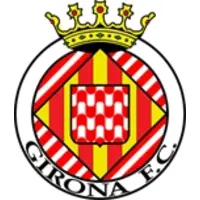
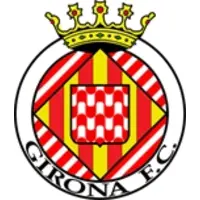
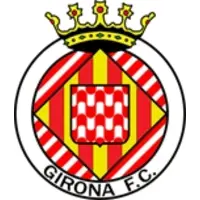
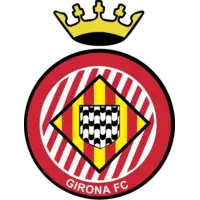
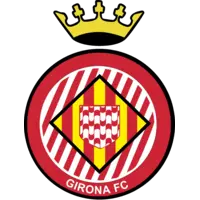
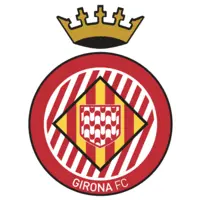
Unlike many clubs whose crests have undergone radical transformations, Girona’s badge has remained remarkably faithful to its original design, preserving key elements that reflect both the city of Girona and the club’s red-and-white identity.
The club's first crest was introduced shortly after its foundation in 1930. From the outset, the emblem incorporated four defining elements that continue to characterize Girona's identity today: the Catalan Senyera, the club's red-and-white stripes, the club name, and the heraldic representation of the city's waters. These features linked the club directly to both Catalonia and the city of Girona.
The centre of the badge featured a shield representing the waters of Girona, a symbol drawn from the city's coat of arms. This motif references the rivers that run through Girona and has remained one of the most distinctive elements of the club's visual identity. Surrounding it were the red-and-white club colours and the Catalan flag, while a princely crown sat above the crest, reflecting its connection to the historic title of the Prince of Girona. 
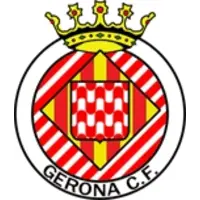
Throughout much of the twentieth century, Girona's crest changed very little. Minor adjustments were made to typography, proportions and the shape of the crown, but the overall composition remained consistent. During the Franco era, the club's name was temporarily Castilianized from Girona FC to "Gerona Club de Fútbol," and this was reflected in some versions of the badge. Following the restoration of Catalan language and identity in Spanish football, the original Catalan name returned to the crest.
A significant chapter in the crest's history began in 2021, when Girona FC launched a consultation process with its members to determine which elements of the badge were most important to preserve. Supporters identified the flag, the red-and-white colours, the club name and the water symbol as the key features of Girona's identity, while the crown received the lowest level of support. 
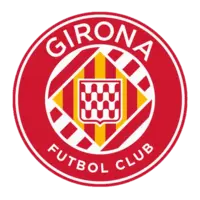
As a result, the club unveiled a completely redesigned crest in 2022. The new emblem removed the crown for the first time in the club's history and placed greater emphasis on the name "Girona," the red-and-white colours, the Senyera and the waters symbol. The redesign was intended to modernize the club's image while strengthening its connection to the city and region. 
The current badge features a cleaner and more symmetrical design, with "Girona" prominently displayed and the historic water motif remaining at its centre. Although more contemporary in appearance, the emblem preserves the elements that supporters identified as essential to the club's identity. 


Girona FC Club History
Girona FC was established to fill the void left by the disappearance of Unió Deportiva Girona, which had folded due to financial difficulties. On 23 July 1930, a group of local football enthusiasts gathered at the Norat Café in Girona and founded a new club that would represent the city for generations to come. Shortly afterward, the city council authorized Girona to use the municipal coat of arms on its badge, reinforcing the club’s connection to the city from its earliest days.
The club enjoyed rapid progress during its formative years. By the mid-1930s, Girona had already reached the Segunda División and came close to securing promotion to the top flight during the 1935–36 season. Although promotion ultimately eluded them, the achievement demonstrated the club’s early potential.
Like many Spanish clubs, Girona’s development was disrupted by the Spanish Civil War. Following the conflict, the club spent decades moving between the second, third and fourth tiers of Spanish football. Despite periods of instability and financial hardship, Girona remained an important sporting institution in Catalonia and maintained a loyal local following.
A major milestone arrived in the late 1960s with the construction of the club’s current home, the Estadi Municipal de Montilivi. Opened in 1970, Montilivi became the first stadium owned by the club and remains the centre of Girona’s football identity today.
The following decades were often difficult. Girona spent much of the 1970s, 1980s and 1990s in Spain’s lower divisions and even endured periods in regional football. Financial struggles threatened the club’s future on multiple occasions, but strong local support ensured its survival.
The modern rise of Girona began in 2008, when the club returned to the Segunda División after nearly fifty years away from Spain’s second tier. This achievement marked the beginning of a new era and laid the foundations for future success. 
After several near misses, Girona achieved the greatest accomplishment in its history in 2017, securing promotion to La Liga for the first time. Remarkably, it took the club 87 years from its foundation to reach Spain’s top division. The achievement transformed Girona from a respected regional club into a national football story. 
A significant turning point came when Girona became part of the City Football Group, the organisation that also owns Manchester City FC. The investment brought greater resources, improved infrastructure and enhanced international visibility while allowing the club to maintain its local identity. 
The club’s most successful period arrived during the early 2020s. Under manager Míchel Sánchez, Girona developed one of the most attractive playing styles in Spanish football and emerged as an unexpected challenger to the country's traditional powers. The club's rise culminated in qualification for European competition and an historic UEFA Champions League debut, achievements that would have seemed unimaginable during its years in the lower divisions. 
Girona’s identity is deeply rooted in Catalonia. The club is affectionately known as Els Blanc-i-vermells (“The White and Reds”) because of its traditional red-and-white colours, and it maintains strong regional rivalries with clubs such as FC Barcelona and RCD Espanyol. Matches against these clubs carry additional significance due to shared Catalan heritage and regional pride.

Girona FC

Your Dynamic Snippet will be displayed here... This message is displayed because you did not provide enough options to retrieve its content.