Historical Crests SV Werder Bremen
Name: SV Werder Bremen
Nickname(s): Die Grün-Weißen (The Green-Whites)
Founded: 1899
Stadium: Weserstadion
Capacity: 42,100

1900-1902
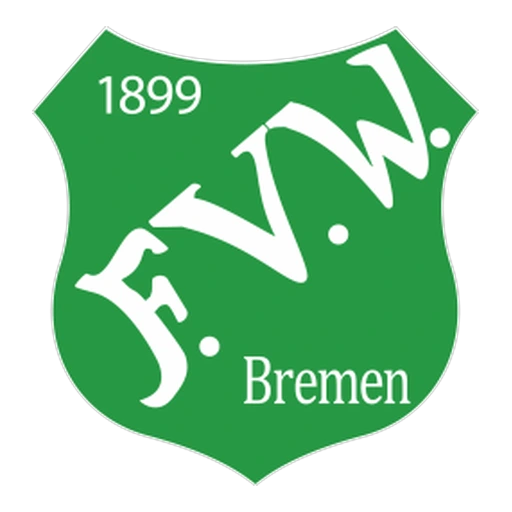
1902-1908
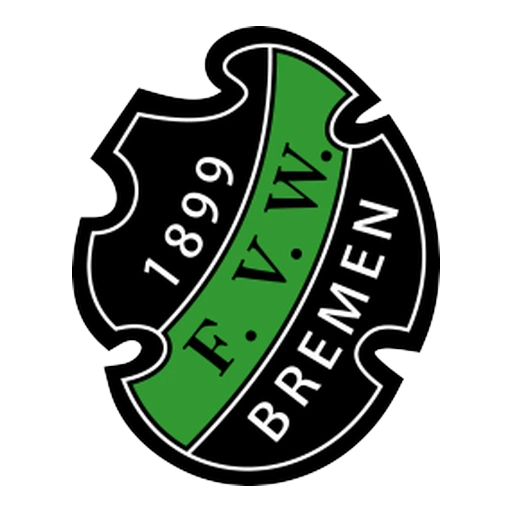
1908-1914
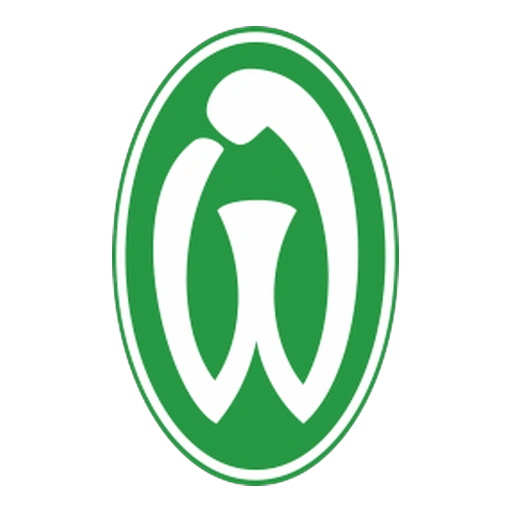
1923-1929
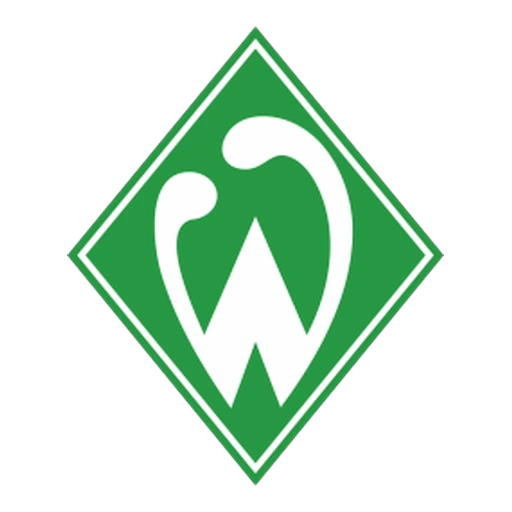
1929-1971
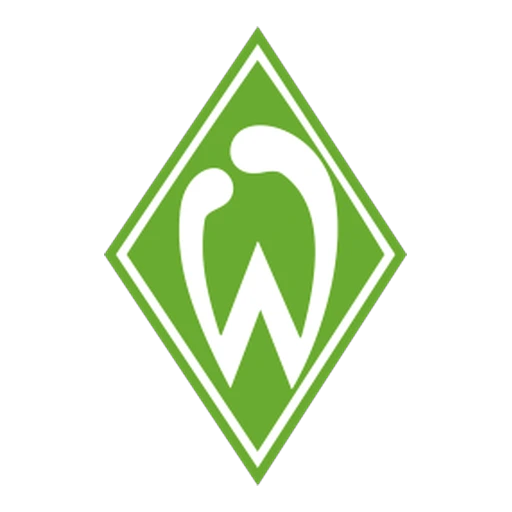
1936
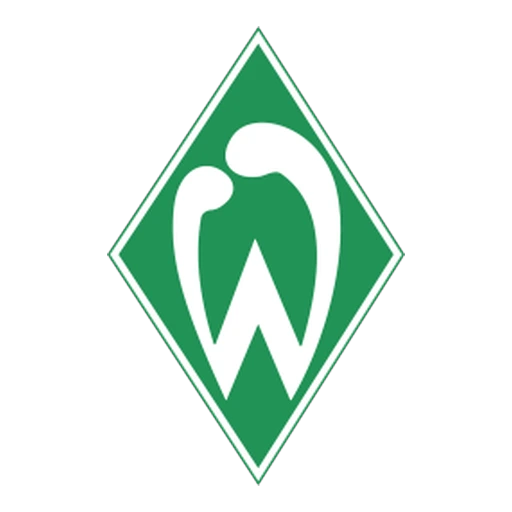
1949
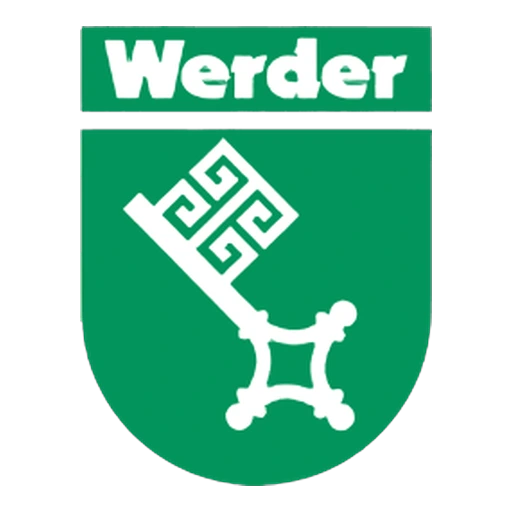
1971-1974
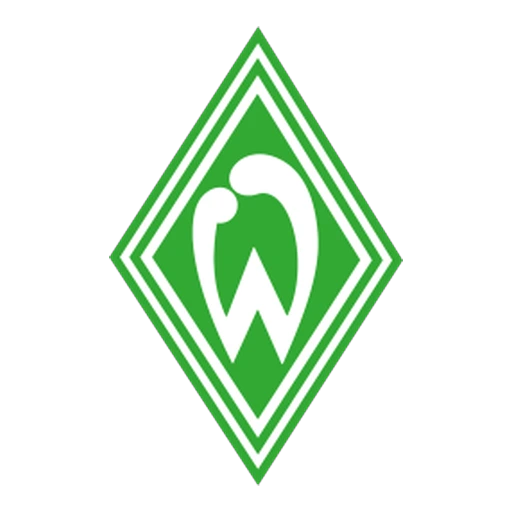
1974-1987
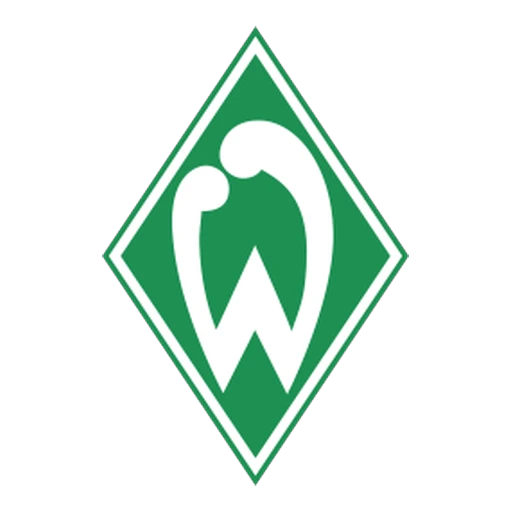
1987-Present
SV Werder Bremen Crest History
Founded in 1899 as FV Werder Bremen, the club's earliest crests reflected the traditional style of German football clubs at the turn of the twentieth century. The first badges consisted of simple monograms and circular emblems displaying the club's initials, placing emphasis on the newly established football association rather than an elaborate visual identity. The name "Werder", referring to the riverside peninsula on which the club was founded, quickly became synonymous with football in Bremen.
Throughout the 1910s and 1920s, Werder Bremen experimented with several shield-shaped and circular designs as the club's identity developed. These early badges featured various combinations of the club's initials and name, while the traditional green and white colours gradually became firmly established as the defining elements of Werder's visual identity. Although the artwork changed on several occasions, the club consistently retained a clean and understated appearance.
Following the Second World War, Werder Bremen refined its visual identity as football resumed across Germany. During the 1950s, the club introduced the now-famous green diamond (Raute) containing a large white "W", replacing the more detailed earlier badges with a simpler and more distinctive design. The diamond quickly became one of the most recognisable symbols in German football and established the foundation of the club's modern identity.
A significant departure from tradition came in 1971, when Werder Bremen introduced a new heraldic shield featuring the historic Bremen Key (Bremer Schlüssel) beneath a bold "Werder" wordmark. Inspired by the city's coat of arms, the design strengthened the club's civic identity and reflected the minimalist graphic style of the early 1970s. Although the badge represented Bremen's Hanseatic heritage, it remained in use for only three years before the club returned to its traditional green diamond in 1974, a symbol that has remained central to Werder Bremen's identity ever since.
The current crest represents a careful evolution of the classic diamond. Minor adjustments to the colours, typography and outlines have enhanced clarity across modern media while preserving one of German football's most iconic emblems.
SV Werder Bremen Club History
Founded on 4 February 1899 as Fußballverein Werder von 1899, SV Werder Bremen was established by a group of students who won a set of footballs in a tug-of-war competition. The club took its name from the Werder, the riverside peninsula in the River Weser where its first matches were played. During the early decades of the twentieth century, Werder established itself as one of northern Germany's leading clubs, winning numerous regional championships and building a strong footballing tradition in the Hanseatic city of Bremen.
Following the introduction of the Bundesliga in 1963, Werder Bremen became one of its sixteen founding members and quickly established itself among Germany's elite. The club claimed its first Bundesliga title in 1964–65, only two years after the league's formation, laying the foundations for decades of success at the highest level of German football.
Werder enjoyed its greatest period of success during the 1980s and early 1990s under legendary manager Otto Rehhagel. During this era, the club won the Bundesliga titles in 1987–88 and 1992–93, lifted the DFB-Pokal in 1991, 1994 and 1999, and achieved European success by winning the 1991–92 European Cup Winners' Cup, defeating AS Monaco in the final. Rehhagel's long tenure transformed Werder into one of Germany's most respected and consistent clubs, earning a reputation for attractive football and outstanding player development.
The club remained highly competitive throughout the 2000s under manager Thomas Schaaf, another Werder legend. The highlight came in 2003–04, when Werder Bremen won both the Bundesliga and the DFB-Pokal, securing the second domestic double in the club's history. The team also became a regular participant in the UEFA Champions League, while players such as Miroslav Klose, Johan Micoud, Diego and Claudio Pizarro helped establish Werder as one of Germany's leading football clubs.
Following this successful period, Werder Bremen experienced more challenging years, narrowly avoiding relegation on several occasions before eventually dropping out of the Bundesliga for the first time in over forty years in 2021. The setback proved short-lived, as the club secured immediate promotion by finishing runners-up in the 2021–22 2. Bundesliga, returning to Germany's top flight after just one season.
Today, SV Werder Bremen remains one of Germany's most successful and best-supported football clubs. Playing at the Weserstadion on the banks of the River Weser, the club continues to enjoy one of the country's most passionate fanbases. Werder's fiercest rivalry is with Hamburger SV in the Nordderby, one of German football's oldest and most prestigious fixtures, while matches against Hannover 96 and regional rivals from northern Germany also carry significant historical importance, reflecting Werder Bremen's enduring status as one of the country's traditional footballing powers.
Werder Bremer Pins
Your Dynamic Snippet will be displayed here... This message is displayed because you did not provide enough options to retrieve its content.