Historical Crests RC Strasbourg Alsace
Name: RC Strasbourg Alsace
Nickname(s): Le Racing (The Racing)
Founded: 1906
Stadium: Stade de la Meinau
Capacity: 27,500
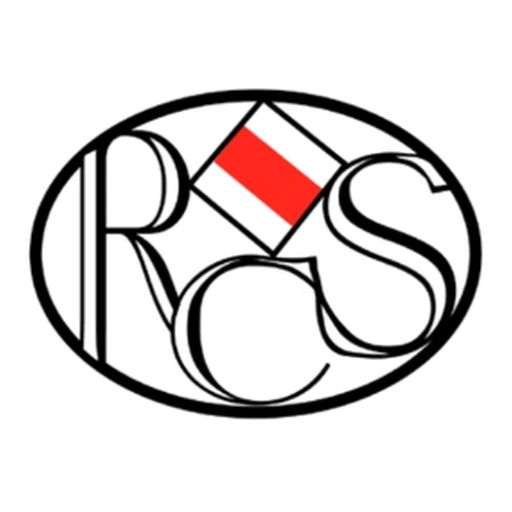
1920-1945
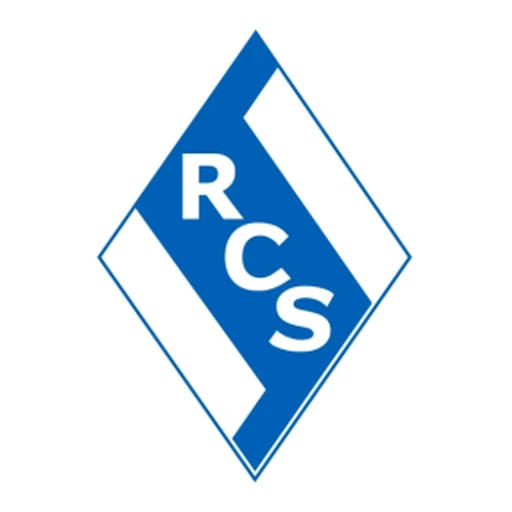
1945-1950
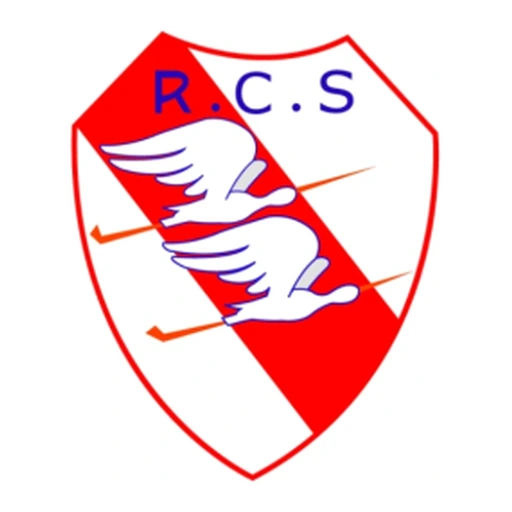
1950-1960
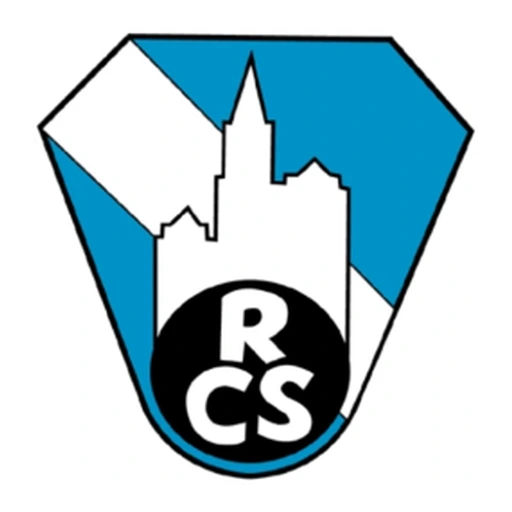
1960-1971
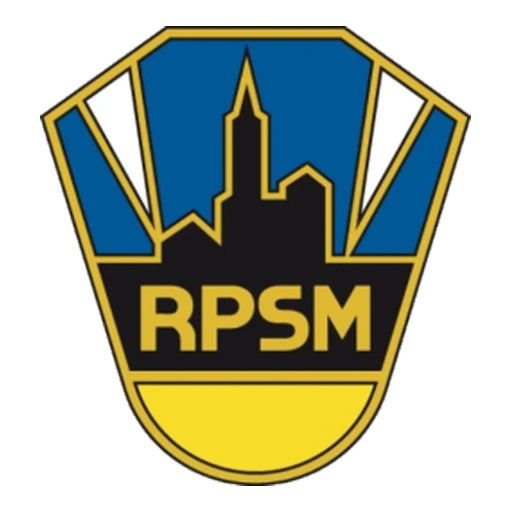
1971-1976
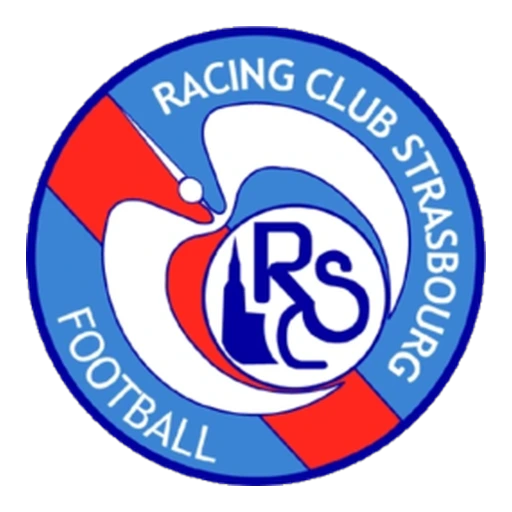
1976-1985
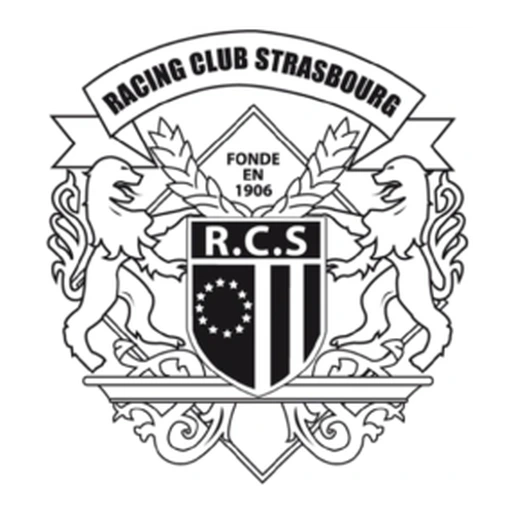
1985-1987
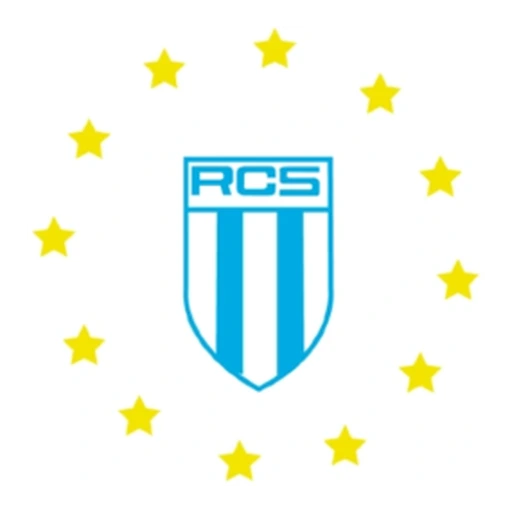
1987-1988
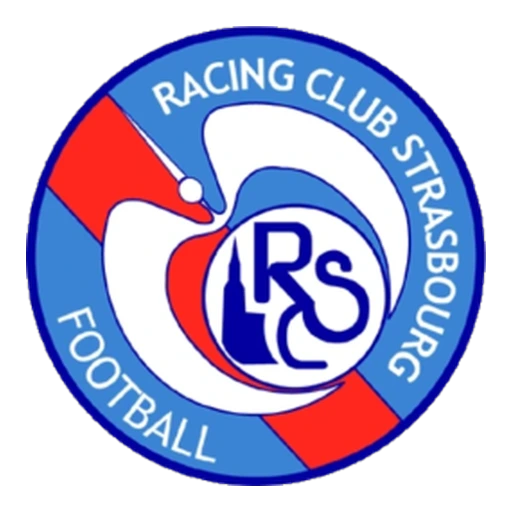
1988-1997
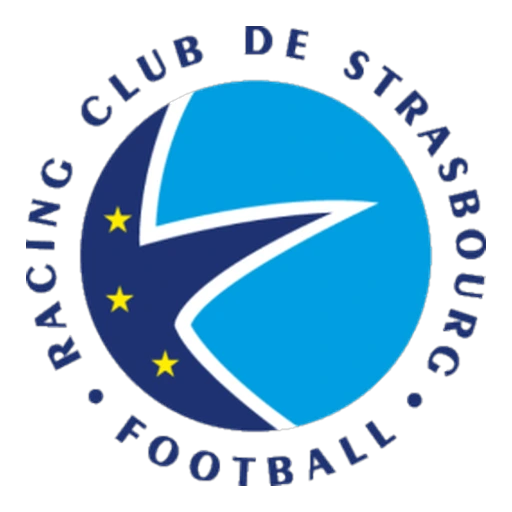
1997-2006
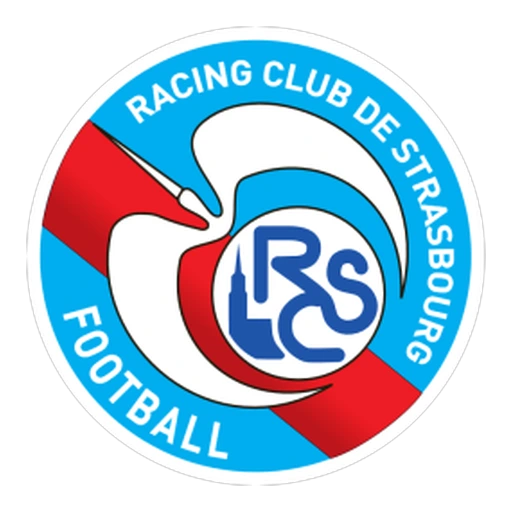
2006-2012
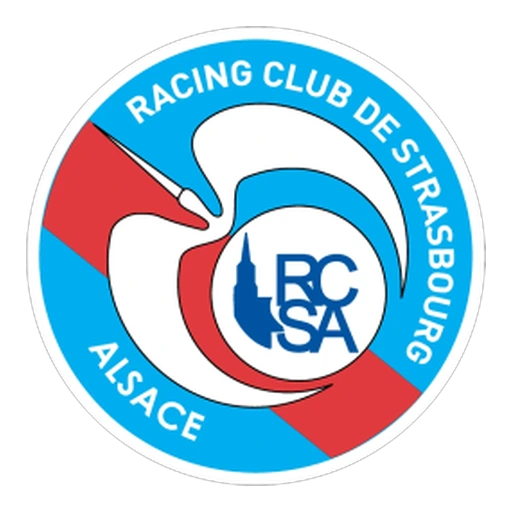
2012-2016
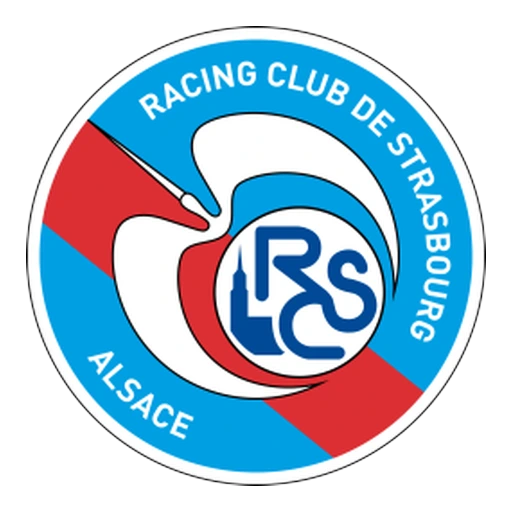
2016-Present
RC Strasbourg Alsace Crest History
The earliest known crest of Racing Club de Strasbourg, used from 1920 to 1945, was a simple oval monogram featuring the intertwined initials RCS. A small red-and-white striped flag, inspired by the historic colours of Strasbourg, appeared at the top of the design. The minimalist badge reflected the club's early years while establishing the initials that would remain a recurring feature throughout its history.
Following the Second World War, 1945 brought a fresh identity in the form of a blue-and-white diamond-shaped crest. The badge displayed the initials RCS in white against a blue diagonal band, creating a cleaner and more modern appearance as the club entered a new era of French football.
Between 1950 and 1960, Racing adopted a traditional shield divided diagonally in red and white. The initials R.C.S. appeared across the top, while three stylised white storks flew across the centre. The stork, the traditional symbol of Alsace, made its first prominent appearance on the club's crest and has remained closely associated with Racing ever since.
In 1960, the club introduced another shield-shaped emblem combining the skyline of Strasbourg Cathedral, the club's initials, and the familiar blue-and-white colours. This redesign strengthened the visual connection between the club and the city of Strasbourg by incorporating one of its most famous landmarks.
From 1971 to 1976, during a period when the club was known as Racing Pierrots Strasbourg Meinau (RPSM), the crest changed completely. The badge adopted a gold-and-blue shield featuring the silhouette of Strasbourg Cathedral above the initials RPSM, reflecting the club's temporary name and organisational restructuring.
The 1976 redesign produced what many supporters still regard as Racing's classic crest. A circular badge combined a large white stork, a red diagonal stripe taken from the city's coat of arms, and the intertwined RCS initials. The words "Racing Club Strasbourg Football" surrounded the emblem, creating a uniquely Alsatian identity that became one of the most recognisable badges in French football.
Between 1985 and 1987, Racing briefly adopted a highly detailed heraldic crest featuring the city's coat of arms, decorative supporters, and the traditional RCS shield at its centre. Although visually impressive, the badge proved short-lived before another redesign followed.
For the 1987–88 season, under club president Daniel Hechter, Racing introduced a minimalist crest consisting of light-blue vertical stripes surrounding the initials RCS, encircled by twelve gold stars representing the European flag and Strasbourg's status as one of Europe's institutional capitals.
The familiar 1976 circular crest returned in 1988 with subtle refinements and remained in use until 1997, becoming closely associated with the club's successes during the late 1980s and early 1990s.
A major rebranding took place in 1997 under president Patrick Proisy. The new badge featured an abstract blue shape intended to represent both a stork and Strasbourg Cathedral. However, supporters criticised the design for being too modern and difficult to interpret, famously nicknaming it "Pac-Man" because of its resemblance to the video game character.
Responding to supporter demand, Racing restored the traditional identity in 2006 by bringing back the 1976 circular crest, with minor graphical refinements. In 2012, following the club's rebirth as Racing Club de Strasbourg Alsace, the inner monogram was updated from RCS to RCSA, and the word "Alsace" was added to emphasise the club's regional identity.
Since 2016, Racing has used a simplified version of this badge. The modern crest retains the iconic white stork, the red diagonal stripe of Strasbourg, and the circular design, while restoring the cleaner RCSA monogram and "Racing Club de Strasbourg Alsace" wording.
RC Strasbourg Alsace Club History
Founded in 1906 as FC Neudorf, Racing Club de Strasbourg began as a team created by young football enthusiasts from the Neudorf district of Strasbourg, then part of the German Empire. The club joined the South German Football Association in 1909 and competed in the regional German leagues. Following the end of the First World War and the return of Alsace to France, the club adopted the name Racing Club de Strasbourg in 1919, inspired by Racing Club de France, and entered the French football system.
RC Strasbourg became a professional club in 1933 and quickly established itself among France's leading teams. The club reached its first Coupe de France Final in 1937, narrowly losing to FC Sochaux, and returned to the final in 1947, again finishing as runners-up. Persistence was rewarded in 1951, when Racing lifted its first major trophy by winning the Coupe de France. The club added further Coupe de France triumphs in 1966 and 2001, while also becoming one of the country's most successful League Cup teams, winning the Coupe de la Ligue in 1964, 1997, 2005, and 2019.
The greatest achievement in the club's history came during the 1978–79 season. Under legendary coach Gilbert Gress, Strasbourg won its first and only French Division 1 championship, finishing ahead of Nantes and Saint-Étienne. Built around players such as Léonard Specht, Albert Gemmrich, René Deutschmann, and Dominique Dropsy, the title-winning side became one of the most celebrated teams in French football history and secured Strasbourg's place among the country's elite clubs.
Throughout the following decades, Racing enjoyed memorable European campaigns and domestic cup successes but also endured periods of instability. Financial problems culminated in 2011, when the club was placed into judicial liquidation and administratively relegated to the fifth tier (CFA 2). Rather than disappearing, Strasbourg rebuilt under president Marc Keller, winning consecutive promotions from CFA 2 to the Championnat National, then to Ligue 2, before returning to Ligue 1 in 2017 after winning the Ligue 2 title. The remarkable recovery became one of the greatest comeback stories in modern French football.
Back in the top flight, Strasbourg quickly re-established itself as a competitive club. In 2019, Racing defeated Guingamp on penalties to win the Coupe de la Ligue, earning qualification for European competition. A new era began in 2023 when the club was acquired by BlueCo, the consortium that also owns Chelsea FC. Investment in infrastructure and a youthful squad helped Racing continue its progress while remaining rooted in its strong Alsatian identity.
Today, RC Strasbourg Alsace is one of France's most historic clubs, renowned for its passionate supporters, unique Alsatian culture, and the famous atmosphere of the Stade de la Meinau. The club continues to combine ambitious sporting goals with a deep attachment to the city of Strasbourg and the Alsace region.
Strasbourg's principal rivalry is with FC Metz in the Derby de l'Est, one of the oldest and fiercest rivalries in eastern France. Matches against Mulhouse also carry historical significance due to the shared football heritage of Alsace, while encounters with AS Nancy Lorraine have developed into another important regional fixture.
RC Strasbourg Alsace Pin
Your Dynamic Snippet will be displayed here... This message is displayed because you did not provide enough options to retrieve its content.