Historical Crests RC Lens
Name: RC Lens
Nickname(s): Les Sang et Or (The Blood and Golds)
Founded: 1906
Stadium: Stade Bollaert-Delelis
Capacity: 39,223
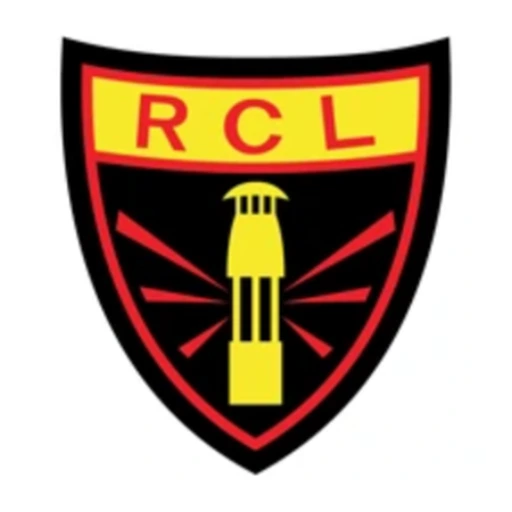
1955-1968
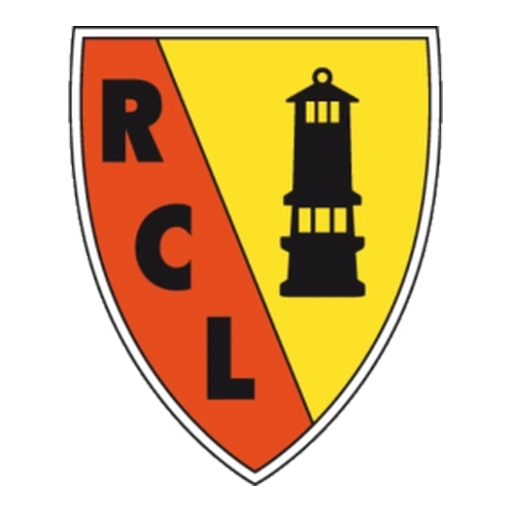
1968-1979
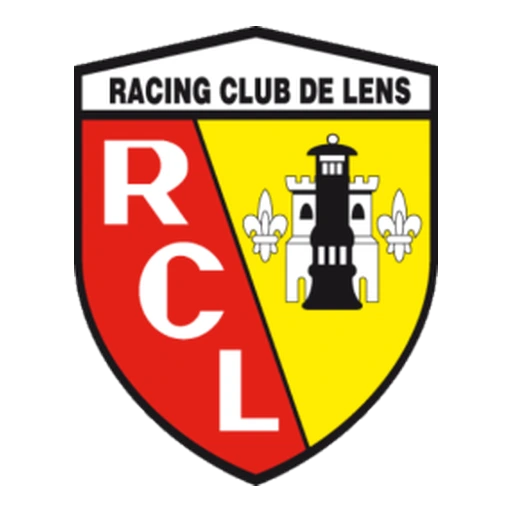
1979-2001
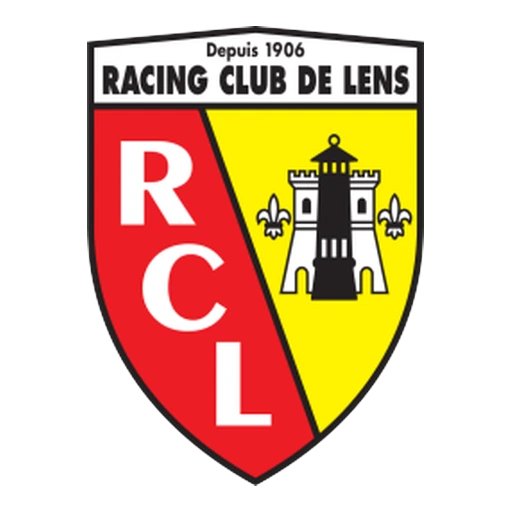
2001-2014
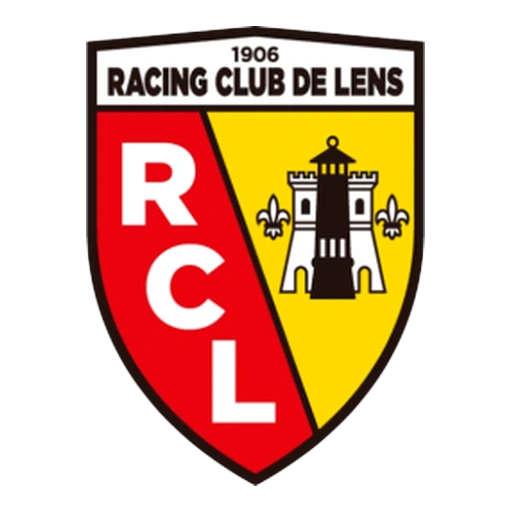
2014-Present
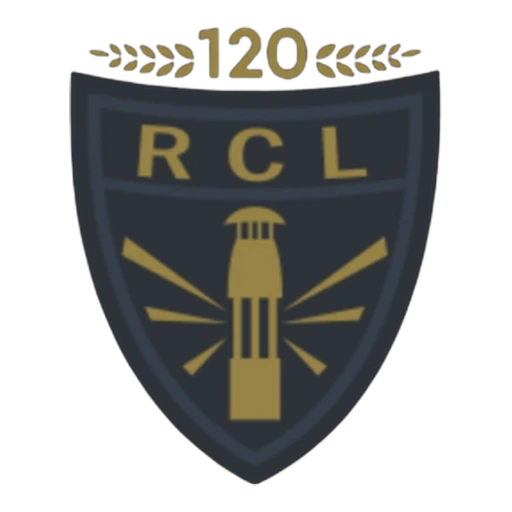
2025-2026
RC Lens Crest History
The first widely used modern crest of RC Lens, introduced in 1955, featured a black shield outlined in red. Across the top, a yellow panel displayed the initials RCL, while the centre showcased the miners' lamp (lampe de mineur), symbolising the region's coal-mining heritage. Red rays radiated behind the lamp, reinforcing the club's identity as the representative of the mining basin of northern France. This badge firmly established the miners' lamp as the club's defining symbol.
In 1968, the club adopted a cleaner and more modern shield divided diagonally into red and yellow, the famous Sang et Or (Blood and Gold) colours. The left half carried the black initials RCL, while the right half displayed a black silhouette of the Lens town hall tower (Tour de l'Hôtel de Ville). The redesign shifted the focus from the mining lamp to one of the city's best-known landmarks while retaining the club's traditional colours.
A major redesign followed in 1979. A white banner bearing "Racing Club de Lens" was added across the top of the shield, while the right half incorporated the town hall tower flanked by two fleurs-de-lis, taken from the coat of arms of the city of Lens. The left half retained the large white RCL initials on a red background. This version became the club's most recognisable badge and accompanied RC Lens through its greatest successes, including the 1997–98 French league title.
In 2001, the crest received only subtle refinements. The overall composition remained unchanged, but "Depuis 1906" ("Since 1906") was added above "Racing Club de Lens", highlighting the club's founding year and strengthening its historical identity. The outlines and typography were also modernised for improved clarity.
The 2014 redesign simplified the badge once again by removing "Depuis 1906", returning the top banner to simply "Racing Club de Lens". The shield, colours, town hall tower, fleurs-de-lis, and diagonal division were retained, with only minor refinements to the typography and proportions. The result was a cleaner, more contemporary version that remains the club's official crest today.
To celebrate the club's 120th anniversary, RC Lens unveiled a special commemorative crest for the 2025–26 season. The traditional red-and-yellow colours were replaced by a dark charcoal and gold palette, while the miners' lamp returned as the central symbol. Above the shield, the number 120 was framed by laurel branches, celebrating 120 years of the club's history. This anniversary badge was designed as a one-season emblem before the club returned to its standard crest.
RC Lens Club History
Founded in 1906 as Racing Club Lensois, RC Lens was established by local students led by Jules Van de Weigh in the mining town of Lens, in the Pas-de-Calais region of northern France. The club originally played in green and black, representing the Place Verte (Green Square), where the team first played, and the region's coal-mining industry. After the First World War, the club resumed activities and, in 1923, adopted its famous red and yellow colours, inspired by the historic Spanish influence in the Artois region.
RC Lens turned professional in 1934 and moved into the newly built Stade Félix-Bollaert (now Stade Bollaert-Delelis) in 1933, a stadium that would become one of French football's most iconic venues. Closely supported by the Lens Mining Company, the club became the sporting symbol of the region's coal miners, earning a reputation for its passionate supporters and strong community identity. Throughout the post-war decades, Lens established itself as a regular fixture in the French top flight while producing several outstanding players, including Stanis Dembicki, Ahmed Oudjani, and Maryan Wisniewski.
The club enjoyed its greatest domestic success during the late 1990s. Under coach Daniel Leclercq, RC Lens won its first and, to date, only French league title in 1997–98, edging FC Metz on goal difference in one of the closest title races in Ligue 1 history. The following season, Lens added the Coupe de la Ligue, defeating FC Metz in the final, and also competed in the UEFA Champions League, famously becoming the first French club to defeat Arsenal at Wembley Stadium.
The 2000s brought both highs and lows. Lens qualified regularly for European competitions but suffered relegations from Ligue 1 in 2008 and 2011. After several seasons in Ligue 2, the club finally returned to the top flight in 2020 under coach Franck Haise, beginning one of the most successful periods in its modern history. Lens finished second in Ligue 1 in 2022–23 with a club-record 84 points, earning direct qualification for the UEFA Champions League and once again establishing itself among France's elite.
The club continued its resurgence in the mid-2020s. Under coach Pierre Sage, RC Lens remained among the leading teams in French football and, in 2026, won the Coupe de France for the first time in its history, defeating OGC Nice in the final. The triumph marked another historic milestone for one of France's most passionately supported clubs and secured qualification for European competition.
RC Lens's greatest rivalry is with LOSC Lille in the Derby du Nord, one of France's oldest and fiercest football rivalries. Matches against Valenciennes FC are also highly significant, while encounters with US Boulogne and other clubs from the Hauts-de-France region carry strong local importance.
Racing Club de Lens Pin
Your Dynamic Snippet will be displayed here... This message is displayed because you did not provide enough options to retrieve its content.