Historical Crests Olympique Lyonnais
Name: Olympique Lyonnais
Nickname(s): Les Gones (The Kids / The Local Boys)
Founded: 1950
Stadium: Groupama Stadium
Capacity: 59,186
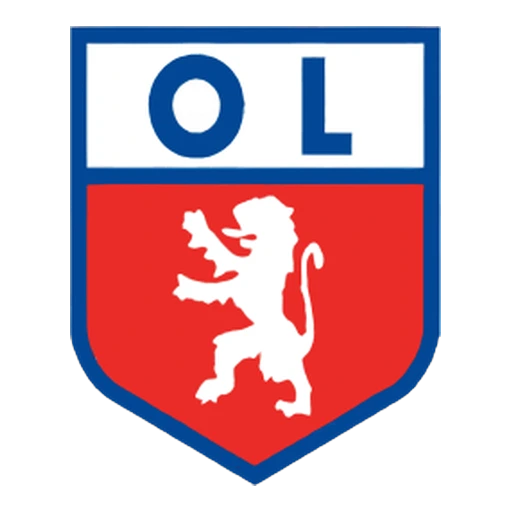
1950-1957
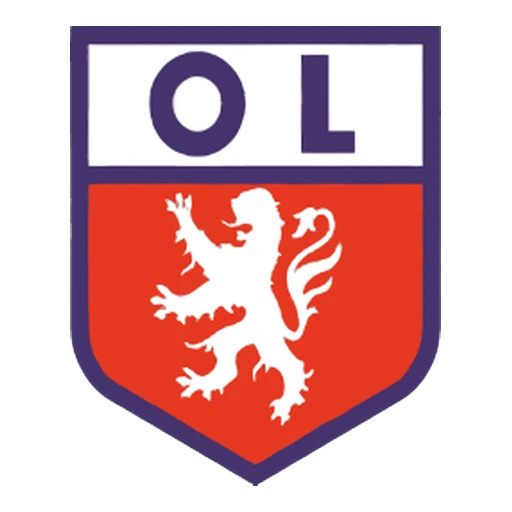
1957-1965
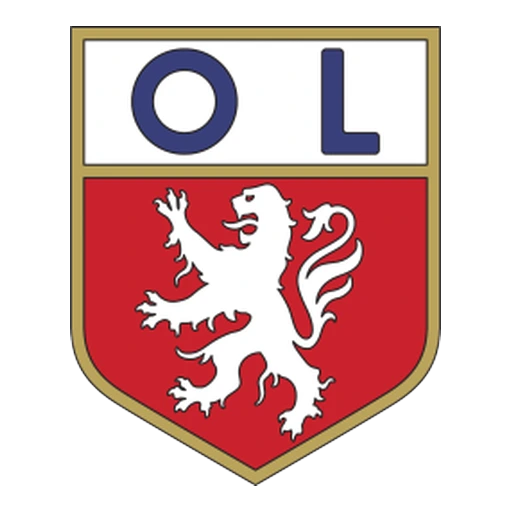
1965-1974
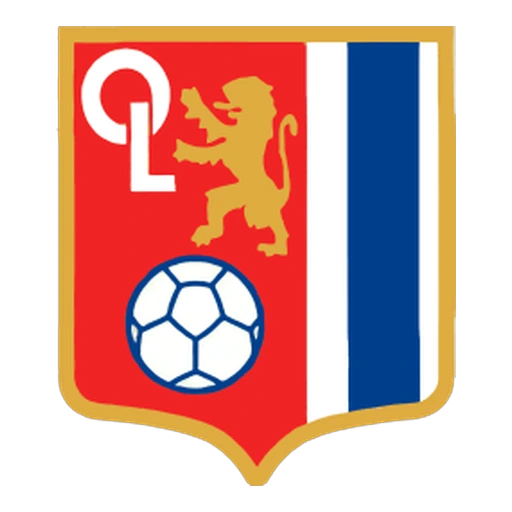
1974-1976
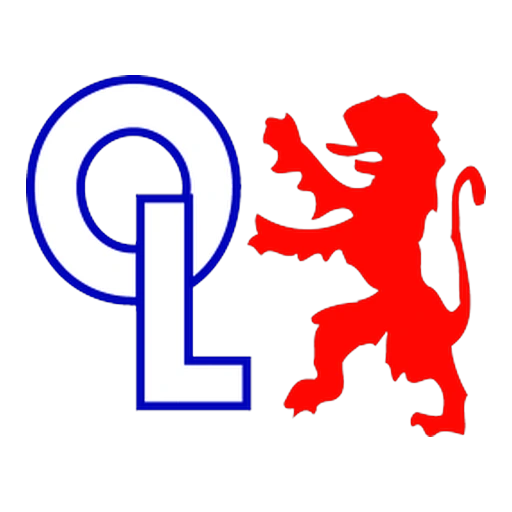
1976-1977
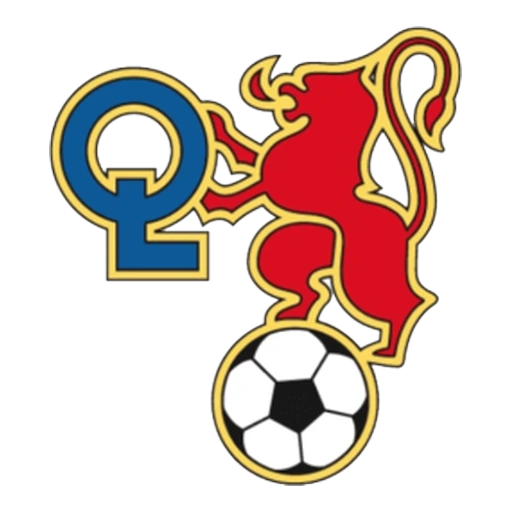
1977-1980
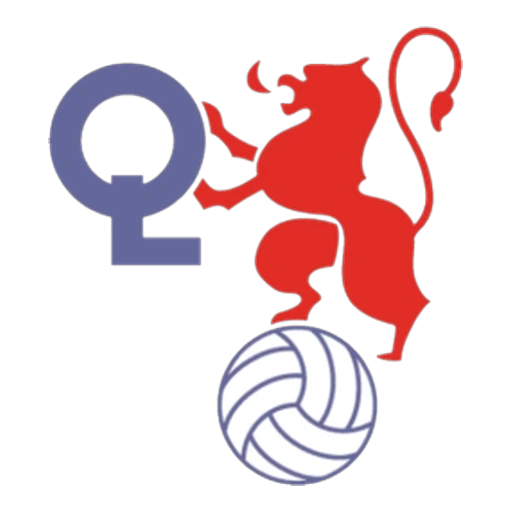
1980-1989
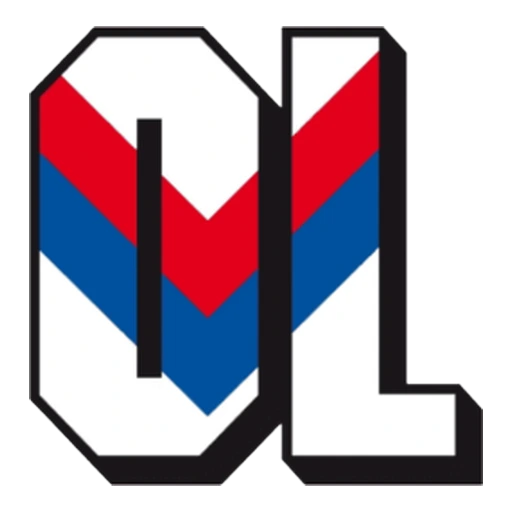
1989-1996
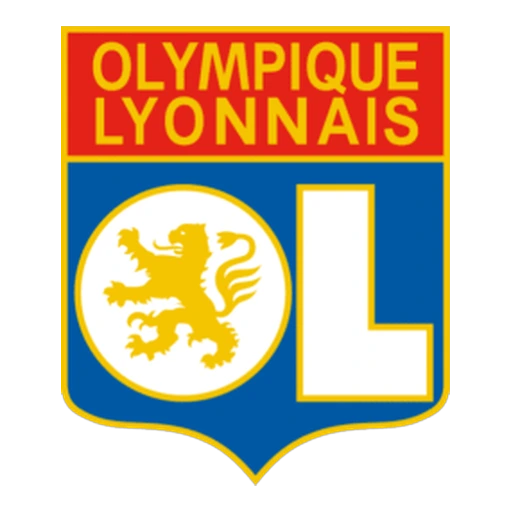
1996-2000
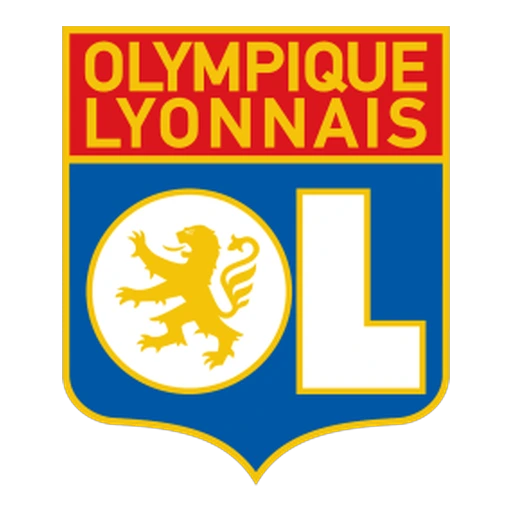
2000-2006
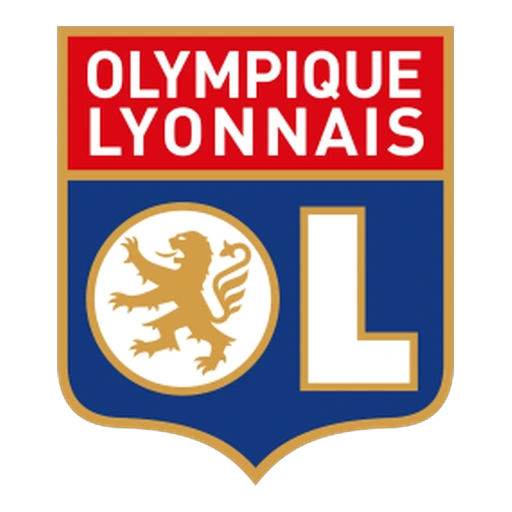
2006-2022
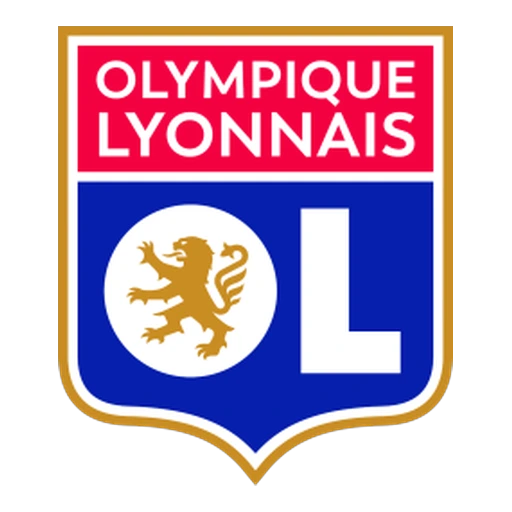
2022-Present
Olympique Lyonnais Crest History
The first crest of Olympique Lyonnais, introduced in 1950, was directly inspired by the coat of arms of the city of Lyon. It featured a blue upper section displaying the initials OL, while the lower red half contained the city's iconic white lion. The simple shield established the club's identity by combining Lyon's civic emblem with the new club's initials, a tradition that would continue throughout its history.
In 1957, the shield was subtly modernised. The overall design remained unchanged, but the border became darker and the proportions were refined, giving the badge a stronger and more polished appearance while retaining the familiar OL initials and the white lion.
A further refinement arrived in 1965. The shield received a gold outline and the lion was redrawn with greater detail, creating a more elegant heraldic emblem. Although the changes were modest, the badge reflected the club's growing ambitions while preserving its close connection to the city of Lyon.
In 1974, Olympique Lyonnais introduced a completely redesigned crest. The initials OL were intertwined in the upper left corner, while a gold lion and a football occupied the centre. A bold vertical blue-white-red stripe on the right referenced the French national colours, giving the badge a more dynamic and modern appearance.
During 1976, the club briefly experimented with a minimalist identity. The crest consisted only of a large interlocking OL monogram alongside a separate red lion, removing the traditional shield entirely. This short-lived design reflected the graphic trends of the 1970s and placed greater emphasis on the club's initials and civic symbol.
Between 1977 and 1980, the lion and intertwined OL initials were brought together into a single emblem. A football beneath the lion reinforced the sporting identity, while the gold outlines added greater visual impact. The badge maintained the modern approach introduced a few years earlier while becoming more cohesive.
A simplified version followed in 1980. The overall composition remained similar, but the football was redrawn with curved panel lines and the colours became softer, creating a cleaner and more balanced design before another major change at the end of the decade.
In 1989, after the arrival of president Jean-Michel Aulas, the club adopted a bold typographic logo. The lion disappeared entirely, replaced by oversized OL initials incorporating red and blue chevrons inspired by the French flag. The modern corporate design reflected the club's new ambitions and remained in use throughout the early 1990s.
A return to the traditional shield came in 1996. The badge featured a red header carrying the words Olympique Lyonnais, while the lower blue section displayed a large gold lion inside the O and a prominent L beside it. The design successfully combined the club's historic heraldic identity with a contemporary layout and soon became one of the most recognisable crests in French football.
The crest was subtly updated in 2000, with refinements to the typography and colours while retaining the overall design. In 2006, another small adjustment introduced white lettering in the red header instead of gold, improving readability and giving the badge a cleaner appearance. These changes accompanied the club's most successful period, during which Olympique Lyonnais dominated French football.
Since 2022, Olympique Lyonnais has used a modernised version of the same crest. The proportions have been simplified, the colours brightened, and a fine white border added between the blue and gold outlines, while the lion and overall shield remain unchanged. The current badge respects the club's historic identity while adapting it to contemporary design standards.
Olympique Lyonnais Club History
Founded on 3 August 1950, Olympique Lyonnais (OL) was created following a split from Lyon Olympique Universitaire (LOU), whose football section had experienced disagreements over the future of professional football in the city. Led by Félix Louot and Dr. Albert Trillat, the newly formed club quickly established itself, winning the Division 2 title in its inaugural season and earning promotion to France's top flight. OL played its home matches at the historic Stade de Gerland, which remained the club's home for more than sixty years.
Lyon enjoyed its first successful period during the 1960s and early 1970s, winning the Coupe de France in 1964, 1967, and 1973. The club also made its first appearances in European competition, establishing itself as a respected side in French football. Legendary players such as Fleury Di Nallo, Serge Chiesa, and Aimé Mignot became synonymous with this era and helped lay the foundations for the club's future success.
Following a period of decline, Olympique Lyonnais reached a turning point in 1987 when businessman Jean-Michel Aulas became president. At the time, the club was playing in Division 2, but Aulas introduced an ambitious long-term strategy centred on financial stability, youth development, and European qualification. Lyon returned to Division 1 in 1989 and steadily developed into one of the strongest clubs in France, with the emergence of talented players from its academy and smart recruitment.
The club entered the most successful period in its history in 2002, winning its first-ever Ligue 1 title under Jacques Santini. That triumph marked the beginning of an unprecedented run of seven consecutive French league championships between 2002 and 2008, a national record. During this golden era, Lyon also won numerous Trophées des Champions and Coupe de France titles while becoming a regular participant in the UEFA Champions League. Players such as Juninho Pernambucano, Sonny Anderson, Grégory Coupet, Michael Essien, Florent Malouda, Éric Abidal, Sidney Govou, and Karim Benzema helped establish OL as one of Europe's leading clubs.
Olympique Lyonnais has also earned worldwide recognition for its exceptional youth academy, which has produced international stars including Karim Benzema, Alexandre Lacazette, Samuel Umtiti, Corentin Tolisso, Anthony Martial, Nabil Fekir, and Hatem Ben Arfa.
Olympique Lyonnais' principal rivalry is with AS Saint-Étienne in the Derby Rhône-Alpes (Derby du Rhône), widely regarded as one of the fiercest rivalries in French football. Matches against Olympique de Marseille have also developed into major contests, particularly since Lyon's rise to prominence in the early 2000s.
Our latest content
Check out what's new in our company !
Your Dynamic Snippet will be displayed here... This message is displayed because you did not provide enough options to retrieve its content.