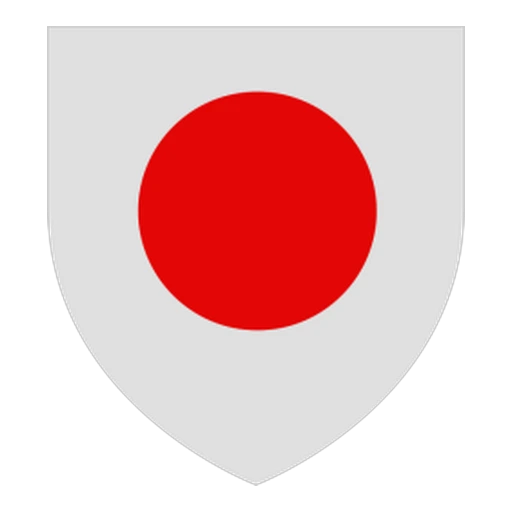
The earliest emblem associated with football in Montpellier, used by Stade Olympique Montpelliérain between 1919 and 1923, was a simple silver shield bearing a large red disc at its centre. Inspired by Japanese symbolism, the minimalist design reflected the sporting aesthetics of the time and served as the club's first recognised football emblem.
In 1923, the club adopted a distinctive monogram formed by the intertwined initials SOM. Rendered entirely in red within a circular outline, the badge abandoned heraldic symbolism in favour of an elegant typographic identity that represented Stade Olympique Montpelliérain.
A simplified version followed in 1931, reducing the monogram to the initials SOM inside a red diamond-shaped outline. The cleaner, more geometric design remained in use for almost two decades and reflected the increasingly modern graphic style of the interwar period.
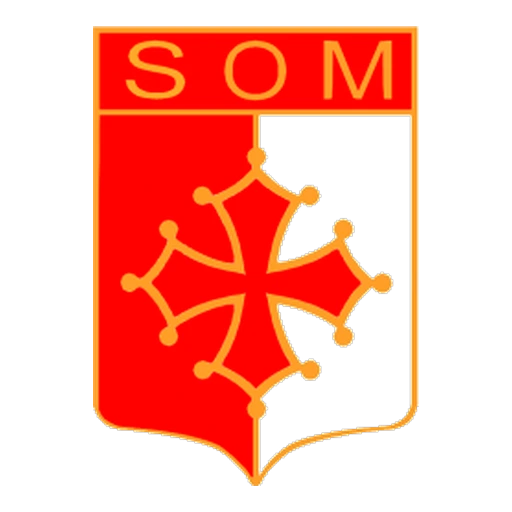
In 1950, the crest returned to a heraldic shield. The initials SOM appeared at the top, while the lower section displayed the Cross of Occitania, one of the most recognisable symbols of the Languedoc region. This redesign strengthened the club's regional identity by connecting it more closely with southern France and remained in use until the club's transformation in 1974.
Following the creation of Montpellier La Paillade Sport Club Littoral in 1974, a completely new circular crest was introduced. The badge featured the words "Paillade SC Littoral" surrounding a football and adopted a striking sky blue and red colour scheme. The design reflected the club's new identity centred on the La Paillade district of Montpellier.
In 1975, after another name change, the crest became Montpellier Paillade SC. The circular badge retained the football at its centre while the club's full name encircled the design. Red and white became the dominant colours, creating a cleaner and more balanced identity that remained largely unchanged throughout the late 1970s.
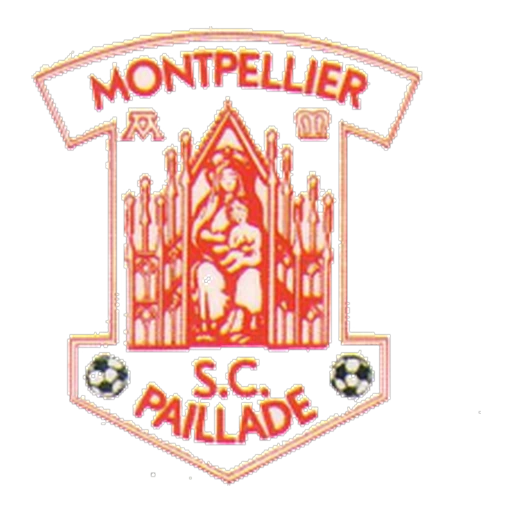
A short-lived redesign appeared in 1982, replacing the circular badge with a stylised crest resembling the outline of the Porte du Peyrou, one of Montpellier's best-known landmarks. The architectural design reinforced the connection between the club and its home city, although it remained in use for only a single season.
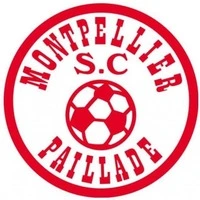
The club returned to a refined version of its previous circular crest in 1983, once again placing the football at the centre and surrounding it with the words Montpellier SC Paillade. This redesign restored continuity with the identity supporters had come to recognise during the previous decade.
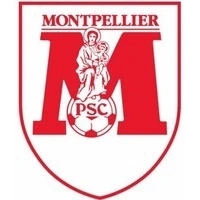
In 1987, the club adopted a bold shield dominated by a large red letter "M", representing Montpellier. Inside the letter stood the figure of Saint Roch, the city's patron saint, while a football completed the composition at the base. The badge symbolised both the city's heritage and the club's growing ambitions.
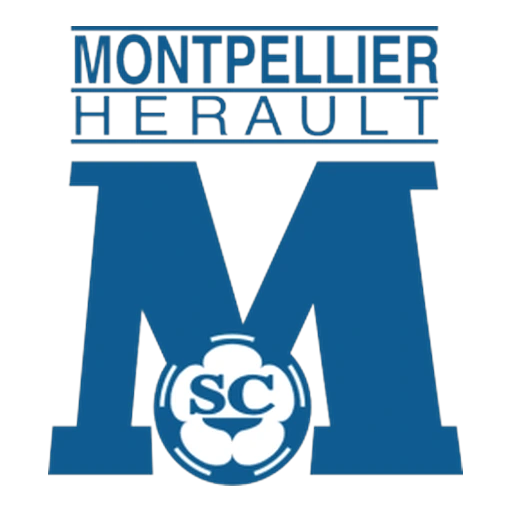
A major rebranding arrived in 1989 with the creation of Montpellier Hérault Sport Club. The crest featured a large blue "M" incorporating a football and the initials SC, presenting a much cleaner and more modern visual identity. This design marked the beginning of the club's familiar blue-and-orange era.
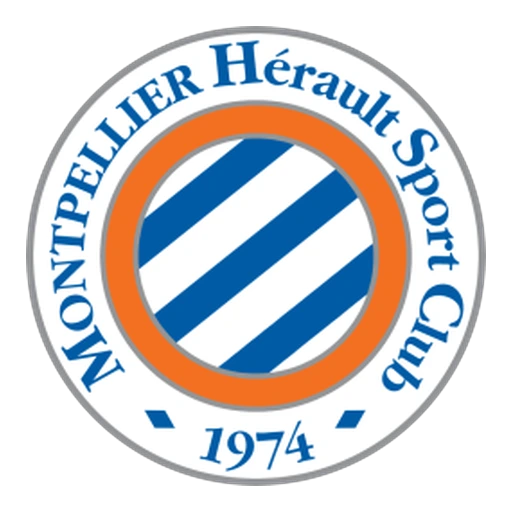
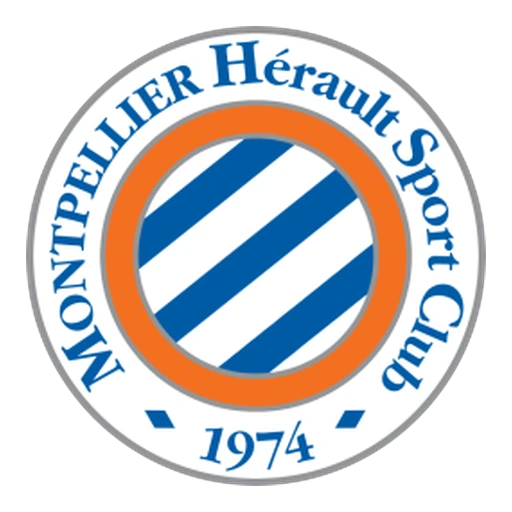
In 2000, Montpellier introduced the emblem that became synonymous with the club for almost a quarter of a century. The circular badge featured the club's name surrounding blue diagonal stripes, inspired by the historic colours of Olympique Lillois? Actually, the stripes referenced the traditional identity adopted by MHSC and created a unique, instantly recognisable visual signature. An orange ring completed the design, giving the crest its characteristic modern appearance.
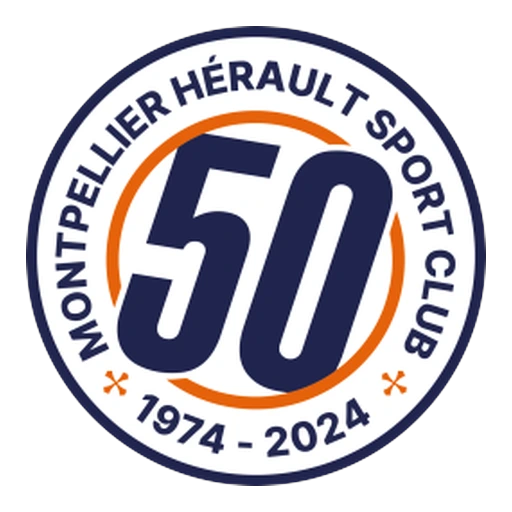
To celebrate the club's 50th anniversary, a special commemorative crest was used during the 2024–25 season. The badge retained the familiar circular layout while replacing the central stripes with a large 50, accompanied by the years 1974–2024, honouring fifty years since the creation of the modern Montpellier HSC.
Since 2025, Montpellier HSC has returned to its traditional circular crest. The design is almost identical to the version introduced in 2000, with the iconic blue diagonal stripes, orange outer ring, and the club's full name surrounding the emblem.
Montpellier HSC Club History
Founded in 1974, Montpellier Hérault Sport Club (MHSC) was created through the merger of Stade Olympique Montpelliérain and AS Paillade, continuing a football tradition in Montpellier that dates back to 1919. The club adopted the identity of the La Paillade district, where it established its home, and came under the leadership of businessman Louis Nicollin, whose long-term vision transformed Montpellier into one of French football's most respected clubs.
The club climbed rapidly through the French football pyramid during the late 1970s and early 1980s, reaching Division 1 in 1981. Although relegation followed, Montpellier soon returned to the top flight and enjoyed its first major success by winning the Coupe de France in 1990, defeating RC Paris in the final. Two years later, the club added the Coupe de la Ligue, establishing itself as a competitive force in French football.
Throughout the 1980s and 1990s, Montpellier became renowned for attracting and developing outstanding talent. Legendary players such as Laurent Blanc, Eric Cantona, Roger Milla, Carlos Valderrama, and Julio César all represented the club. In 1999, Montpellier won the UEFA Intertoto Cup, earning one of the club's first European honours and further enhancing its growing reputation.
Following promotion back to Ligue 1 in 2009, Montpellier entered the greatest period in its history under coach René Girard. Built around a talented young squad featuring Olivier Giroud, Younès Belhanda, Mapou Yanga-Mbiwa, and Rémy Cabella, the club sensationally won its first-ever Ligue 1 title in 2011–12, finishing ahead of Paris Saint-Germain. Giroud finished the season as the league's top scorer, while the championship remains one of the biggest surprises in modern French football.
Montpellier's principal rivalry is with Nîmes Olympique in the Derby du Languedoc, one of southern France's oldest and most passionate football rivalries.