Historical Crests Lille OSC
Name: Lille OSC
Nickname(s): Les Dogues (The Mastiffs)
Founded: 1944
Stadium: Stade Pierre-Mauroy
Capacity: 50,186
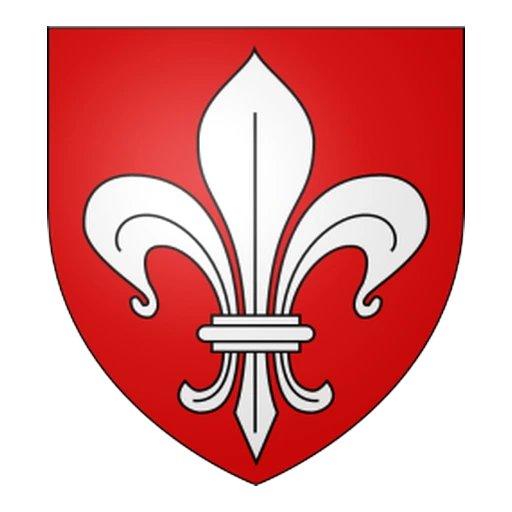
1944-1946
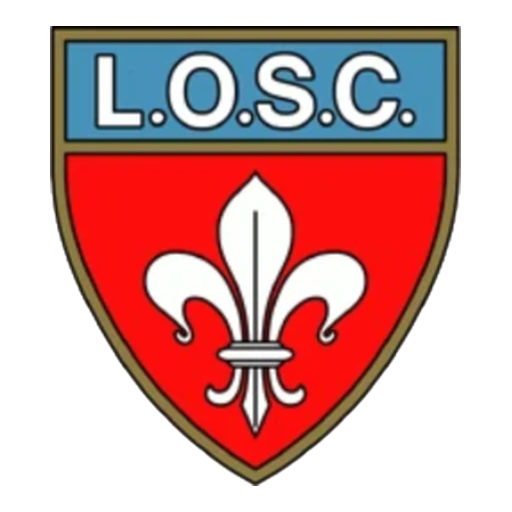
1946-1955
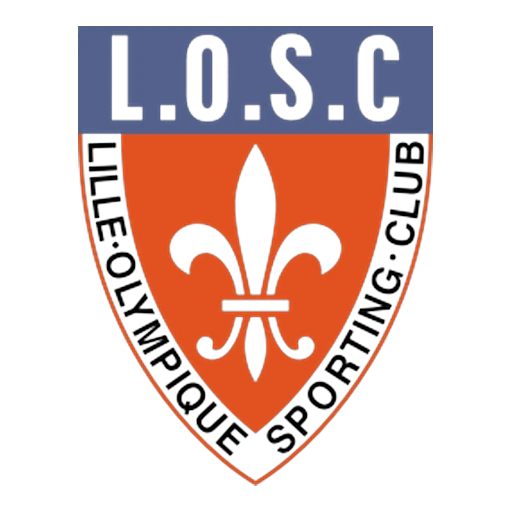
1955-1974
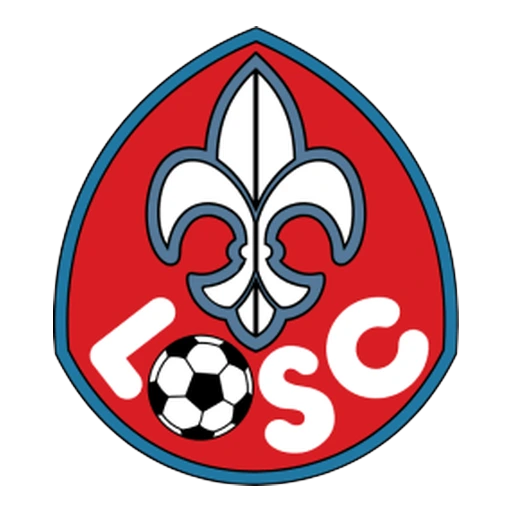
1974-1981
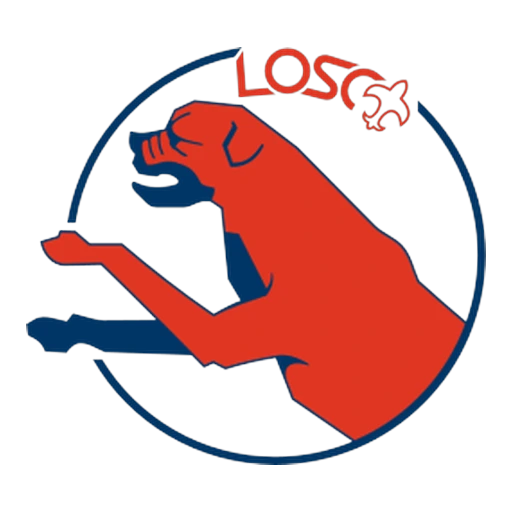
1981-1989
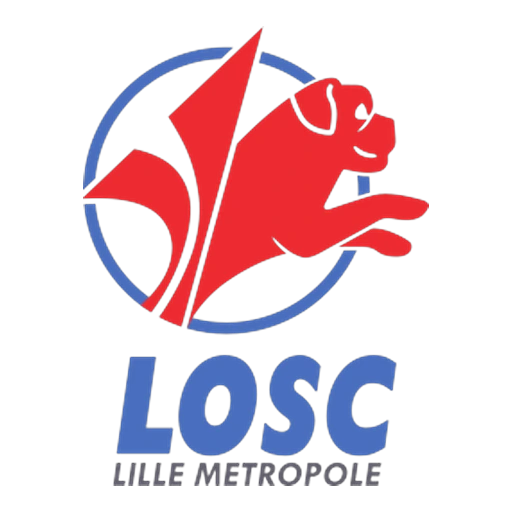
1989-1997
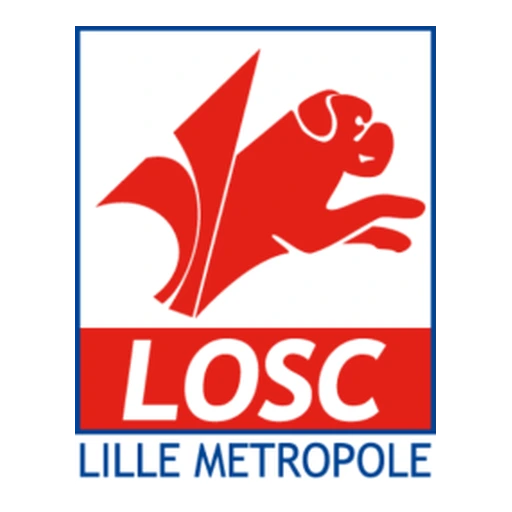
1997-2002
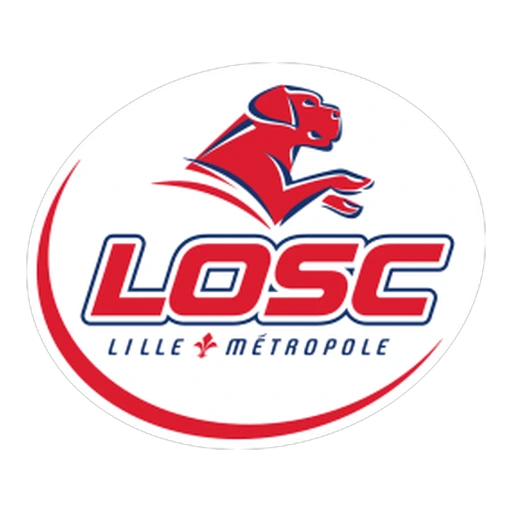
2002-2012
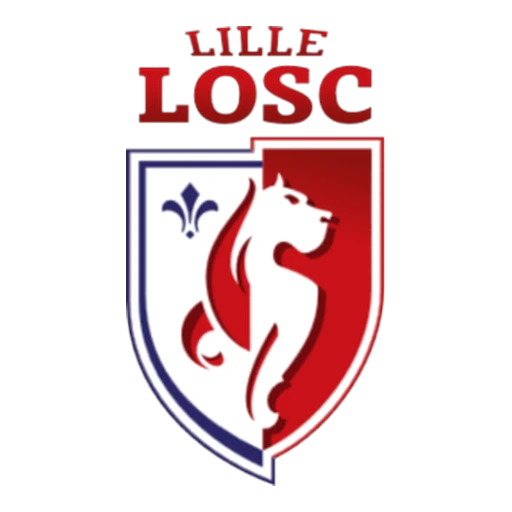
2012-2018
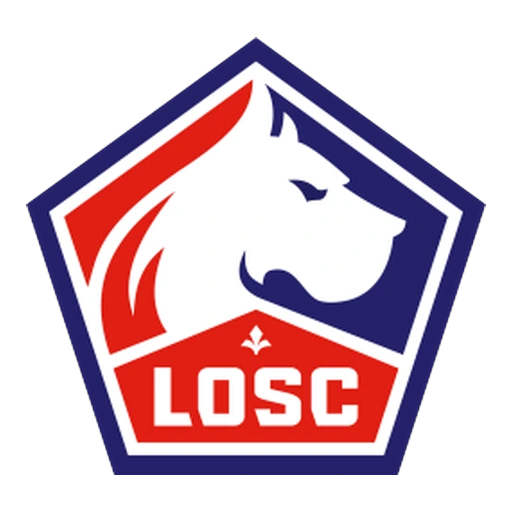
2018-Present
Lille OSC Crest History
The first crest of Lille OSC, introduced in 1944 following the merger of Olympique Lillois and SC Fives, was simply the historic coat of arms of the city of Lille. It featured a large white fleur-de-lis on a red shield, symbolising the city's heritage and its close association with the lily, from which Lille derives its name. The simple design reflected the club's origins while establishing the fleur-de-lis as a lasting element of its identity.
In 1946, the badge evolved into a more recognisable football crest. A blue banner bearing the initials L.O.S.C. was added across the top of the shield, while the fleur-de-lis remained at the centre. This version combined the symbols of Lille with the club's new identity following the merger, and the blue header also paid tribute to SC Fives, one of the founding clubs.
A redesigned shield appeared in 1955, introducing the club's full name, Lille Olympique Sporting Club, around the badge. The fleur-de-lis became smaller and more stylised, while the shield adopted a cleaner, more balanced appearance. This crest remained in use for nearly two decades and became closely associated with the club's traditional identity.
In 1974, Lille unveiled a modern teardrop-shaped badge. The fleur-de-lis returned to prominence above the initials LOSC, while a football was incorporated into the lower section. The redesign reflected changing graphic trends while preserving the club's historic civic symbol.
A major visual change arrived in 1981 with the introduction of the mastiff (dogue), which became the club's defining symbol. The leaping red mastiff represented strength, determination and fighting spirit, reflecting the long-established nickname Les Dogues. This was the first time the animal appeared on the club's crest, marking a significant shift away from the fleur-de-lis as the primary symbol.
In 1989, following the creation of the Lille Métropole identity, the crest combined the mastiff with a stylised fleur-de-lis, while the words LOSC Lille Métropole were added. The design linked the club more closely to the wider metropolitan area while uniting its two strongest visual symbols. A slightly refined version remained in use from 1997 to 2002, improving the proportions without changing the overall concept.
The 2002 redesign introduced a more dynamic elliptical badge. The mastiff became larger and more athletic, leaping above the bold LOSC lettering, with Lille Métropole positioned beneath. Cleaner typography and sweeping lines created a modern identity that accompanied one of the club's most successful periods.
In 2012, Lille adopted a shield that reintroduced the fleur-de-lis as a central element alongside the mastiff, symbolising the balance between the club's historic roots and its modern identity. The badge echoed earlier heraldic designs while maintaining the dog that had become synonymous with LOSC.
Since 2018, Lille OSC has used a modern pentagonal crest inspired by the shape of the Citadel of Lille. The design incorporates every major symbol in the club's history: the mastiff forms the profile within the shield, the fleur-de-lis appears beneath the LOSC initials, and the traditional red, white and blue colours remain. The result is a contemporary emblem that unites the club's civic heritage, nickname and visual identity into a single, distinctive badge.
Lille OSC Club History
Founded on 23 September 1944, Lille Olympique Sporting Club (LOSC) was created through the merger of Olympique Lillois and SC Fives, two of northern France's leading clubs. Olympique Lillois had won the inaugural French professional championship in 1933, while SC Fives had established itself as one of the country's strongest teams before the Second World War. The merger combined the traditions of both clubs and created a new football powerhouse for the city of Lille.
LOSC immediately entered the most successful period in its history. Nicknamed La Machine de Guerre (The War Machine), the club won the Ligue 1 and Coupe de France double in 1945–46, followed by another league title in 1954. Between 1946 and 1955, Lille lifted five Coupe de France trophies, establishing itself as one of the dominant forces in post-war French football. Players such as Jean Baratte, Marceau Somerlinck, and Joseph Jadrejak became club legends during this golden era.
Following this remarkable success, Lille experienced several decades of inconsistency. Financial difficulties and relegation in the late 1960s led the club to temporarily lose its professional status before rebuilding during the 1970s. Although honours became scarce, LOSC remained one of France's traditional clubs and gradually re-established itself in the professional game, returning permanently to the top flight in 2000 under coach Vahid Halilhodžić after winning the Division 2 championship.
The twenty-first century has brought a new era of sustained success. Under Claude Puel, Lille became a regular participant in European competitions, while Rudi Garcia guided the club to a historic Ligue 1 and Coupe de France double in 2010–11. The club also earned a reputation as one of Europe's finest developers of talent, producing or nurturing players such as Eden Hazard, Yohan Cabaye, Mathieu Debuchy, Lucas Digne, Benjamin Pavard, Divock Origi, Victor Osimhen, and Rafael Leão before many moved to Europe's biggest clubs.
Another unforgettable achievement came in 2020–21, when Christophe Galtier led LOSC to its fourth French league title, finishing ahead of Paris Saint-Germain after one of the most competitive title races in recent history. The championship was followed by victory in the 2021 Trophée des Champions, while the club continued to establish itself as a consistent participant in European competitions, regularly appearing in the UEFA Champions League and UEFA Europa League.
LOSC's principal rivalry is with RC Lens in the Derby du Nord, one of the most fiercely contested fixtures in French football.
LOSC Lille Pin
Your Dynamic Snippet will be displayed here... This message is displayed because you did not provide enough options to retrieve its content.