Historical Crests FC Metz
Name: FC Metz
Nickname(s): Les Grenats (The Maroons)
Founded: 1932
Stadium: Stade Saint-Symphorien
Capacity: 28,786

1921-1934
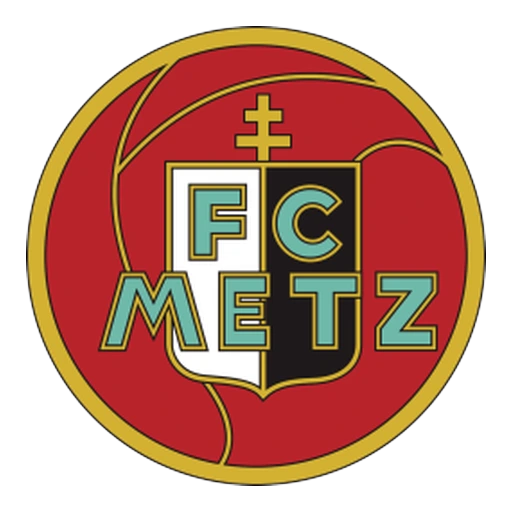
1932-1967
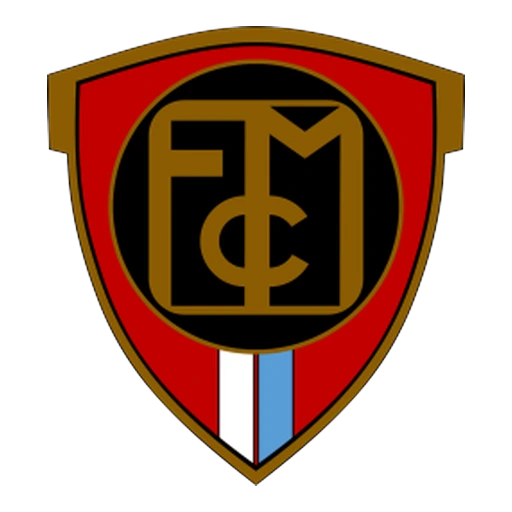
1936
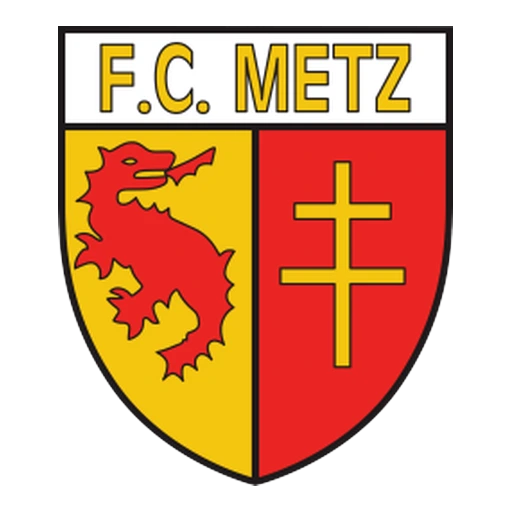
1967-2001
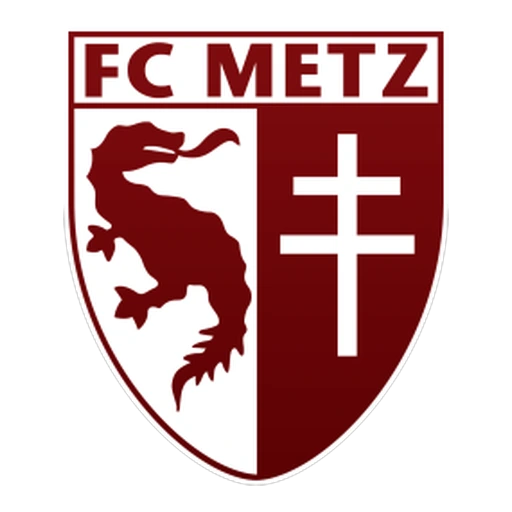
2001-2021
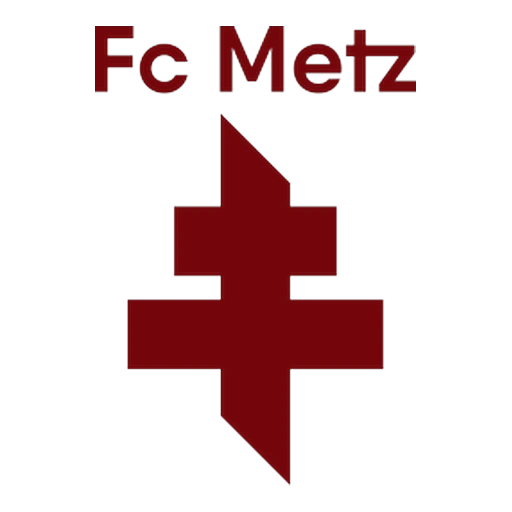
2021-Present
FC Metz Crest History
The earliest emblem used by the club, while it was still known as Cercle Athlétique Messin, appeared in 1921. It consisted of the intertwined initials C, A, and M, with the A forming the central letter and the C and M arranged around it. The monogram was enclosed within a blue circular border with a thin red outer ring, creating a simple and elegant identity that reflected the club's origins before the creation of FC Metz.
When Football Club de Metz was founded in 1932, a new circular crest was introduced. The badge adopted the club's traditional grenat (maroon) colour and incorporated a subtle vintage football pattern in the background. At the centre sat a small shield bearing the words FC Metz, while the Cross of Lorraine appeared above it, marking the first use of the historic regional symbol that would become central to the club's identity.
In 1936, the club briefly adopted a shield-shaped crest. The emblem featured the intertwined initials F, C, and M in gold on a black circular background placed within a maroon shield. At the base were three vertical stripes in white, light blue and red, representing the colours traditionally associated with the city of Metz. This design was only used for a short period before another redesign followed.
A major redesign arrived in 1967 with a heraldic shield that remained the club's emblem for more than three decades. The badge was divided vertically into two halves: the left side displayed the Graoully, the legendary dragon from the coat of arms of the city of Metz, while the right side featured the Cross of Lorraine. A white banner across the top carried the words F.C. Metz. By combining the city's mythical dragon with Lorraine's historic cross, the crest firmly established the club's regional identity.
In 2001, the shield was modernised while preserving its familiar symbolism. The yellow background behind the dragon was replaced with white, the dragon itself became grenat, and the right half adopted a matching grenat field with a white Cross of Lorraine. The typography was simplified and the overall design became cleaner and more balanced, creating a more contemporary version of the classic crest without altering its key elements.
In 2021, FC Metz unveiled a radical new visual identity. The traditional shield, the Graoully dragon and all additional decorative elements were removed in favour of a minimalist design consisting solely of the words "Fc Metz" above a stylised Cross of Lorraine, both rendered in the club's signature grenat colour. The redesign placed the historic cross at the heart of the club's identity, reflecting its importance to both the city of Metz and the wider Lorraine region while presenting a bold and modern image.
FC Metz Club History
Founded in 1932, Football Club de Metz was created when the football section of Cercle Athlétique Messin (CAM) turned professional following the introduction of professional football in France. The club's roots, however, stretch back to 1919, when CAM was established in Metz after the First World War. As one of the founding members of the French professional championship, FC Metz quickly became one of the country's oldest and most respected professional clubs.
Metz established itself in the top flight during the 1930s, winning the Division 2 championship in 1935 to secure its first promotion to the highest level of French football. Despite interruptions caused by the Second World War, the club remained a regular presence in the national divisions. During the post-war decades, FC Metz built a reputation for attacking football and became renowned for developing talented players, laying the foundations for future success.
The most successful era in the club's history came during the 1980s. Under presidents Carlo Molinari and coaches including Marcel Husson, Metz won the Coupe de France twice, in 1984 and 1988, as well as the Coupe de la Ligue in 1986. One of the greatest moments in the club's history occurred during the 1984–85 European Cup Winners' Cup, when Metz produced one of European football's biggest upsets by defeating FC Barcelona 4–1 at Camp Nou after losing the first leg 4–2, eliminating the Spanish giants on aggregate. The club also became known for legendary players such as Nico Braun, Patrick Battiston, and Philippe Hinschberger.
During the 1990s, under long-serving manager Joël Muller, Metz enjoyed another golden period. The club won a second Coupe de la Ligue in 1996 and came agonisingly close to winning its first French league title in 1997–98, finishing level on points with RC Lens but losing the championship on goal difference. That achievement earned FC Metz its only appearance in the UEFA Champions League the following season. Throughout this period, the club continued its tradition of producing outstanding talent, with players such as Robert Pirès, Sylvain Kastendeuch, Frédéric Meyrieu, and Rigobert Song representing the Grenats.
The twenty-first century has seen Metz alternate between Ligue 1 and Ligue 2, earning a reputation as one of France's classic "yo-yo clubs." Despite several relegations, the club has won the Ligue 2 title four times and has consistently relied on one of the country's finest youth academies, producing internationals including Sadio Mané, Kalidou Koulibaly, Miralem Pjanić, Emmanuel Adebayor, and Ismaïla Sarr. The academy has become one of FC Metz's defining strengths and a major contributor to its long-term stability.
FC Metz's fiercest rivalry is with AS Nancy-Lorraine in the Derby Lorrain (Lorraine Derby), one of the oldest and most passionate regional rivalries in French football. Matches against RC Strasbourg Alsace are also highly competitive, reflecting the historic sporting rivalry between the neighbouring regions of Lorraine and Alsace.
FC Metz Pin
Your Dynamic Snippet will be displayed here... This message is displayed because you did not provide enough options to retrieve its content.