Historical Crests FC Lorient
Name: FC Lorient
Nickname(s): Les Merlus (The Hakes)
Founded: 1926
Stadium: Stade du Moustoir – Yves Allainmat
Capacity: 16,787
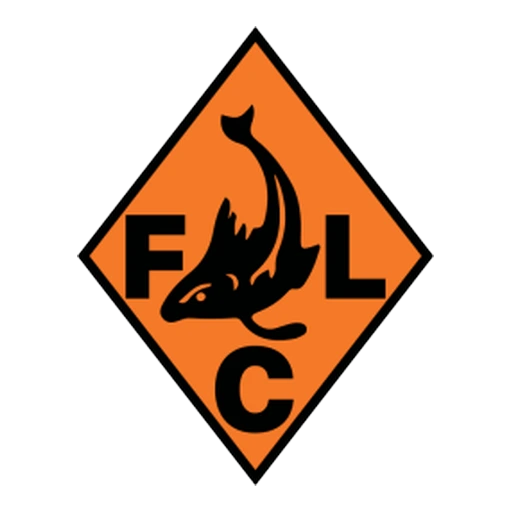
1926-1994
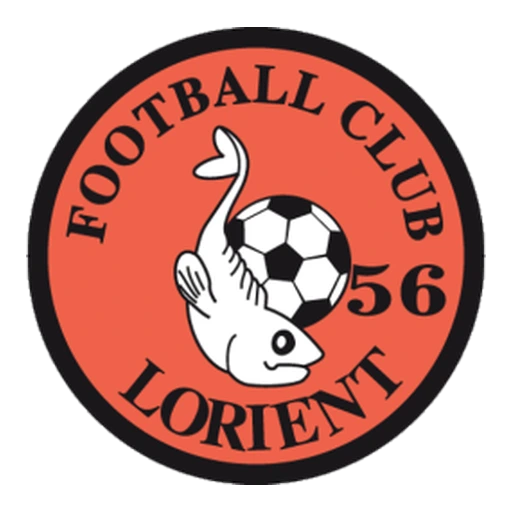
1994-2002
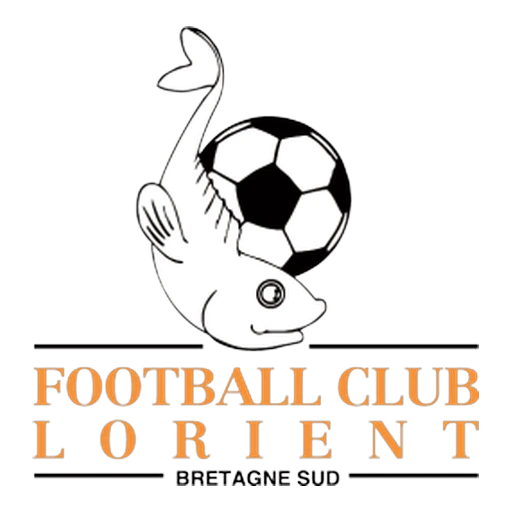
1994-2002 (2)
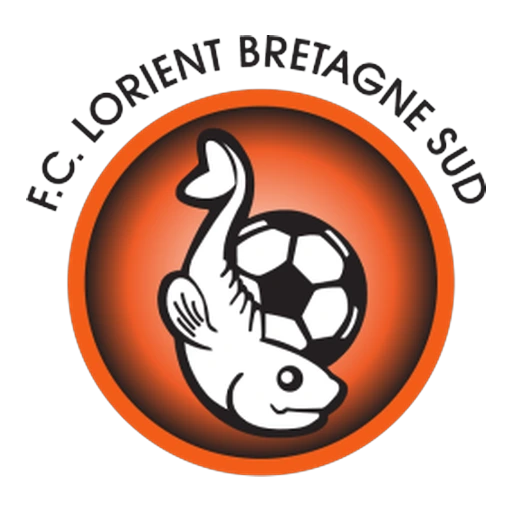
2002-2010
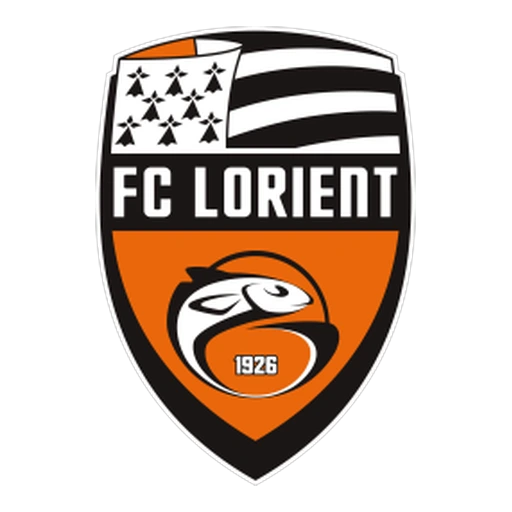
2010-Present
FC Lorient Crest History
The first official crest of Football Club Lorientais, introduced in 1926, featured a diamond-shaped badge displaying the initials FCL around a stylised grondin (red gurnard), a fish closely associated with Lorient's fishing industry. The original ceramic emblem was created by Italian tiler Louis Andreatta and symbolised the club's maritime roots and the importance of the city's fishing port. This distinctive diamond remained the club's emblem for nearly seventy years.
In 1994, the club abandoned the traditional diamond in favour of a circular crest. The grondin was replaced by a merlu (European hake), from which the club derives its famous nickname, Les Merlus. The fish was shown balancing a football, while the words "Football Club Lorient" surrounded the badge. During this period, an alternative version featuring the full Football Club Lorient Bretagne Sud wordmark was also used alongside the circular emblem as part of the club's visual identity.
In 2002, the circular crest received a modern refinement. The merlu and football were redrawn with bolder lines and placed against an orange gradient background, while the inscription "F.C. Lorient Bretagne Sud" moved outside the circle above the badge. Although the overall concept remained unchanged, the redesign created a cleaner and more contemporary appearance that accompanied the club during its first sustained spell in Ligue 1.
A major redesign arrived in 2010 with the introduction of the current shield-shaped crest. The new badge retained the merlu as the club's central symbol but adopted a more dynamic pose and incorporated several new elements. The upper section features the Gwenn-ha-du, Brittany's black-and-white flag, highlighting the club's Breton identity, while the founding year 1926 appears beneath the fish. The traditional orange and black colours were preserved, and the modern shield shape was intended to symbolise ambition and future success while maintaining the club's maritime heritage.
FC Lorient Club History
Founded on 2 April 1926, Football Club Lorient was established by the Cuissard family, owners of a local fish trading business, who transformed their company team, La Marée Sportive, into an amateur football club. From the beginning, the club adopted the famous orange and black colours and quickly became a symbol of the city's maritime identity. Starting in the regional Breton leagues, Lorient rose steadily through the divisions and became a professional club in 1967, marking the beginning of its national ambitions.
After financial difficulties in the late 1970s forced the club back into amateur football, Lorient rebuilt patiently throughout the 1980s and 1990s. Under the leadership of Christian Gourcuff, appointed head coach in 1991, the club developed an attractive, possession-based style of play that became synonymous with FC Lorient. Gourcuff guided the club to promotion to Ligue 2 in 1995 and, four years later, to Ligue 1 for the first time in its history after winning the 1998–99 Ligue 2 championship.
The greatest achievement in the club's history came during the 2001–02 season. Although Lorient was relegated from Ligue 1, it reached both domestic cup finals, finishing runners-up in the Coupe de la Ligue before defeating SC Bastia 1–0 to win the Coupe de France, the club's first major trophy. The victory earned Lorient qualification for the 2002–03 UEFA Cup, marking its first appearance in European competition.
Following several years alternating between Ligue 1 and Ligue 2, Lorient returned to the top flight in 2006 under Gourcuff and remained there for eleven consecutive seasons. During this period, the club earned widespread praise for its attractive football and exceptional player development. Future stars including André-Pierre Gignac, Kevin Gameiro, Laurent Koscielny, Raphaël Guerreiro, Mario Lemina, and Mattéo Guendouzi all played for Lorient before moving to larger European clubs.
After relegation in 2017, Lorient returned to Ligue 1 by winning the 2019–20 Ligue 2 title under Christophe Pélissier. The club spent four consecutive seasons in the top flight before being relegated in 2024. Lorient responded immediately by winning promotion back to Ligue 1 at the first attempt during the 2024–25 season, reinforcing its reputation as one of France's most resilient clubs.
FC Lorient's principal rivalry is with Stade Rennais in the Breton Derby, while matches against EA Guingamp, Stade Brestois 29, and FC Nantes are also among the club's most important regional fixtures, reflecting the long-standing football rivalries within Brittany.
FC Lorient Pin
Your Dynamic Snippet will be displayed here... This message is displayed because you did not provide enough options to retrieve its content.