Historical Crests FC Südtirol
Name: FC Südtirol
Nickname(s): Biancorossi / Weiss-Rote (Whitereds)
Founded: 1974
Stadium: Stadio Druso (Bolzano)
Capacity: 5,500
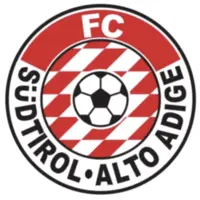
1995-2016
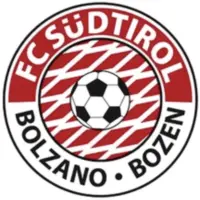
2016-Present
FC Südtirol Crest History
The club's earliest roots lie with SV Milland, founded in 1974 in the Brixen district of Milland. During this period, the team used simple local sporting emblems typical of amateur football clubs in South Tyrol. These early logos focused primarily on the club name and local identity rather than distinctive football symbolism.
A major turning point arrived in 1995, when a group of South Tyrolean entrepreneurs acquired SV Milland and transformed it into FC Südtirol-Alto Adige. The new club was created with the ambition of representing the entire province rather than a single town. To reflect this broader mission, a completely new crest was introduced.
The 1995 badge established many of the elements that still define the club today. It featured a circular design incorporating a distinctive red-and-white diamond pattern, inspired by the traditional colours of both South Tyrol and the city of Bolzano. A football was placed at the centre of the crest, while the bilingual identity of the region was emphasised through the inclusion of both the German name Südtirol and the Italian name Alto Adige.
A subtle but significant redesign arrived in 2016. Rather than introducing a completely new badge, the club modernised the existing crest. The words "Alto Adige" were removed, leaving FC Südtirol as the primary identity. The red colour was slightly darkened, the diamond pattern was refined and the typography modernised. The football remained at the centre, while Bolzano–Bozen continued to appear along the outer ring.
The redesign reflected the club's growing confidence and recognition. By this stage, FC Südtirol had become the leading football institution in the province and no longer required the bilingual "Alto Adige" addition to establish its identity. The updated badge maintained all the traditional elements while creating a cleaner and more contemporary appearance.
FC Südtirol Club History
FC Südtirol is one of the youngest professional clubs in Italian football and one of the most unique. Representing the autonomous province of South Tyrol (Südtirol/Alto Adige), the club serves as a sporting symbol of a region where Italian and German cultures coexist. Unlike most Italian clubs, FC Südtirol was created with the ambition of representing an entire province rather than a single city, making it a distinctive presence within the Italian football landscape.
The club's origins can be traced to SV Milland, founded in 1974 in the district of Milland near Brixen (Bressanone). For many years, the club competed in the regional amateur leagues of northern Italy and remained largely unknown outside South Tyrol.
A transformative moment arrived in 1995, when a group of local entrepreneurs acquired SV Milland and relocated the sporting project to Bolzano (Bozen), the capital of South Tyrol. The club was renamed FC Südtirol-Alto Adige, reflecting the ambition to become the footballing representative of the entire province rather than a local amateur side.
During the late 1990s, Südtirol climbed through the regional divisions and established itself as one of the strongest clubs in the area. The club's bilingual identity, combining German and Italian traditions, helped it attract support from across the province.
A historic breakthrough came in 2000, when FC Südtirol achieved promotion to Serie C2, becoming the first club from South Tyrol to reach the professional ranks of Italian football. This achievement marked the beginning of a steady rise that would continue for more than two decades.
The club's home matches were traditionally played at the Stadio Druso in Bolzano, a venue that became synonymous with Südtirol's rise. Over time, the stadium underwent significant redevelopment to meet the requirements of higher-level football and to support the club's growing ambitions.
After years of near misses, the greatest achievement in the club's history arrived in 2022. Under coach Lamberto Zauli and later Ivan Javorčić, FC Südtirol won Serie C Group A, securing promotion to Serie B for the first time. The achievement represented a historic milestone not only for the club but for the entire province of South Tyrol.
The club's principal rivalries are with fellow Trentino-Alto Adige clubs such as AC Trento and regional neighbours from northern Italy. Matches against these sides often carry added significance because of local pride and regional competition.
FC Südtirol
Your Dynamic Snippet will be displayed here... This message is displayed because you did not provide enough options to retrieve its content.