Historical Crests FC Internazionale
Name: FC Internazionale
Nickname(s): I Nerazzurri (The Black and Blues), La Beneamata (The Well-Cherised One)
Founded: 1908
Stadium: San Siro (Milan)
Capacity: 75,923
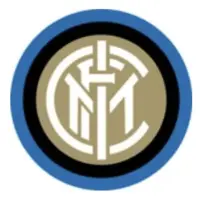
1908-1928
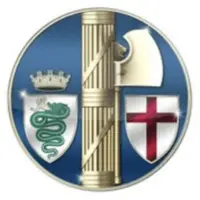
1928-1929
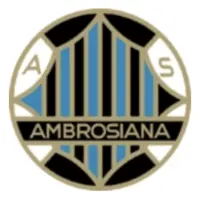
1929-1931
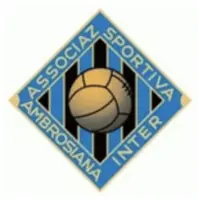
1931-1945
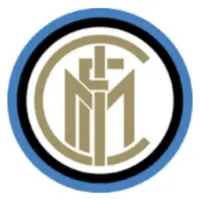
1945-1960
1960-1963
1961-1962
1962-1963
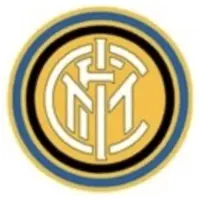
1963-1966
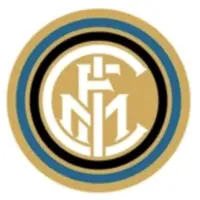
1966-1978
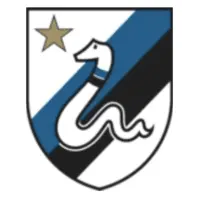
1979-1988
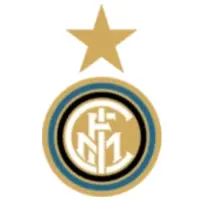
1988-1998
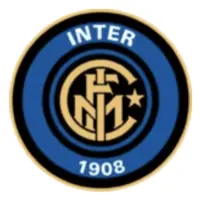
1998-2007
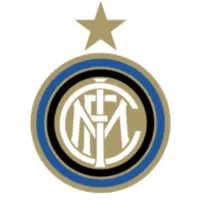
2007-2014
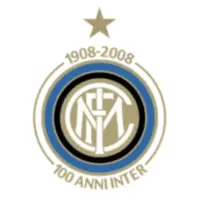
2008
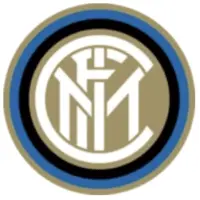
2014-2021
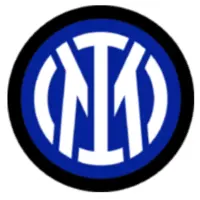
2021-Present
FC Internazionale Milano Crest History
The most enduring feature of the badge has been the famous FCIM monogram, created by club founder and artist Giorgio Muggiani. The original 1908 crest was designed by Muggiani shortly after the club's creation. Inspired by Art Nouveau aesthetics and the emblems of contemporary football clubs, it featured the intertwined letters F, C, I and M (Foot-Ball Club Internazionale Milano) in white on a gold background, surrounded by concentric black-and-blue circles. The design immediately established the colours and monogram that would define Inter's identity for generations.
A dramatic change arrived in 1928, when the Fascist regime forced the club to abandon the name Internazionale and merge with Unione Sportiva Milanese. The club became Società Sportiva Ambrosiana, and the crest was completely redesigned. The famous monogram disappeared and was replaced by civic and political symbolism linked to Milan and the regime of the era.
Further redesigns followed between 1929, 1931 and 1945 while the club competed under the names Ambrosiana and Ambrosiana-Inter. Various circular and diamond-shaped badges appeared, often incorporating black-and-blue stripes, footballs and the Ambrosiana name. Although the historic monogram vanished during this period, supporters continued referring to the club simply as Inter, helping preserve its identity through a turbulent chapter.
Following the end of the Second World War in 1945, the club returned to the name Football Club Internazionale Milano and restored the original FCIM monogram. The revived badge closely resembled Muggiani's creation, symbolising a return to the club's roots and traditions.
A notable departure from tradition arrived in 1960, when Inter introduced a crest centred around the Biscione, the serpent historically associated with the Visconti family and the city of Milan. The badge featured black-and-blue stripes and a large serpent, marking the first time one of Milan's most famous civic symbols became the central element of Inter's visual identity.
In 1963, during the beginning of the legendary Grande Inter era under Helenio Herrera, the club returned to a refined version of the FCIM monogram. Enhanced with gold detailing, this crest became associated with one of the most successful periods in the club's history, including multiple European Cup triumphs and world titles.
A major redesign arrived in 1979. Inter once again embraced the Biscione, placing a stylised white serpent inside a shield featuring diagonal black-and-blue stripes. A gold star appeared above the badge to commemorate the club's tenth Serie A title. This became one of the most distinctive and recognisable crests in the club's history.
The club returned to a modernised version of the traditional monogram during the late 1980s, combining the historic FCIM initials with contemporary graphic styling. The star remained an important element, symbolising Inter's domestic success and connection to Italian football tradition.
A centenary-inspired redesign arrived in 1998. The badge retained the FCIM monogram but added the club name and the foundation year 1908 around the outer ring. The design celebrated nearly a century of history while preserving the essential features established at the club's birth.
Throughout the 2000s, the crest underwent only subtle refinements. Typography, colours and proportions were modernised, but the famous circular badge and FCIM monogram remained intact. This version became associated with one of the most successful periods in Inter's history, including multiple Serie A titles and the historic Treble-winning season of 2009–10.
Another modernisation followed in 2014, simplifying the badge and giving greater prominence to the FCIM monogram. The redesign reflected contemporary branding trends while remaining faithful to the identity created by Giorgio Muggiani more than a century earlier.
The most significant modern change arrived in 2021. Inter unveiled a completely redesigned crest centred solely on the letters I and M, representing Internazionale and Milano. While the circular shape and club colours were retained, the historic FCIM monogram was simplified into a cleaner and more modern design intended to strengthen the club's global brand. The redesign marked one of the boldest visual changes in the club's history while still maintaining a clear connection to Milan and the club's origins.
FC Internazionale Milano Club History
FC Internazionale Milano was founded on 9 March 1908 following a schism within Milan Cricket and Football Club, now known as AC Milan. A group of members disagreed with Milan's policy of restricting the participation of foreign players and decided to establish a new club built upon principles of openness and internationalism. They named their new team Internazionale, reflecting their belief that football should welcome players from all nations. This founding philosophy remains one of the defining characteristics of the club's identity to this day.
From its earliest years, Inter quickly established itself as one of Italy's leading football clubs. The Nerazzurri won their first Italian championship in 1910, only two years after their formation, and continued to challenge for honours throughout the early decades of the twentieth century. The club's black-and-blue colours became instantly recognisable and helped create one of the strongest identities in Italian football.
Unlike many of Italy's traditional giants, Inter possesses a unique distinction. They are the only club to have participated in every Serie A season since the league's creation in 1929, never having been relegated to Serie B. This record highlights the club's remarkable consistency and places Inter among the most enduring institutions in world football.
A defining chapter in the club's history arrived during the 1960s under legendary coach Helenio Herrera. Herrera transformed Inter into one of the most dominant teams in Europe and pioneered tactical concepts that would shape modern football. His version of catenaccio, built around defensive organisation, rapid counterattacks and the use of a sweeper behind the defence, revolutionised the game. The side became known as Grande Inter and achieved unprecedented success.
Under Herrera, Inter won three Serie A titles, two European Cups and two Intercontinental Cups between 1963 and 1965. Led by legendary players such as Sandro Mazzola, Giacinto Facchetti and Luis Suárez Miramontes, Grande Inter became one of the most celebrated teams in football history.
The club continued to compete at the highest level throughout the following decades, winning domestic titles and remaining a constant presence in European competitions. During the 1980s, Inter assembled another memorable side, culminating in the record-breaking Serie A title triumph of 1988–89 under coach Giovanni Trapattoni.
The 1990s saw Inter remain a major force both domestically and internationally. Although league titles proved elusive, the club enjoyed considerable success in European competition, winning the UEFA Cup in 1991, 1994 and 1998. The latter triumph was inspired by the brilliance of Brazilian superstar Ronaldo, who became one of the most iconic players ever to wear the Nerazzurri shirt.
A new golden era emerged during the mid-2000s. Under the ownership of Massimo Moratti, Inter assembled one of the strongest squads in Europe and dominated Italian football. Between 2006 and 2010, the club won five consecutive Serie A titles, establishing itself as the dominant force in the country.
The pinnacle of this period came in 2010 under coach José Mourinho. Inter achieved the historic Treble, winning Serie A, the Coppa Italia and the UEFA Champions League in the same season. Led by stars such as Javier Zanetti, Diego Milito, Wesley Sneijder and Samuel Eto'o, Inter became the first and still only Italian club to complete a continental treble.
Following the Treble, Inter experienced a period of transition but remained one of Italy's most important clubs. New ownership structures, including the arrival of the Chinese conglomerate Suning Holdings Group, helped modernise the club and restore its competitiveness at both domestic and European level.
Success returned in 2021 when Inter won Serie A under coach Antonio Conte, ending Juventus' nine-year dominance of Italian football. Further trophies followed, including Coppa Italia victories and another league title in 2024, reinforcing the club's position among Europe's elite.
Inter plays its home matches at the iconic San Siro, officially known as the Stadio Giuseppe Meazza. Shared with city rivals AC Milan since 1947, it is the largest football stadium in Italy and one of the most famous sporting venues in the world. The stadium has served as the backdrop for many of the greatest moments in Inter's history and remains a symbol of Milanese football.
The club's most famous rivalry is with AC Milan, against whom they contest the Derby della Madonnina. Played between the two clubs of Milan, it is one of the most watched and celebrated derbies in world football. Inter also shares an intense rivalry with Juventus FC in the Derby d'Italia, a fixture that has often shaped the destination of major honours in Italian football.
FC Internazionale Pins
Your Dynamic Snippet will be displayed here... This message is displayed because you did not provide enough options to retrieve its content.