Historical Crests FC Andorra
Name: FC Andorra
Nickname(s): Els Tricolors (The Tricolours)
Founded: 1942
Stadium: Estadi Nacional d’Andorra (Andorra)
Capacity: 3,306
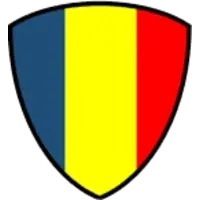
1942-1948
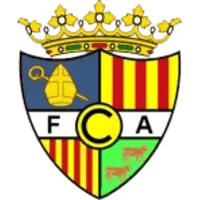
1948-1965
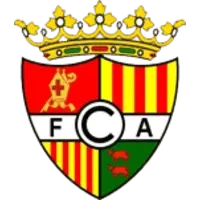
1965-1982
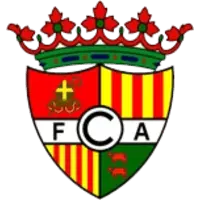
1982-2013
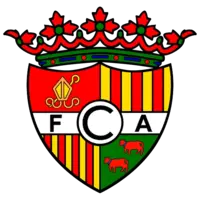
2013-2021

2021-Present
FC Andorra Crest History
Founded in 1942, FC Andorra has long maintained a visual identity closely connected to the history, culture and national symbols of the Principality of Andorra.
The club’s most recognisable historical emblem was introduced in 1948 and proudly displayed the colours and heraldic symbols of Andorra. Because of its strong association with the national flag, FC Andorra became widely known by the nickname Els Tricolors (“The Tricolours”), a reference to the blue, yellow and red colours that have long defined both the club and the nation.
At the centre of the traditional crest was the Andorran coat of arms, one of the most distinctive national emblems in Europe. The badge incorporated the historic insignias of the Bishop of Urgell and the Count of Foix, reflecting their roles as the historical Co-Princes of Andorra. These symbols highlighted the unique political arrangement that has shaped the principality for centuries.
The crest also included references to the Viscounts of Béarn and Catalonia, neighbouring regions with deep historical connections to Andorra. By combining these elements, the badge reflected the complex heritage and influences that contributed to the formation of the modern Andorran state.
A major transformation occurred in 2021, following the club’s rapid growth and increasing international profile. Seeking a more contemporary visual identity, FC Andorra replaced its traditional crest with an entirely new logo. The redesign marked the most significant change in the club’s branding since the introduction of the original emblem in 1948.
The new badge adopted a circular format dominated by blue, featuring a distinctive white geometric pattern. The design was created to represent multiple aspects of the club and country, including the initials of FC Andorra, the mountainous landscape that defines the principality and the club’s forward-looking ambitions. The outer ring incorporates the colours of the Andorran flag, ensuring that the connection to national identity remains a central element despite the modernised appearance.
FC Andorra Club History
FC Andorra occupies a unique place in European football history. Based in Andorra la Vella, the club is not only the oldest football club in Andorra but also the first football institution ever established in the principality.
The club was founded within the College of Our Lady of Meritxell in 1942, at a time when organised football in Andorra was still in its infancy. Its creation marked the beginning of structured football activity in the country and laid the foundations for the development of the sport throughout the principality.
Unlike most clubs based in sovereign nations, FC Andorra has spent the vast majority of its existence competing outside its own national league structure. Although located in Andorra, the club became affiliated with the Catalan Football Federation and, from 1948, was permitted to participate in the Spanish football league system. This arrangement has allowed FC Andorra to compete against Spanish clubs for generations while maintaining its identity as a representative of Andorra.
For much of its history, FC Andorra was widely regarded as the largest and most prominent football club in the country. Before the creation and professionalisation of the Andorran domestic league system, the club served as the principal footballing ambassador of the principality and remains one of the country's most recognisable sporting institutions.
Throughout the second half of the twentieth century, FC Andorra spent most of its time competing in the lower divisions of Spanish football. The club experienced periods of success and decline, but one of its most notable achievements came in 1994, when it won the Copa Catalunya. The victory was particularly significant because FC Andorra became the first club from outside Spain to win the competition, defeating several established Catalan sides along the way.
A transformative chapter began in 2018, when former Gerard Piqué, through his company Kosmos Holding, acquired the club. The investment brought renewed ambition, professionalisation and resources. Under the new ownership, FC Andorra achieved a rapid rise through the Spanish football pyramid, earning multiple promotions within a relatively short period.
The club's progress culminated in promotion to the professional tiers of Spanish football, an extraordinary achievement for a team representing a microstate of fewer than 100,000 inhabitants. This ascent significantly increased FC Andorra’s visibility across Spain and Europe and established the club as one of the most intriguing projects in modern football.
Today, FC Andorra plays its home matches at the Estadi Nacional, the country's principal football venue. The stadium serves as both the home of FC Andorra and an important sporting landmark within the principality.
FC Andorra Pins
Your Dynamic Snippet will be displayed here... This message is displayed because you did not provide enough options to retrieve its content.