Skip to Content

Historical Crests Dundee United FC

Name: Dundee United FC
Nickname(s): ​​The Terrors
Founded: 1909
Stadium: Tannadice Park (Dundee)
Capacity: 14,223

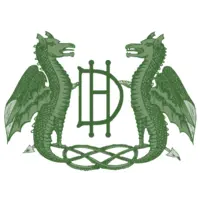
1922-1923
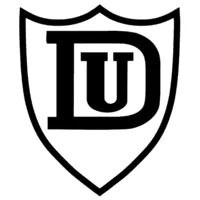
1923-1925
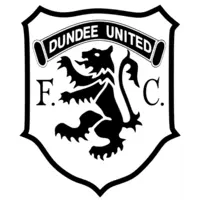
1956-1958
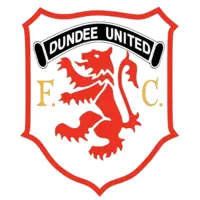
1956-1958
1958-1969
1969-1973
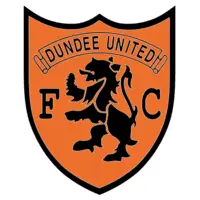
1973-1983
1983-1993
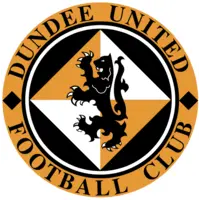
1993-2022
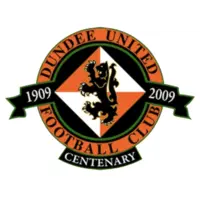
2009 Centenary
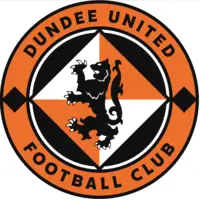
2022-Present

Dundee United FC Crest History
While the lion has become the defining symbol of Dundee United’s modern identity, the club has undergone several significant crest changes over the years.
Founded in 1909 as Dundee Hibernian, the club initially used simple monograms and lettering rather than a formal club crest. During the early decades of its existence, there was no single, consistent badge associated with the club, and various representations of the club’s initials appeared on official documents and merchandise.
Following the adoption of the name Dundee United in 1923, the club gradually began to develop a more distinctive visual identity. However, it was not until the latter half of the twentieth century that a recognisable and enduring crest emerged.
As Dundee United rose to prominence during the 1970s and 1980s under the management of Jim McLean, the club adopted designs featuring the Scottish lion rampant. The lion became the central symbol of the club, representing strength, ambition and Scottish heritage. These badges became closely associated with the most successful period in Dundee United’s history, which included league titles, domestic cup victories and memorable European campaigns.
In 1993, Dundee United introduced a new circular crest featuring a lion at its centre surrounded by the club name. This design modernised the club’s image while maintaining the lion as the dominant element. The badge became familiar to supporters throughout the 1990s and early 2000s and was worn during several notable periods in the club’s history.
A major redesign arrived in 2009 as part of Dundee United’s centenary celebrations. The club unveiled a new crest featuring a stylised lion rampant within a shield. The anniversary version included the dates 1909 and 2009 to commemorate one hundred years since the club’s foundation. The design successfully combined traditional heraldic elements with a more contemporary appearance.
Following the centenary season, the commemorative dates were removed, leaving the basis of the crest that remains in use today. The modern badge retains the shield shape and lion rampant while presenting a cleaner and more versatile design suitable for both traditional and digital applications.


Dundee United FC Club History
Dundee United Football Club was founded in 1909 as Dundee Hibernian by members of Dundee’s Irish Catholic community. The club was established to provide representation for the city’s growing Catholic population and reflected many of the cultural influences associated with Irish football clubs of the period. Although these origins remain an important part of the club’s history, Dundee United has evolved into a club representing supporters from all backgrounds across Dundee and beyond.
In 1923, following financial difficulties and a change in ownership, the club adopted the name Dundee United, the identity under which it has competed ever since. The name change marked the beginning of a new era and helped establish the club as a permanent fixture in Scottish football.
Dundee United has played at Tannadice Park since its formation in 1909. The stadium is one of the most famous grounds in Scottish football and is unique for its location directly opposite the home of city rivals Dundee FC. The two stadiums are separated by only a short distance along the same street, making the Dundee Derby one of the closest football rivalries anywhere in Britain.
Although Dundee United enjoyed periods of success during its early decades, the club’s greatest achievements came during the reign of legendary manager Jim McLean. Appointed in 1971, McLean transformed Dundee United into one of the strongest clubs in Scotland and one of the most respected teams in Europe.
Under McLean, Dundee United won the Scottish League Championship in 1982–83, breaking the traditional dominance of Celtic and Rangers. The club also won the Scottish League Cup twice and enjoyed a series of memorable European campaigns. United reached the semi-finals of the European Cup in 1984 and the UEFA Cup Final in 1987, defeating some of Europe’s most famous clubs along the way.
The 1980s are widely regarded as the golden era of Dundee United. Players such as Paul Sturrock, Eamonn Bannon, Richard Gough, Maurice Malpas and Hamish McAlpine became club legends and helped establish United as one of the leading forces in Scottish football.
The club is widely known by the nicknames “The Tangerines” and “The Terrors.” The Tangerines nickname derives from the club’s distinctive orange shirts, while “The Terrors” dates back to the early twentieth century and reflects the reputation of Dundee United teams for being formidable opponents.
Dundee United supporters are known as “The Arabs,” one of the most unusual nicknames in British football. The term originated during the 1960s and has since become a proud part of the club’s identity, embraced by generations of fans.
One of the defining aspects of Dundee United’s history is its rivalry with Dundee FC. Matches between the two clubs are known as the Dundee Derby and are among the most distinctive fixtures in Scottish football. Unlike many fierce football rivalries, the Dundee Derby is often noted for its relatively friendly atmosphere while still maintaining intense local pride and competition. The fixture remains one of the highlights of the Scottish football calendar and reflects the unique character of the city.

Dundee United Pins

Your Dynamic Snippet will be displayed here... This message is displayed because you did not provide enough options to retrieve its content.