Historical Crests Crystal Palace FC
Name: Crystal Palace FC
Nickname(s): The Eagles
Founded: 1905
Stadium: Selhurst Park (London)
Capacity: 25,486


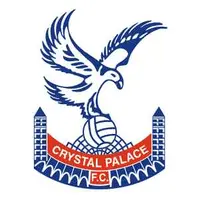
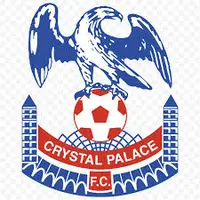
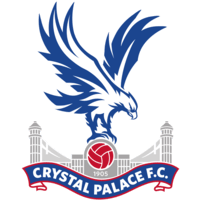
Crystal Palace FC Crest History
Founded in 1905, Crystal Palace Football Club has used a variety of badges throughout its history, but no symbol has become more closely associated with the club than the eagle. Today, the eagle is the defining feature of Crystal Palace’s identity and reflects the club’s famous nickname, “The Eagles,” while symbolising strength, ambition and the club’s modern era.
Crystal Palace was relatively late in establishing a formal club crest. During the club’s early decades, Palace did not consistently wear an official badge on its playing shirts. Like many English clubs of the period, the team often played without an embroidered crest, relying instead on its colours and local identity.
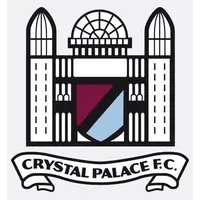
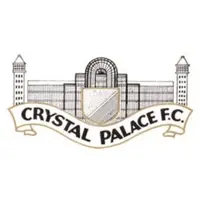
A significant development came during the 1950s when Crystal Palace adopted its first recognised crest, featuring the façade of the famous Crystal Palace building from which the club took its name. The design celebrated the club’s origins and reinforced its connection to one of Britain’s most iconic landmarks. Variations of this badge remained in use until 1964, when the crest disappeared from the club’s shirts.
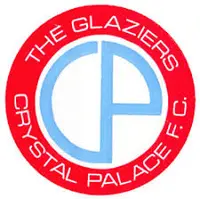
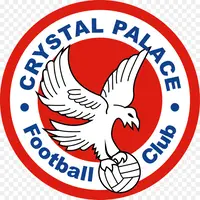
The most dramatic transformation in Crystal Palace’s visual identity came in 1973 following the appointment of manager Malcolm Allison. Seeking to modernise the club and create a stronger image, Allison changed the club’s nickname from “The Glaziers” to “The Eagles.” The new identity was inspired by the Portuguese club Benfica, whose eagle symbol Allison admired. As part of the rebranding, Crystal Palace adopted a crest featuring a large eagle, establishing a visual identity that would define the club for generations.
Throughout the 1970s, 1980s and 1990s, various versions of the eagle badge were introduced. Some designs featured a standing eagle, while others incorporated shields, footballs and club lettering. Despite these changes, the eagle remained the central element and became firmly embedded in Crystal Palace’s identity.
A major redesign arrived in 1994 when Palace introduced a crest featuring an eagle holding a football above an image of the Crystal Palace building. The badge successfully combined the club’s modern Eagles identity with its historic origins, linking the symbol of the eagle to the landmark that inspired the club’s name. The design became one of the most recognisable crests in the club’s history.
In 2013, Crystal Palace unveiled a refined version of its crest. The updated design retained the eagle and the Crystal Palace building while introducing a cleaner and more modern appearance. The club name was given greater prominence, and the overall badge was simplified to improve its use across digital and commercial platforms while preserving its traditional symbolism.
Since the mid-2010s, Crystal Palace has further embraced its Eagles identity through the introduction of Kayla, an American bald eagle who serves as the club’s live mascot and regularly appears at matches at Selhurst Park. Kayla has become a popular symbol among supporters and reinforces the strong connection between the club and its eagle-themed identity.
Crystal Palace FC Club History
Crystal Palace Football Club was founded in 1905 and takes its name from the famous Crystal Palace exhibition building in South London. The club was established by the owners of the Crystal Palace Company, who sought to create a professional football team to play at the FA Cup Final venue located within the Crystal Palace grounds. Since its formation, Palace has developed into one of London’s most established football clubs.
The club joined the Southern League upon its formation and quickly established itself as a competitive side. In 1920, Crystal Palace became a founder member of the Football League Third Division and won the division’s inaugural title in 1920–21. Palace joined the Football League in 1920 and began a long association with the English professional game that continues today.
A major milestone came in 1924 when the club moved into Selhurst Park, which has remained its home ever since. The stadium became central to Crystal Palace’s identity and is now one of the most recognisable football grounds in London.
For much of the twentieth century, Palace competed between the lower divisions before enjoying a period of significant progress during the 1960s and 1970s. Under manager Bert Head, Crystal Palace reached the top flight for the first time in 1969. Shortly afterwards, manager Malcolm Allison transformed the club’s image by changing its nickname from “The Glaziers” to “The Eagles,” helping to establish the identity for which the club is known today.
The club enjoyed one of its most successful periods under manager Steve Coppell during the late 1980s and early 1990s. Crystal Palace reached the 1990 FA Cup Final, where they finished runners-up to Manchester United after a replay. The following season, Palace achieved the highest league finish in the club’s history, finishing third in the First Division during the 1990–91 campaign.
The following decades brought a mixture of promotions, relegations and financial uncertainty. Despite these challenges, Palace remained a competitive club and developed a strong reputation for producing talented players through its academy system.
One of the most important moments in the club’s history came in 2010 when Crystal Palace entered administration and faced a serious threat to its future. The club was ultimately rescued by a consortium of wealthy supporters known as CPFC 2010, whose takeover saved Palace from financial disaster and provided the stability needed for long-term growth.
A new era began in 2013 when Crystal Palace won promotion to the Premier League through the Championship play-offs, returning to the top flight after an eight-year absence. Since then, the club has established itself as a regular Premier League side and enjoyed one of the most stable periods in its history. Palace also reached the FA Cup Final for a second time in 2016, once again finishing runners-up to Manchester United.
Crystal Palace’s principal rivalry is with Brighton & Hove Albion, a fixture known as the M23 Derby and one of the fiercest rivalries in English football. Strong rivalries also exist with fellow South London clubs Millwall and Charlton Athletic.
Crystal Palace FC Pin
Your Dynamic Snippet will be displayed here... This message is displayed because you did not provide enough options to retrieve its content.