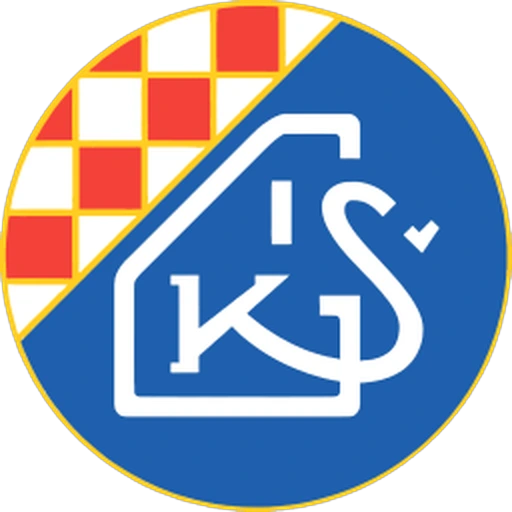
The first crest associated with the club's predecessor, Građanski Zagreb, appeared in 1926. The circular badge featured the club's intertwined initials GŠK on a blue background, separated by a diagonal band from the famous Croatian red-and-white chequerboard. This elegant design reflected Građanski's civic identity and established the visual foundations that would later influence Dinamo's modern emblem. The badge remained in use until the club was dissolved by the Yugoslav authorities in 1945.
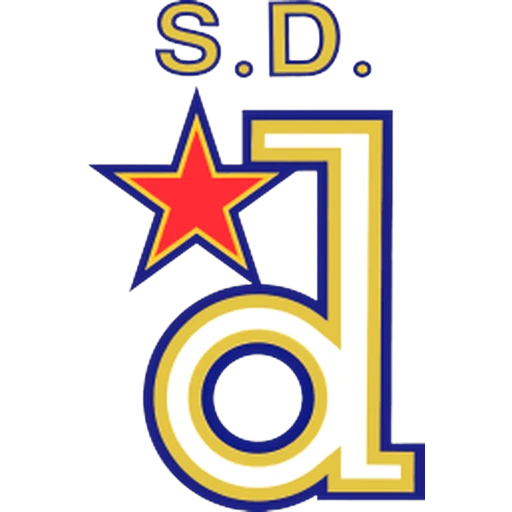
Following the formation of Dinamo Zagreb in 1945, the club introduced a completely new emblem. Inspired by Soviet-era sporting symbolism, the badge centred on a large lowercase "d" accompanied by a red star and the initials S.D. (Sportsko Društvo). Although radically different from the Građanski crest, the distinctive blue colour remained, preserving an important visual link with the club's predecessor during the early post-war years.
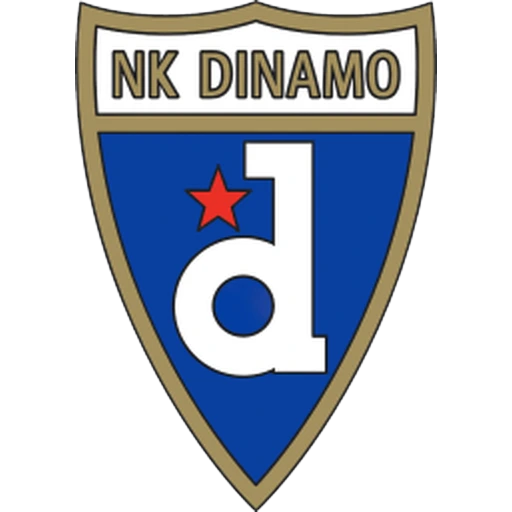
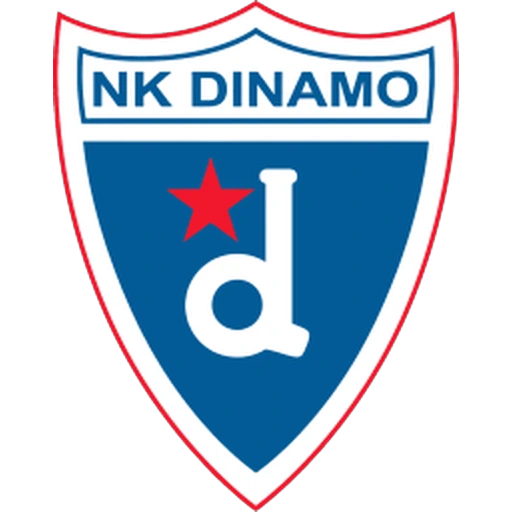
A major redesign arrived in 1954, when Dinamo adopted a heraldic shield featuring the familiar lowercase "d" beneath the club name NK Dinamo. The blue shield, red star and white letter created a cleaner and more recognisable identity that represented the club throughout one of its most successful periods, including victory in the 1966–67 Inter-Cities Fairs Cup, still the greatest achievement in Croatian club football.
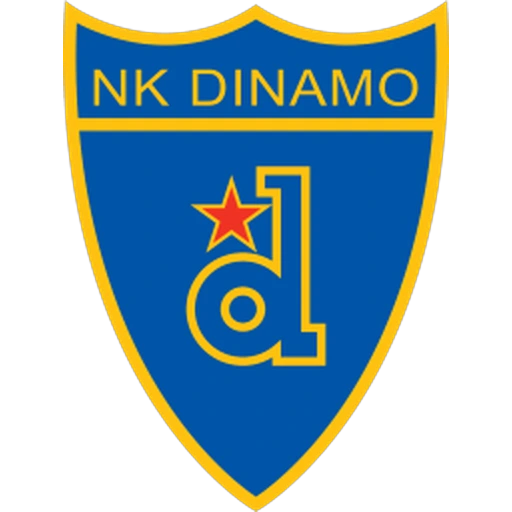
In 1970, the club modernised the shield while retaining the established concept introduced during the previous decade. The proportions were refined, the typography updated and a yellow border added, creating a brighter and more balanced appearance. According to the club, this redesign formed the basis of the modern Dinamo crest and was deliberately modelled on the historic Građanski emblem, reinforcing the continuity between the two clubs.
A further refinement followed in 1982, when the shield received cleaner lines and a simplified outline. The red star, blue shield and white "d" remained unchanged, while the updated typography improved legibility and consistency. Although visually subtle, this version became one of the most recognisable emblems of the Yugoslav era and remained in use until the political changes that accompanied Croatian independence.
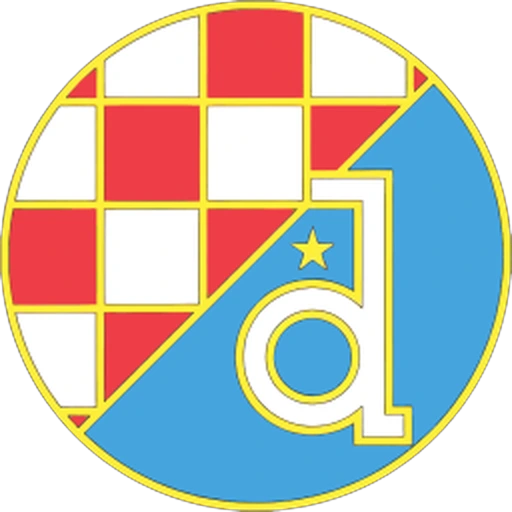
In 1988, Dinamo introduced a circular crest that re-established a much stronger connection with the club's pre-war heritage. The new badge revived the Croatian chequerboard and the diagonal division first seen on the Građanski emblem, while incorporating the familiar lowercase "d" and a small red star. The redesign anticipated the national changes that were about to reshape Croatian football and deliberately reconnected the club with its historic roots.
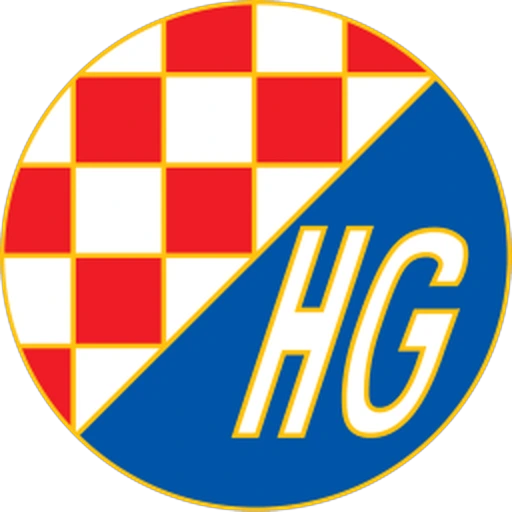
Following Croatia's declaration of independence, the club entered a period of frequent name changes that were reflected in successive crests. Between 1990 and 1991, the circular badge was simplified by removing the red star while retaining the Croatian chequerboard and the stylised "d". After the club became HAŠK Građanski in 1991, the crest adopted the initials HG, combining references to both historic Zagreb clubs in an attempt to redefine the club's identity during a period of political transition.
When the club adopted the name Croatia Zagreb in 1993, an entirely new crest was introduced. Rich in Croatian national symbolism, the badge incorporated the Croatian coat of arms, the city walls of Zagreb and references to the historic clubs Građanski, HAŠK and Dinamo within a complex heraldic composition. A refined circular version followed in 1995, retaining the Croatia name while further emphasising the links between the club's various historical identities.
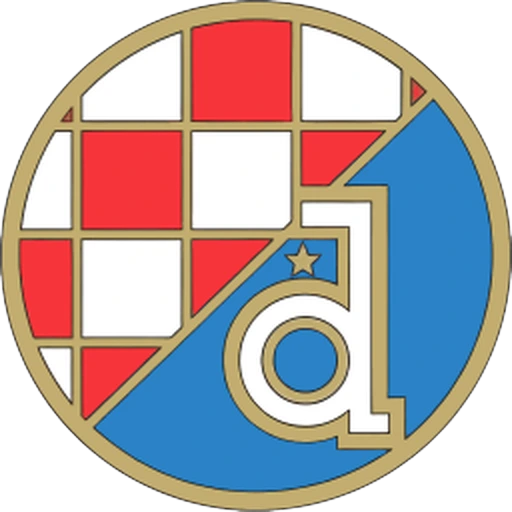
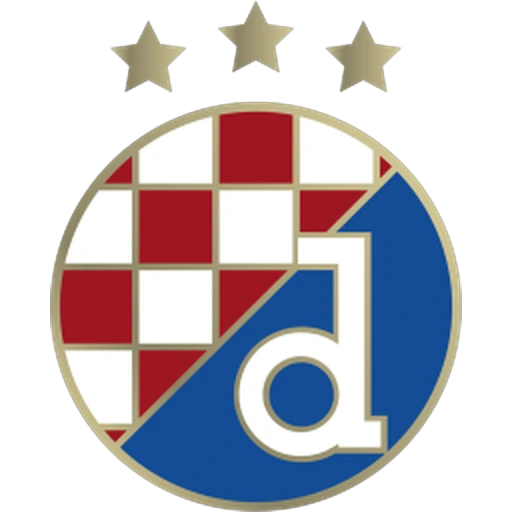
The return of the historic name Dinamo in 2000 also marked the return of the club's traditional identity. The Croatia crest was abandoned in favour of a modern circular emblem directly inspired by the classic Građanski design. The Croatian chequerboard occupied the upper-left section, while the familiar lowercase "d" dominated the blue half of the badge, symbolising both the club's post-war history and its pre-1945 heritage. The following decade saw several subtle refinements to the colours, outlines and proportions between 2000 and 2013, gradually producing a cleaner and more contemporary design without altering the emblem's core elements.
Between 2013 and 2019, the crest underwent further graphic refinement, introducing richer colours, cleaner gradients and improved proportions while preserving the traditional circular composition. The Croatian chequerboard and lowercase "d" remained the defining features, reinforcing the club's visual continuity across print and digital media.
In 2019, Dinamo unveiled the current version of its crest, adding three gold stars above the badge to commemorate the club's achievement of more than thirty Croatian and Yugoslav league championships, following the convention of one star for every ten league titles. Aside from the stars, the emblem retained the familiar circular design inspired by Građanski Zagreb, combining the Croatian chequerboard with the iconic lowercase "d" that has symbolised Dinamo for more than half a century. The modern crest successfully unites the club's pre-war heritage, post-war identity and contemporary success within a single, timeless design.
GNK Dinamo Zagreb Club History
Although GNK Dinamo Zagreb was officially established on 9 June 1945, the club traces its origins to 26 April 1911, when Prvi hrvatski građanski športski klub (Građanski Zagreb) was founded. Građanski quickly became one of the leading clubs in the Kingdom of Yugoslavia, winning six national championships and establishing the blue colours that remain synonymous with Dinamo today. Following the end of the Second World War, the communist authorities dissolved Građanski, but many of its players, officials, supporters and traditions were carried into the newly formed Dinamo Zagreb, creating an unbroken sporting and cultural continuity that the club officially recognises today.
From its formation in 1945, Dinamo immediately established itself among the giants of Yugoslav football alongside Red Star Belgrade, Partizan Belgrade and Hajduk Split. The club won its first Yugoslav championship in 1948, followed by further league titles in 1954, 1958 and 1982, while regularly competing for domestic honours. Dinamo also became renowned for its attractive attacking football and the development of outstanding home-grown talent, cementing its reputation as one of the strongest clubs in the former Yugoslavia.
The club's greatest achievement came during the 1960s, a golden era in European competition. Dinamo reached the 1963 Inter-Cities Fairs Cup Final, finishing runners-up to Valencia, before making history four years later by defeating Leeds United over two legs to win the 1966–67 Inter-Cities Fairs Cup. The triumph remains the greatest success by a Croatian club in European football and made Dinamo the first Yugoslav club to lift a major UEFA competition.
During the late 1980s and early 1990s, Dinamo became closely associated with Croatia's growing national identity. The infamous riot before the match against Red Star Belgrade on 13 May 1990, and captain Zvonimir Boban's intervention to defend a supporter, became one of the defining symbolic moments preceding the Croatian War of Independence. Following Croatia's independence, the club underwent a series of politically influenced name changes, becoming HAŠK Građanski in 1991 and Croatia Zagreb in 1993, before the historic name Dinamo was restored on 14 February 2000 after years of supporter opposition.
Since the creation of the Croatian First Football League in 1992, Dinamo has dominated domestic football. Under the name Croatia Zagreb, the club won five consecutive league titles during the 1990s before continuing its success after reverting to Dinamo Zagreb in 2000. The club has since established itself as Croatia's most successful football institution, winning numerous league championships, Croatian Cups and Super Cups while regularly qualifying for the UEFA Champions League and UEFA Europa League.
Dinamo has also earned worldwide recognition for its exceptional youth academy, widely regarded as one of Europe's finest. The academy has produced numerous international stars including Luka Modrić, Zvonimir Boban, Robert Prosinečki, Mateo Kovačić, Marcelo Brozović, Mario Mandžukić, Joško Gvardiol, Dani Olmo and many others. The club holds the distinction of producing more home-grown players who have appeared in FIFA World Cup finals than any other club in the world, underlining its extraordinary contribution to Croatian and international football.
In 2011, the club adopted the official name Građanski nogometni klub (GNK) Dinamo Zagreb, restoring the "Građanski" prefix to emphasise its historical connection with Građanski Zagreb. The change reflected the club's commitment to recognising its pre-war heritage while maintaining the Dinamo identity established in 1945.
The fiercest rivalry involving GNK Dinamo Zagreb is with HNK Hajduk Split. Matches between the two clubs are known as the Eternal Derby (Vječni derbi) and are widely regarded as the biggest fixture in Croatian football. First contested in 1946, the rivalry extends far beyond the pitch, reflecting the historic, cultural and regional divide between the Croatian capital of Zagreb and the Dalmatian city of Split. Dinamo traditionally represents inland Croatia and the capital, while Hajduk has long been seen as the symbol of Dalmatia and the Adriatic coast.
The rivalry is intensified by the clubs' passionate supporter groups. Dinamo's Bad Blue Boys (BBB), founded in 1986, occupy the north stand of Maksimir Stadium and are renowned as one of Europe's most influential ultra groups. Hajduk's supporters, Torcida Split, founded in 1950, are recognised as the oldest organised supporters' group in Europe. Encounters between the two sets of fans have helped make the Eternal Derby one of the most intense fixtures in the Balkans, with elaborate choreographies, deafening atmospheres and, at times, crowd disorder.
The rivalry also carries significant historical importance. The abandoned league match between Dinamo and the Serbian club Red Star Belgrade on 13 May 1990, following major crowd disturbances at Maksimir Stadium, has become one of the defining symbolic moments preceding the Croatian War of Independence. Dinamo captain Zvonimir Boban's confrontation with a police officer during the unrest remains one of the most iconic images in Croatian sporting history.
Although Hajduk Split remains Dinamo's principal rival, the club has also developed a strong sporting rivalry with HNK Rijeka. As Rijeka emerged as Dinamo's main challenger for domestic honours during the 2010s and 2020s, meetings between the clubs gained increasing significance and became regular title-deciding encounters in the Croatian First Football League and Croatian Cup.
Historically, Dinamo also maintained fierce rivalries with Red Star Belgrade and FK Partizan during the Yugoslav First League era. These matches ranked among the biggest fixtures in Yugoslav football before Croatian independence and were fuelled by both sporting success and political tensions. While no longer contested in domestic competition, they remain an important part of Dinamo Zagreb's history.