Nickname(s):Acereros (The Steelers),Campeón del Sur (Champion of the South)
Founded:1947
Stadium:Estadio Huachipato-CAP Acero
Capacity:10,579
1947-1966
1987-2018
2019-Present
CD Huachipato Crest History
The crest history of Club Deportivo Huachipato is closely connected with the club's origins in Chile's steel industry. Founded in 1947 by workers associated with the Huachipato steelworks near Talcahuano, the club's identity developed around industrial symbolism and its distinctive blue and black colours. Although the crest has changed considerably over the decades, the modern badge continues to reflect Huachipato's working-class and industrial heritage.
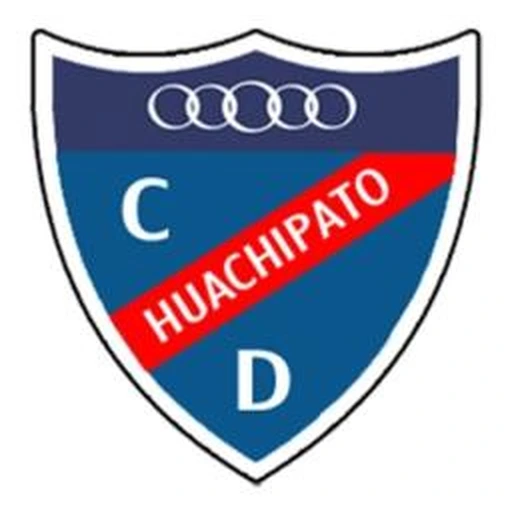
The original 1947–1966 crest used a traditional shield dominated by shades of blue. A dark-blue upper section contained a series of five interlocking rings, representing the club's origins as a multi-sport organisation rather than exclusively a football club.
The lower section of the shield was lighter blue and featured a bold red diagonal band carrying the name HUACHIPATO in white. The letters C and D, representing Club Deportivo, appeared above and below the band. This produced a straightforward institutional badge centred primarily on the club's name rather than a mascot or football symbol.
Huachipato's visual identity later moved toward the blue-and-black vertical stripes that became synonymous with the football team. These colours strongly distinguished the club from other Chilean sides and complemented its nickname Acereros — The Steelers, a direct reference to the industrial community from which Huachipato emerged.
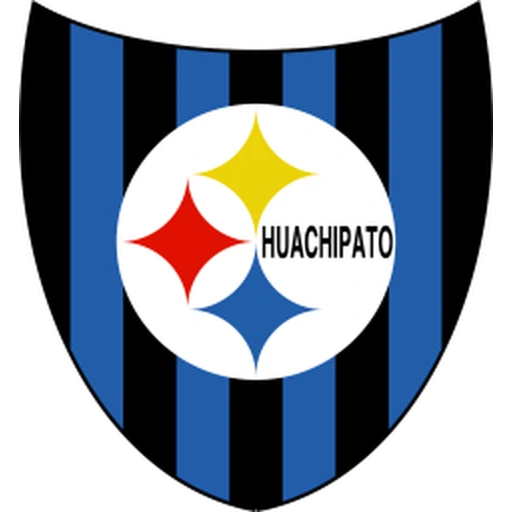
The 1987–2018 crest established the basic appearance familiar to modern supporters. A broad shield was filled with alternating black and blue vertical stripes, while a large white circle occupied its centre.
Inside the white circle appeared three distinctive four-pointed symbols in yellow, red and blue, accompanied by the name HUACHIPATO. These shapes were based on the corporate identity associated with the steel industry behind the club and reinforced the connection between Huachipato football and its industrial origins.
The combination of the striped shield and central industrial symbol became one of the most recognisable badges in Chilean football. It accompanied Huachipato through more than three decades of domestic competition and became firmly associated with the club's identity in Talcahuano.
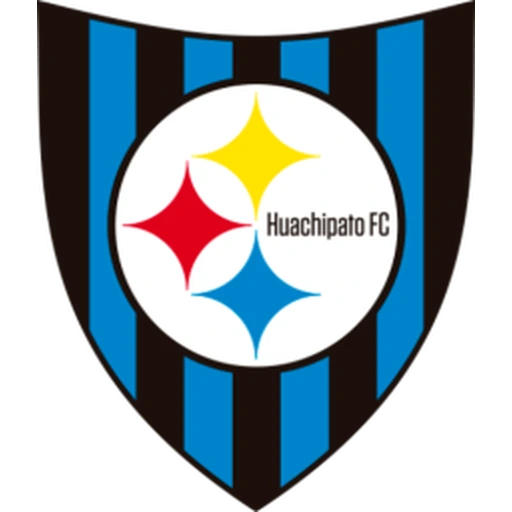
In 2019, the crest received a significant modernisation rather than a complete redesign. The shield became narrower and more sharply pointed, producing a cleaner and more traditional football-badge silhouette.
The blue stripes were changed to a brighter shade, contrasting more strongly with the black sections. The large white central circle remained, as did the three coloured symbols, preserving the most distinctive feature of the previous crest.
The wording was also updated to Huachipato FC, presented more discreetly inside the central circle. This reduced the visual weight of the lettering and placed greater emphasis on the coloured industrial emblem.
The 2019–present crest therefore represents a modern refinement of an identity established decades earlier. Despite the sharper shield and updated typography, the essential elements — blue and black stripes, the white circular centre and the yellow, red and blue symbols — remain immediately recognisable.
CD Huachipato Club History
Club Deportivo Huachipato was founded on 7 June 1947 in Talcahuano, in Chile's Biobío Region. The club was created by workers connected with the developing Huachipato steel industry, and this industrial origin has remained fundamental to its identity. It explains the nickname Acereros — The Steelers and makes Huachipato one of the clearest examples of a Chilean football club shaped by its local industry and working community.
Huachipato began as a multi-sport organisation, providing recreational and sporting activities for workers and their families. Football gradually became its most prominent section, and the club progressed through regional competition before entering the national professional structure.
The club's rise was relatively rapid. Huachipato entered the professional Segunda División during the 1960s and won promotion to the Primera División in 1966, establishing a permanent national presence for football from the industrial communities around Talcahuano and Concepción.
Huachipato's first great era arrived during the 1970s. After gradually establishing itself in the Primera División, the club produced an outstanding 1974 season and won the Chilean Primera División championship for the first time.
The 1974 title was historically significant because Huachipato became the first club from southern Chile to win the country's top-flight championship. This achievement helped establish the nickname Campeón del Sur — Champion of the South and gave the club a special position within Chilean football history.
Much of Huachipato's identity has been built around its connection with the steelworks and the city of Talcahuano. Its blue-and-black colours, the nickname Acereros and the industrial symbolism incorporated into its crest all reinforce this relationship. Unlike many of Chile's major clubs centred in Santiago, Huachipato developed as a strongly regional institution.
The decades following the 1974 championship brought periods of both stability and difficulty. Huachipato remained a familiar presence in Chilean professional football but also experienced relegation, including a drop to the second tier during the 1970s. The club nevertheless repeatedly recovered and re-established itself in the Primera División.
One of Huachipato's greatest strengths became its youth academy. Rather than competing financially with the largest clubs in Santiago, the Acereros developed a reputation for producing and promoting young footballers. This academy structure became an important part of both the club's sporting philosophy and its long-term sustainability.
Huachipato entered another important period during the 2000s, regularly competing in the upper levels of Chilean football and qualifying for South American competitions. Appearances in tournaments such as the Copa Libertadores and Copa Sudamericana increased the club's international profile.
A second national championship finally arrived in 2012, thirty-eight years after the historic 1974 triumph. Huachipato reached the final of the 2012 Clausura against Unión Española. After losing the first leg, the Acereros produced a dramatic comeback in the return match and eventually won the championship through a penalty shootout.
The 2012 title confirmed that Huachipato's 1974 success was not merely an isolated achievement. It also earned the club another opportunity to represent Chile in the Copa Libertadores, reinforcing its status as one of the most successful clubs from outside the Santiago metropolitan area.
Huachipato traditionally played at the Estadio Las Higueras in Talcahuano. The old ground was replaced by a modern stadium constructed on the same site, which opened in 2009 as the Estadio CAP. Today known as Estadio Huachipato-CAP Acero, it remains closely linked to the steel industry that created the club.
The club was deeply affected by the 2010 Chile earthquake, whose epicentre was close to the Biobío Region. Talcahuano suffered extensive damage from both the earthquake and subsequent tsunami. Against this background, football became part of the wider recovery of the local community, further strengthening Huachipato's relationship with the region it represents.
Another exceptional chapter arrived in 2023. Huachipato entered the final stages of the Primera División season competing for the championship and ultimately secured its third Chilean league title, finishing ahead of Cobresal after a dramatic title race.
The 2023 championship came more than seventy-five years after the club's foundation and demonstrated Huachipato's continuing ability to challenge clubs with considerably larger supporter bases and financial resources. The title also returned the Acereros to the Copa Libertadores.
Huachipato's most important rivalries are regional rather than based on one dominant national clásico. Matches against clubs from the Greater Concepción area, particularly Deportes Concepción, have historically carried strong local significance, while encounters with Universidad de Concepción have also developed into important regional fixtures.