Nickname(s):Los Itálicos (The Italians), Los Tanos (The Italians), Audinos
Founded:1910
Stadium:Estadio Bicentenario de La Florida
Capacity:12,000
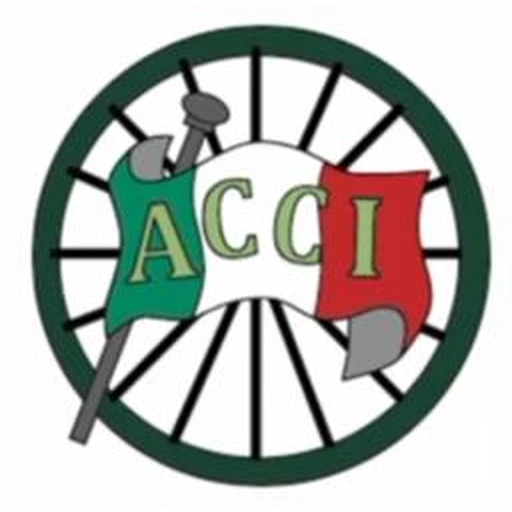
1910-1921
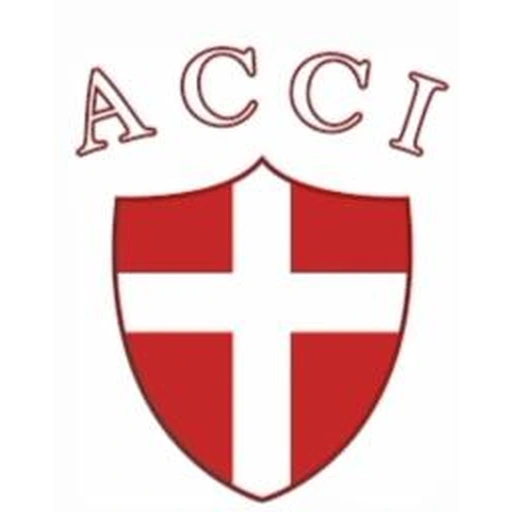
1921-1938
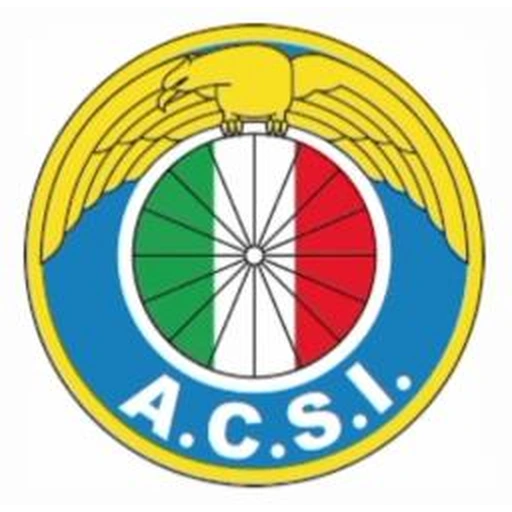
1938-1977
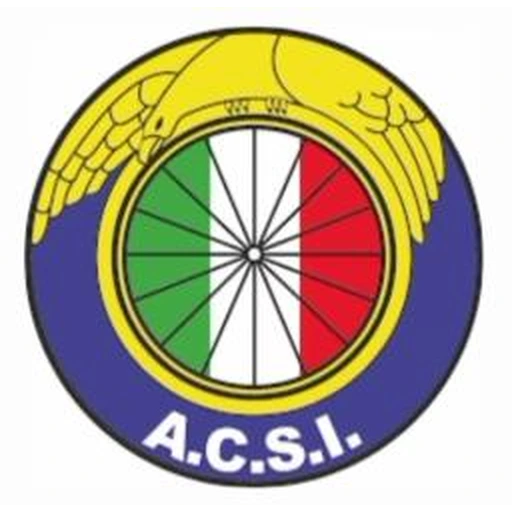
1977-2000
2000-2003
2003-Present
Audax Italiano Crest History
The crest history of Audax Italiano reflects the club's strong Italian heritage and its origins within the Italian immigrant community of Santiago. For most of its history, the badge incorporated the colours of the Italian flag, the wheel associated with the club's cycling origins and the initials of its former name, Audax Club Sportivo Italiano (ACSI). The modern crest introduced in 2003 radically simplified these historic elements while preserving their underlying symbolism.
The original 1910–1921 emblem directly represented the organisation's beginnings as a cycling club. A large bicycle wheel formed the background, while a ribbon in the Italian colours of green, white and red crossed its centre. The initials ACCI, referring to the club's early identity, appeared prominently across the ribbon, while cycling-related elements reinforced the organisation's sporting origins.
Between 1921 and 1938, the club adopted a completely different design. The wheel disappeared and was replaced by a traditional shield divided into red and white sections, strongly reminiscent of European heraldic badges. The letters ACCI appeared separately above the shield, maintaining a connection with the club's name while producing a considerably simpler identity.
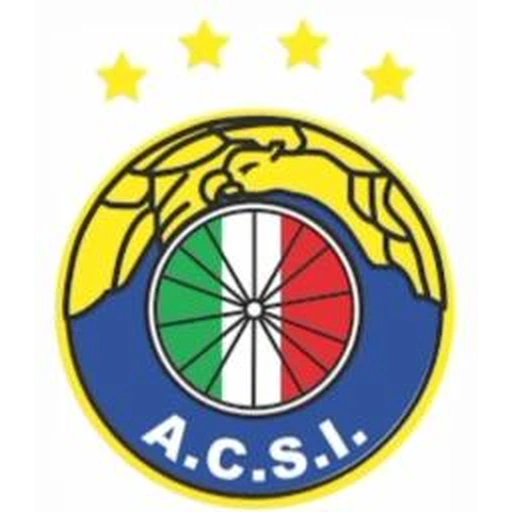
A major redesign arrived in 1938. The 1938–1977 crest returned to the circular form and reintroduced the wheel as its central element. The wheel was coloured green, white and red, directly referencing Italy, while a large golden eagle spread its wings across the upper part of the badge. A blue lower section contained the initials A.C.S.I., representing Audax Club Sportivo Italiano. This design established the basic visual identity that would remain in use for more than six decades.
From 1977 to 2000, the same fundamental composition was retained but modernised. The circular badge became more compact, the surrounding colours were adjusted and the eagle and Italian tricolour wheel were redrawn. The initials A.C.S.I. remained clearly visible across the blue lower portion, preserving the connection with the club's Italian sporting heritage.
The 2000–2003 crest continued the traditional circular design with another refinement of the artwork. The golden eagle became more prominent across the upper section, while the Italian tricolour wheel remained at the centre. Four gold stars appeared above the badge, representing the club's four Chilean league championships won in 1936, 1946, 1948 and 1957.
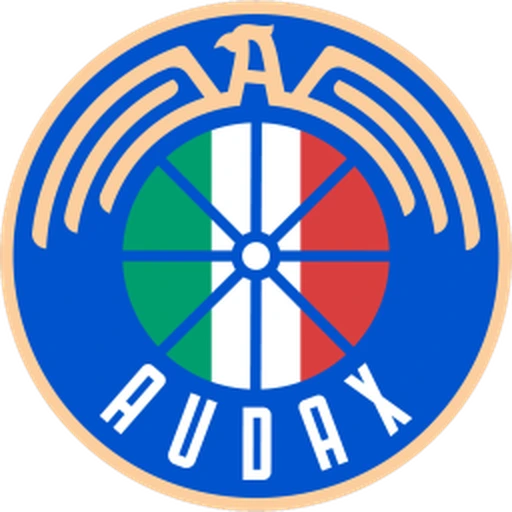
In 2003, Audax Italiano introduced a radically modernised identity. The eagle and A.C.S.I. initials disappeared, while the historic wheel became the dominant feature of the crest. The new circular badge used a strong blue background, with a stylised wheel incorporating green, white and red sections to preserve the club's Italian roots.
The name AUDAX was placed prominently around the lower part of the new badge, replacing the older initials and giving the crest a cleaner and more immediately recognisable identity. The wheel's spokes also create a strong geometric appearance, connecting the modern football club directly with the cycling organisation from which it originated in 1910.
Since 2003, this design has remained Audax Italiano's principal crest. Although dramatically different from the elaborate eagle badges used throughout much of the twentieth century, it retains the two most important historical elements of the club's identity: the Italian tricolour and the bicycle wheel.
Audax Italiano Club History
Audax Italiano was founded on 30 November 1910 in Santiago, Chile, by members of the city's Italian immigrant community. The organisation was originally established as Audax Club Ciclista Italiano, with cycling rather than football as its principal activity. This origin explains why the bicycle wheel has remained such an important element of the club's visual identity.
Football gradually became increasingly popular within the organisation, and in 1921 a dedicated football section was established. The club subsequently developed into one of the strongest teams in Santiago, while retaining the Italian identity that distinguished it from many other Chilean clubs.
During the amateur era, Audax became an important force in Chilean football. Its growing popularity was demonstrated dramatically in 1932, when the club undertook an extensive tour of the Americas. Audax played dozens of matches across several countries, helping establish its reputation beyond Chile before returning home for the beginning of a new era in the country's football.
Audax Italiano was one of the eight founding members of Chile's professional league in 1933. The establishment of professional football transformed the domestic game, and Audax quickly emerged as one of its leading clubs alongside teams such as Colo-Colo, Magallanes and Unión Española.
The club won its first professional Chilean Primera División championship in 1936. This success established Audax among the country's elite and marked the beginning of the most successful period in its history.
A second league championship followed in 1946, confirming Audax's position as one of the major forces of the era. Only two years later, the club captured another national title in 1948, giving it three championships within the first fifteen seasons of Chilean professional football.
Audax's fourth championship arrived in 1957. That title completed a remarkable collection of four league championships, 1936, 1946, 1948 and 1957, and the four achievements would later be represented by four stars above the club crest.
One of the defining elements of Audax Italiano's identity is its rivalry with Unión Española and Palestino. All three clubs were created by immigrant communities in Chile, Italian, Spanish and Palestinian respectively, and their meetings became collectively associated with the Clásico de Colonias. Matches between these clubs represent not only football rivalries but also the distinctive cultural histories of Santiago's immigrant communities.
Audax was particularly influential during the first decades of Chilean professional football, but after the championship of 1957 the club struggled to reproduce its earlier national dominance. The emergence and consolidation of larger clubs such as Colo-Colo, Universidad de Chile and Universidad Católica gradually changed the balance of Chilean football.
The following decades brought periods of instability, including relegation from the top division. Audax spent parts of its history outside the Primera División, but its traditional identity and support within Santiago allowed the club to survive difficult periods and eventually re-establish itself at the highest level.
A major revival began during the 1990s. Audax returned to the Primera División in 1996, beginning a new period of stability in the top flight. The club increasingly became known for developing technically gifted players and operating effectively despite having fewer financial resources than Chile's largest institutions.
The 2000s brought one of Audax's strongest modern periods. Under coach Raúl Toro, the club developed an attractive attacking side and challenged near the top of Chilean football. Audax reached the final of the 2006 Clausura, where it faced Colo-Colo. Although it finished runner-up, the campaign returned the club to national prominence.
That resurgence also brought Audax back onto the international stage. The club qualified for competitions including the Copa Libertadores and Copa Sudamericana, representing a significant achievement for a team whose last national championship had come several decades earlier.