Nickname(s):Dragão (The Dragon), Rubro-Negro (The Red and Black)
Founded:1937
Stadium:Estádio Antônio Accioly
Capacity:12,500
1937-1940
1940-1950
1950-1971
1971-1990
1990-2007
2007-2014
2014-2016
2016-2018
2018-2020
2020-Present
Atlético Clube Goianense Crest History
The crest history of Atlético Clube Goianiense reflects the gradual development of an identity built around the club’s traditional red, black and white colours and the initials ACG. While the earliest emblem was circular, the distinctive inverted triangular shield introduced during the 1940s became Atlético’s defining symbol for most of its history. In 2020, however, the club introduced its most radical redesign.
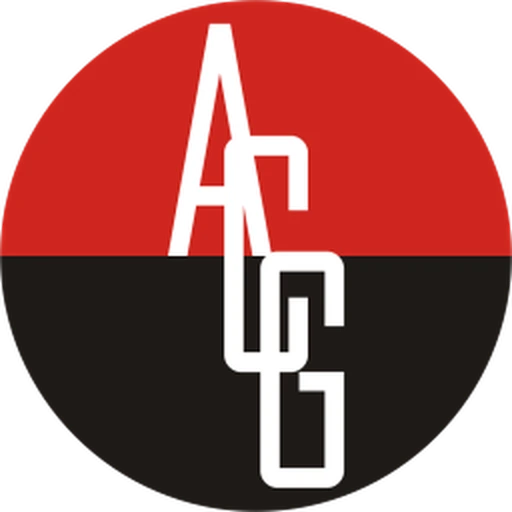
The earliest crest shown, used from 1937 to 1940, was completely different from the badge associated with Atlético today. It consisted of a circle divided horizontally into red and black halves, with an elongated white ACG monogram running vertically through the centre. The design established both the club initials and its characteristic colour combination immediately after its foundation.
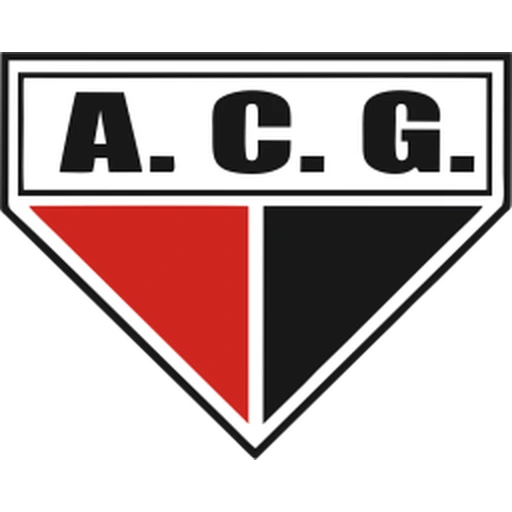
Between 1940 and 1950, Atlético adopted the basic shape that would define its identity for the next eight decades. The circular badge disappeared in favour of an inverted triangular shield. A rectangular white panel across the top contained the initials “A.C.G.”, while the lower section was divided vertically into red and black fields separated by white lines.
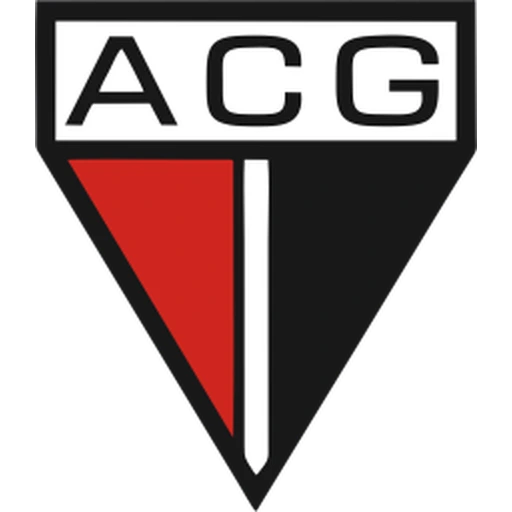
The 1950–1971 version retained this triangular construction but gave it a heavier appearance. The black outline became much thicker, the upper section was enlarged and the punctuation disappeared from the ACG initials. The red-and-black lower section became narrower towards the pointed base, strengthening the geometric character of the badge.
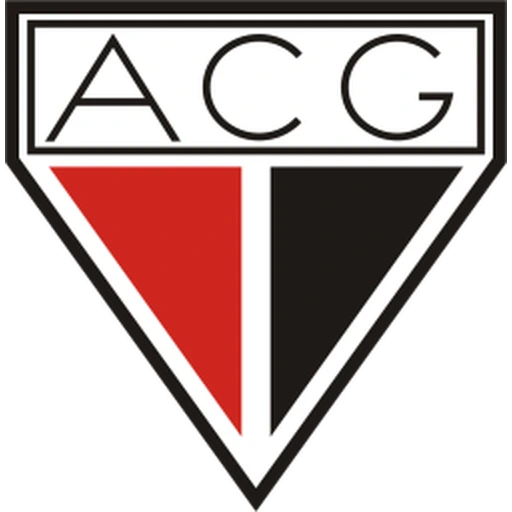
Between 1971 and 1990, the crest was refined into a cleaner and more elegant form. The outer shield became slightly broader, while the lettering changed to a thinner style. The fundamental arrangement remained unchanged: ACG above a red-and-black divided triangle.
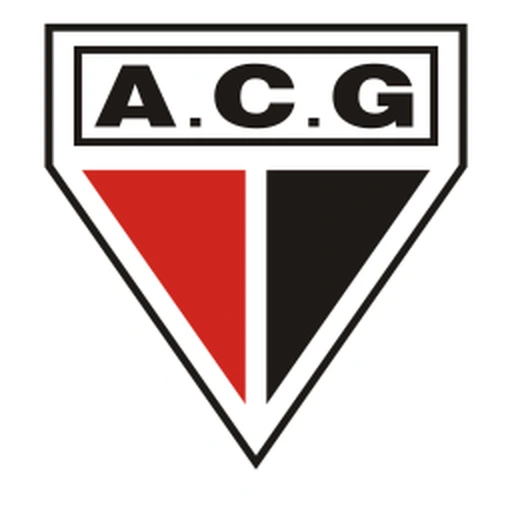
The 1990–2007 crest returned to heavier lettering, with “A.C.G.” once again including punctuation. The proportions were simplified and the white dividing line between the red and black sections became more prominent. By this period, the triangular crest had become firmly established as Atlético Goianiense’s traditional visual identity.
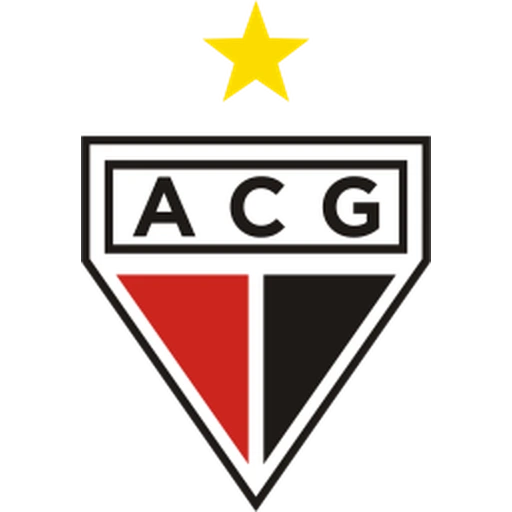
For 2007–2014, the same badge was used with a golden star positioned above it. The underlying shield remained virtually unchanged, demonstrating how stable Atlético’s visual identity had become.
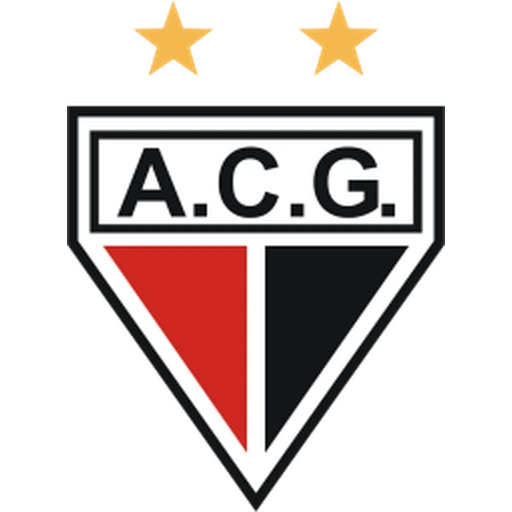
Between 2014 and 2016, a second golden star was added above the crest. The traditional A.C.G. shield itself remained unchanged, with the stars serving as additional decorative symbols associated with the club’s sporting achievements.
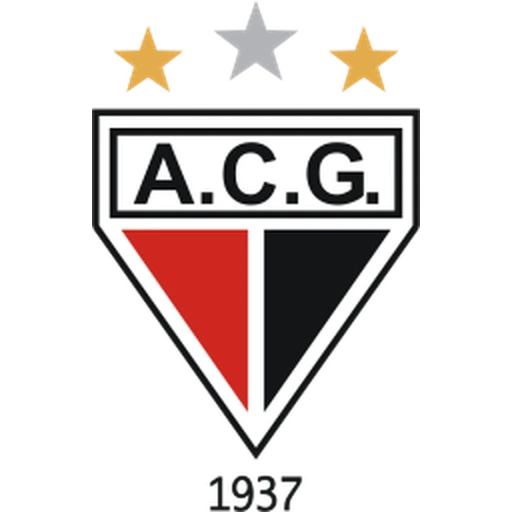
The 2016–2018 version expanded this concept further. Three stars appeared above the badge, with a silver star in the centre flanked by two golden stars. The year 1937, marking the club’s foundation, was also added beneath the crest.
For 2018–2020, Atlético again retained the familiar triangular shield. The punctuation was removed from the ACG lettering, while the three-star arrangement remained above it. The red section also became noticeably brighter, giving the traditional badge a somewhat more contemporary appearance.
A dramatic transformation arrived in 2020. After approximately eighty years of variations on the same triangular design, Atlético introduced an entirely new crest. The traditional horizontal ACG panel and simple red-and-black division disappeared, replaced by a much more angular and vertically constructed emblem.
The 2020–Present crest forms the letters ACG directly into the geometry of the shield. Red, black and white sections interlock to create a sharp, modern monogram, while the pointed lower edge preserves a visual connection with the club’s historic triangular badges. Three stars remain positioned above the crest.
Atlético Clube Goianense Club History
Atlético Clube Goianiense was founded on 2 April 1937 in Goiânia, Goiás, and developed into one of the most important football institutions in Brazil’s Central-West region. Known as Dragão (The Dragon) and Rubro-Negro (The Red and Black), Atlético has built its identity around its traditional red-and-black colours and a strong connection with the Campinas district of Goiânia.
Atlético emerged during the early development of organised football in Goiás. The club quickly became one of the dominant forces in the state and won the inaugural Campeonato Goiano in 1944. This success established Atlético among the traditional powers of Goiás football, alongside clubs that would later include Goiás and Vila Nova.
The club accumulated numerous Campeonato Goiano titles over the following decades and became particularly associated with intense local competition. Its rivalry with Goiás, generally known as the Clássico do Equilíbrio, became one of the major fixtures in the state, while matches against Vila Nova also developed into important Goiânia derbies.
For much of the twentieth century, Atlético's achievements were concentrated primarily at state level. Like many clubs outside Brazil's traditional football centres of Rio de Janeiro and São Paulo, establishing a permanent position in the national divisions proved more difficult. Nevertheless, Atlético periodically competed on the national stage and gradually built a reputation beyond Goiás.
One of the club's most important breakthroughs came in 1990, when Atlético won the Campeonato Brasileiro Série C. The achievement represented its first major national title and demonstrated that the club could compete successfully beyond state football.
Atlético experienced difficult periods during the following years, including spells outside the highest levels of the Brazilian league system. A major revival began during the 2000s. Improved performances and successive promotions transformed the club from a regional force into an increasingly established participant in Brazil's national competitions.
In 2008, Atlético captured another Série C championship, beginning a rapid rise through the divisions. The following season brought an excellent campaign in Série B, and promotion returned the club to the Campeonato Brasileiro Série A for 2010, ending a long absence from Brazil's top flight.
Atlético subsequently moved several times between Série A and Série B, but the club increasingly demonstrated an ability to recover quickly from relegation. In 2016, the Dragão produced one of its finest national campaigns, winning the Campeonato Brasileiro Série B and earning another promotion to Série A.
Another important chapter began with the club's return to the top division in 2020. Atlético became increasingly competitive against some of Brazil's largest clubs and also appeared internationally in the Copa Sudamericana.
The 2022 Copa Sudamericana campaign became one of the greatest achievements in Atlético's history. The Dragão advanced all the way to the semi-finals, defeating established opposition during an impressive continental run before being eliminated by São Paulo on penalties. It represented an extraordinary international achievement for a club whose roots had traditionally been centred on Goiás football.
Atlético Goianiense’s most important rivalries are with the other major clubs of Goiânia, particularly Goiás and Vila Nova. The rivalry with Goiás is traditionally known as the Clássico do Equilíbrio, a name reflecting the historically competitive nature of meetings between the two sides, while encounters with Vila Nova form another of the city's major derbies and carry strong local significance. Atlético also has a traditional rivalry with Goiânia Esporte Clube, especially rooted in the earlier decades of Goiás football when the two clubs regularly competed for state supremacy.