Nickname(s):Esquadrão de Aço(The Steel Squadron),Alvinegro(The Black and White)
Founded:1909
Stadium:Estádio Joaquim Portugal(Arena Sicredi)
Capacity:6,000
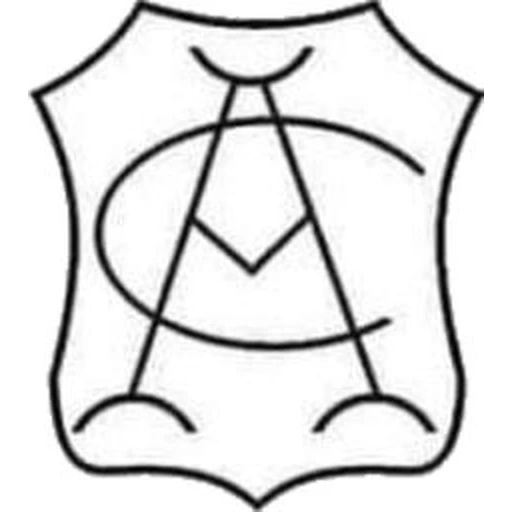
1917
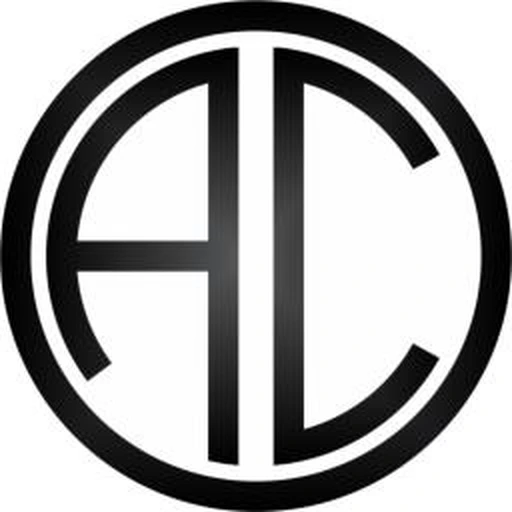
1941
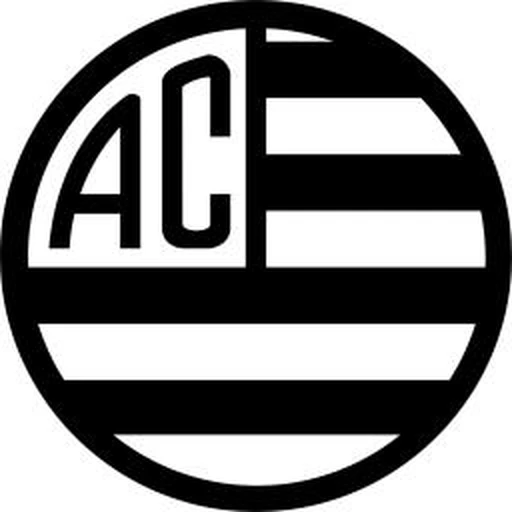
1949-1969
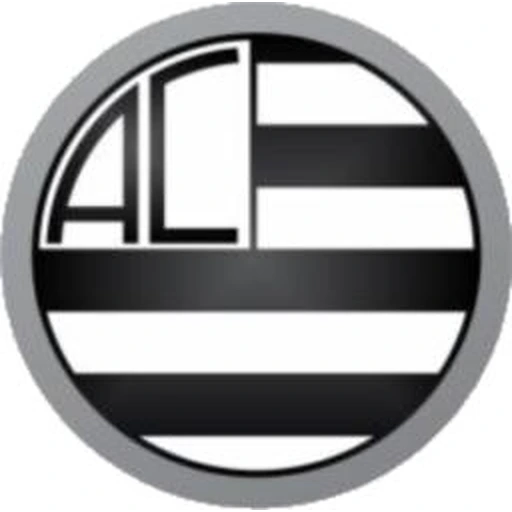
1970
1971-Present
Athletic Club Crest History
The crest history of Athletic Club of São João del-Rei is unusually restrained compared with many Brazilian clubs. Across more than a century, Athletic has relied almost entirely on two elements: the club's intertwined AC monogram and its traditional black-and-white colours. Although the shape surrounding the initials changed considerably, the monogram remained the central element of the club's visual identity.
The earliest crest shown, dating from 1917, used a traditional white shield outlined in black. Inside appeared an elaborate black monogram combining the letters A and C. The tall vertical stroke of the “A” extended almost the full height of the badge, while the sweeping curve of the “C” crossed behind it. This established the basic monogram that would survive, in modified form, throughout Athletic's history.
By 1941, the shield had disappeared completely. Athletic adopted a bold circular emblem containing a highly stylised AC monogram. The letters were constructed almost as geometric components of the circle itself, producing a much more modern and compact identity. This design represented a major simplification compared with the original 1917 shield.
The 1949–1969 crest retained the circular format but introduced another important element: horizontal black-and-white stripes. The AC initials occupied the upper-left portion of the circle, while alternating horizontal bands filled the remainder. This was the first crest shown to combine the monogram directly with the striped pattern strongly associated with Athletic's black-and-white football identity.
A subtle redesign appeared in 1970. The same fundamental circular composition remained, with AC in the upper-left and horizontal stripes across the badge, but the emblem was given a thick grey outer border. The lettering and stripes were also slightly reorganised, giving the crest a heavier and more three-dimensional appearance.
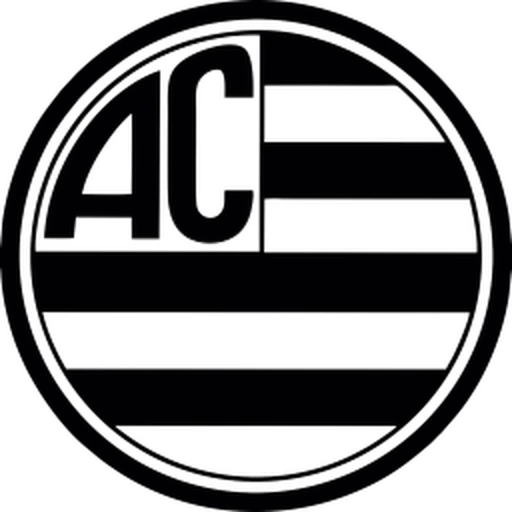
From 1971, Athletic returned to a cleaner version of the same concept. The grey border was removed and replaced by strong black-and-white concentric outlines, while the AC initials and horizontal stripes remained almost unchanged. The result was a sharper and more balanced badge.
Remarkably, this 1971–Present design has endured for more than half a century. Unlike many clubs that have repeatedly modernised or simplified their emblems, Athletic has retained essentially the same badge through its long absence from professional football and its dramatic modern revival.
The current crest therefore connects today's Athletic directly with the club's twentieth-century identity. Its circular construction, AC monogram and black-and-white horizontal stripes create a simple and immediately recognisable emblem. While the club's sporting fortunes have changed dramatically over the decades, its crest has remained remarkably stable, making the modern badge one of the longest-lasting designs in Athletic Club's history.
Athletic Club Club History
Athletic Club was founded on 27 June 1909 in São João del-Rei, Minas Gerais, and is one of the historic football institutions of the interior of the state. Traditionally dressed in black and white, the club became known as Esquadrão de Aço – “The Steel Squadron” and developed a strong local identity around São João del-Rei.
For much of its early history, Athletic competed primarily in regional football. Unlike the major Belo Horizonte clubs, the team represented one of Minas Gerais' historic interior cities and spent much of the twentieth century outside the highest levels of state and national competition.
Athletic nevertheless enjoyed important periods in the Campeonato Mineiro. The club competed in the state's top division during parts of the twentieth century, including an extended spell from the late 1960s into the 1970s. However, after 1970, Athletic gradually disappeared from the leading levels of professional football.
Eventually, the club withdrew from professional competition altogether. For several decades Athletic survived primarily as a social and sporting institution in São João del-Rei rather than as a prominent professional football team. This long absence makes its modern revival one of the most interesting stories in Minas Gerais football.
The turning point came in 2018, when Athletic returned to professional football after an absence of almost half a century. Starting in the lower levels of the Minas Gerais state system, the club began a remarkably rapid climb through the divisions.
Athletic won promotion from the Campeonato Mineiro Segunda Divisão in 2018 and continued progressing through the state structure. In 2020, the club earned promotion from the Módulo II, securing a return to the Campeonato Mineiro's top division for 2021.
The return proved highly successful. Athletic quickly demonstrated that it could compete against the traditional powers of Minas Gerais, including Atlético Mineiro, Cruzeiro and América Mineiro. Strong state championship performances also opened the door to Brazil's national competitions.
In 2022, Athletic enjoyed one of the most important seasons in its history. The club finished strongly in the Campeonato Mineiro and won the Troféu Inconfidência, establishing itself as one of the leading teams from the interior of Minas Gerais. It also began building a national profile through participation in the Brazilian league system.
Another major step followed in 2023. Athletic produced an impressive campaign in the Campeonato Brasileiro Série D, reaching the decisive stages of the competition and earning promotion to Série C. For a club that had only returned to professional football five years earlier, reaching the third national level represented an extraordinary transformation.
The rise continued in 2024. Athletic became one of the strongest teams in Série C and secured another promotion, this time to the Campeonato Brasileiro Série B. It meant that within only a few years the club had progressed from regional football in Minas Gerais to the second tier of Brazilian national football.
The club's home is the Estádio Joaquim Portugal, commonly known as Arena Sicredi, in São João del-Rei. Its relatively compact dimensions give Athletic a very different atmosphere from the large stadiums associated with Brazil's traditional metropolitan clubs, while strengthening the connection between the team and its home city.
Athletic's traditional rivalry is principally associated with clubs from the Campo das Vertentes region and the interior of Minas Gerais rather than with the major Belo Horizonte derbies. Historically, local encounters carried the greatest significance, but Athletic's decades away from professional football interrupted many of these rivalries. Since its revival in 2018, matches against established Minas Gerais sides have gained greater importance, while encounters with Atlético Mineiro, Cruzeiro and América Mineiro are significant state fixtures rather than traditional derbies.