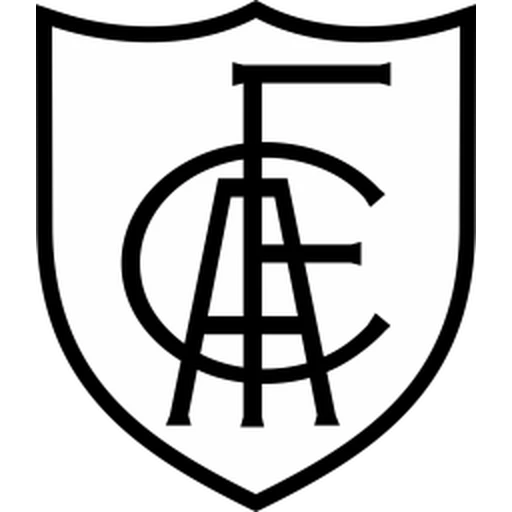
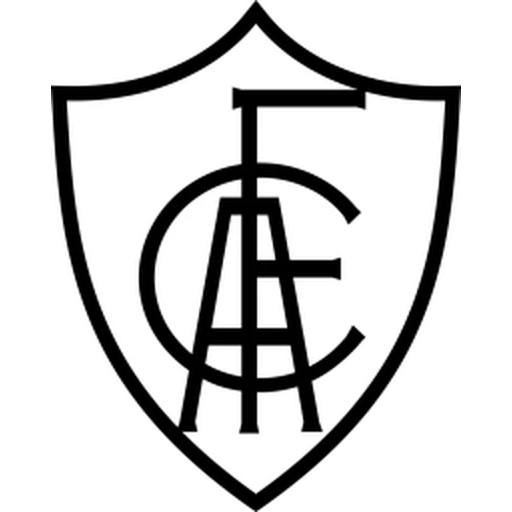
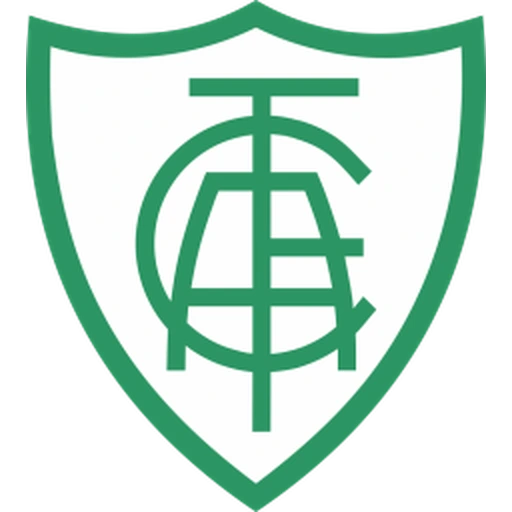
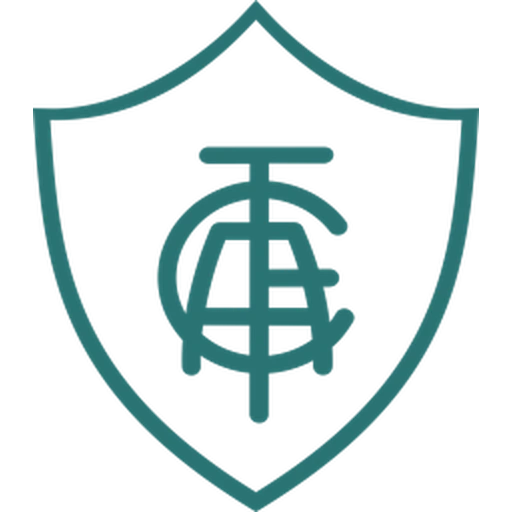
The crest history of América Futebol Clube (Minas Gerais) is defined by exceptional continuity. From the earliest badge shown, the club has relied almost entirely on two elements: a traditional shield and the distinctive intertwined AFC monogram. The greatest visual change has been the transition from black to green, together with the occasional use of stars, commemorative ribbons and gold.
The earliest crest shown, used from 1912 to 1933, already established the fundamental identity that América would retain for more than a century. A white shield with a black outline contained an elaborate intertwined monogram formed from the letters A, F and C, representing América Futebol Clube. The absence of additional imagery made the monogram itself the central symbol of the club.
The 1943–1971 crest retained essentially the same concept. The shield became slightly narrower and more angular, while the black AFC monogram was redrawn with finer proportions. Despite these adjustments, the design remained immediately recognisable as a continuation of the original badge.
A significant visual change arrived in 1971. For the 1971–1993 crest, the traditional black was replaced by green, the colour that would subsequently dominate América's visual identity. Both the shield outline and AFC monogram appeared in green against a white background. The shield itself also became broader and more symmetrical.
Between 1993 and 1997, the green was presented in a darker, slightly bluish tone. The shield became narrower and the monogram more compact, but the fundamental combination of a white field and intertwined AFC initials remained unchanged.
The 1997–2000 version returned to a brighter green and enlarged the monogram. The shield was also widened, bringing its proportions closer to those used during the 1970s and 1980s.
For 2000–2009, América introduced a gold star above the shield. The underlying badge remained almost unchanged, continuing to use the green outline and monogram on white. The star added sporting symbolism without altering the historic crest itself.
Between 2009 and 2011, a second star was introduced, with one gold and one red star positioned above the shield. The crest underneath remained the familiar green-and-white design.
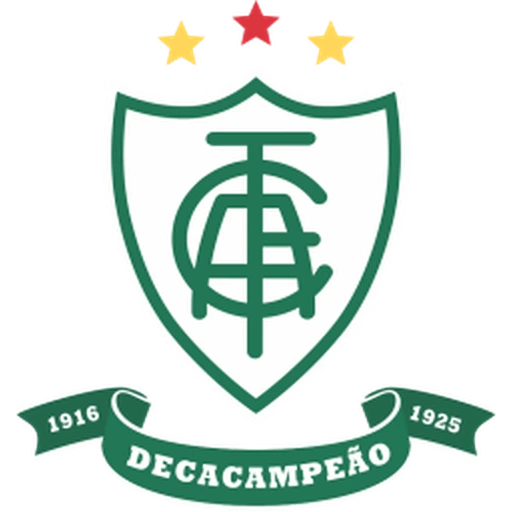
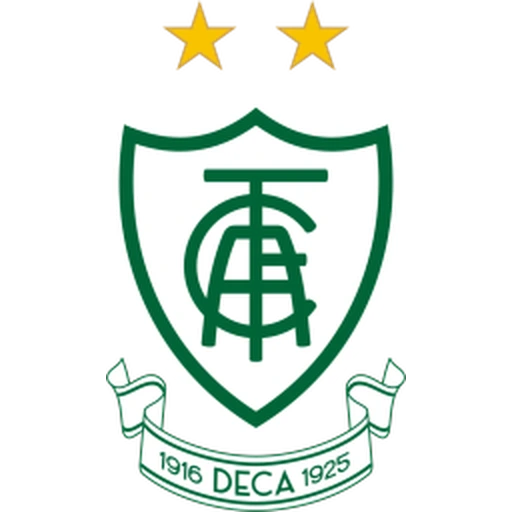
The 2011–2017 badge added a commemorative ribbon beneath the shield carrying the word “DECACAMPEÃO” and the years 1916 and 1925. This celebrated América's extraordinary achievement of winning ten consecutive Campeonato Mineiro titles from 1916 through 1925, one of the defining accomplishments in the club's history. Two gold stars appeared above the crest.
In 2017, the same historical theme was retained but the ribbon was redesigned. The inscription referred directly to the championship sequence with 1916, DECA and 1925, while two gold stars remained above the shield.
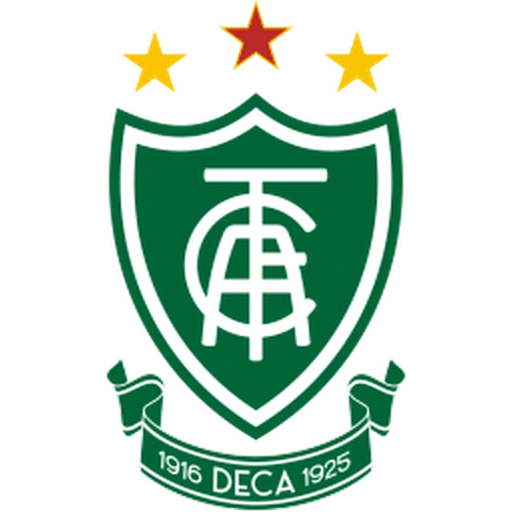
The 2017–2018 version introduced a more elaborate presentation. The shield was filled with dark green rather than white, while the AFC monogram appeared in white. Three stars – two gold and one red – were positioned above it, and a green commemorative ribbon remained below.
For 2018–2020, América returned to the traditional white shield with green monogram. Two gold stars were displayed above it and the commemorative ribbon continued underneath, producing a design that combined the historic badge with references to the club's achievements.
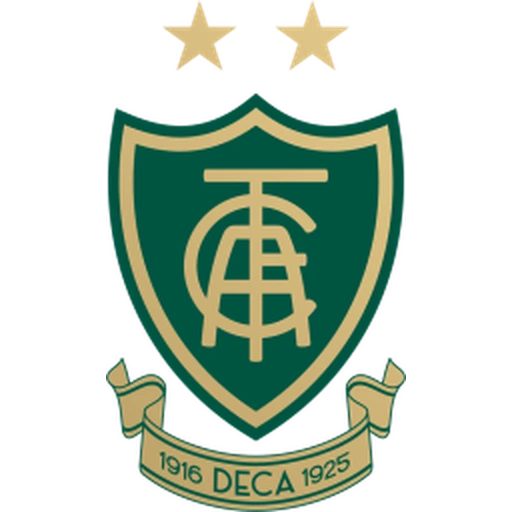
A striking alternative appeared in 2020–2021. The shield was filled with dark green, while both the outline and AFC monogram were rendered in gold. Removing the white background created one of the most visually distinctive interpretations of América's traditional emblem.
A related version appeared in 2021, combining the dark-green and gold shield with two gold stars above and the historical 1916–DECA–1925 ribbon below. The design strongly emphasised the club's championship heritage while retaining the century-old monogram.
In 2022, América returned decisively to simplicity. The 2022–Present crest removed the stars, ribbons, coloured backgrounds and other decorative elements. Once again, the badge consists simply of a white shield outlined in green with the intertwined green AFC monogram at its centre.
América FC Club History
América Futebol Clube, commonly known as América Mineiro, was founded on 30 April 1912 in Belo Horizonte, Minas Gerais. Created by a group of young men in the rapidly developing state capital, América soon became one of the pioneering football institutions of Minas Gerais and would develop into one of the three traditional major clubs of Belo Horizonte alongside Atlético Mineiro and Cruzeiro.
The club initially played in green and white, colours that became central to its identity. Black was later incorporated into the playing colours, creating the familiar green, black and white associated with América today. The club became popularly known as Coelho – “The Rabbit” – a nickname that developed into one of the most recognisable symbols in football from Minas Gerais.
América's first decades produced the most extraordinary period of sustained dominance in the club's history. Beginning in 1916, América won the Campeonato Mineiro ten consecutive times, retaining the state championship every season through 1925. This remarkable achievement became known as the Decacampeonato and remains one of the defining chapters in América's identity. The years 1916 and 1925 and references to Deca have consequently appeared on several versions of the club crest.
The sequence established América as the dominant force in the early history of football in Minas Gerais. Even as Atlético Mineiro and later Cruzeiro grew into powerful rivals, América remained one of the state's traditional institutions.
The club's rivalry with Atlético Mineiro is particularly historic. Meetings between the two became known as the Clássico das Multidões, reflecting the large followings both clubs attracted during the early development of football in Belo Horizonte. América also developed a major rivalry with Cruzeiro as the city's football landscape evolved into competition between three important clubs.
América continued to win state championships after its extraordinary run of the 1910s and 1920s, although the balance of power gradually shifted. Further Campeonato Mineiro titles followed in 1948, 1957 and 1971, demonstrating the club's ability to remain competitive across different generations.
The 1971 Campeonato Mineiro triumph was particularly significant. América completed the championship undefeated, producing one of the finest campaigns in its history. By this period, however, Brazilian football was becoming increasingly dominated by clubs with larger supporter bases and greater financial resources, making sustained success more difficult for América.
During the national-league era, the club experienced long periods outside Brazil's top division. Nevertheless, América repeatedly demonstrated its ability to rebuild. One of its most important national achievements came in 1997, when the club won the Campeonato Brasileiro Série B, securing a major national title and promotion to the highest level.
Another significant trophy arrived in 2009, when América became champion of Série C. The victory helped begin another period of recovery and was followed by promotion from Série B in 2010, returning the club to the top level of Brazilian football.
The club's historic home is the Estádio Independência in Belo Horizonte. Originally opened in 1950 and used during that year's FIFA World Cup, the stadium later became closely associated with América. Following a major reconstruction, it reopened in 2012 as the modern Arena Independência, while retaining the intimate atmosphere that has made it an important part of the club's identity.
América again won Série B in 2017, adding another national championship to its honours. The success helped establish the Coelho as an increasingly competitive club during the modern era and was followed by several seasons competing at the highest level.
One of the strongest recent periods came in the early 2020s. América finished eighth in the 2021 Campeonato Brasileiro Série A, one of its best performances of the national league era. The result earned the club qualification for the Copa Libertadores for the first time in its history.
In 2022, América made its Libertadores debut and progressed through two qualifying rounds to reach the group stage. It represented an important milestone for a club whose history stretched back more than a century but which had rarely enjoyed such international exposure.
América Mineiro’s principal rivalries are with fellow Belo Horizonte clubs Atlético Mineiro and Cruzeiro. The historic rivalry with Atlético is traditionally known as the Clássico das Multidões, a name dating from the early decades of football in Minas Gerais when América and Atlético possessed two of the largest followings in the state. Matches against Cruzeiro also became an important part of Belo Horizonte football as Cruzeiro developed into a major force during the twentieth century. Together, América, Atlético and Cruzeiro form the traditional three-club rivalry of Belo Horizonte, although Atlético and Cruzeiro later developed much larger national supporter bases.