Historical Crests FC Admira Wacker Mödling
Name: FC Admira Wacker Mödling
Nickname(s): Die Admiraner (The Admira)
Founded: 1905
Stadium: Datenpol Arena
Capacity: 8,000
1960s
1997-2008
2008-2017
2017-2024
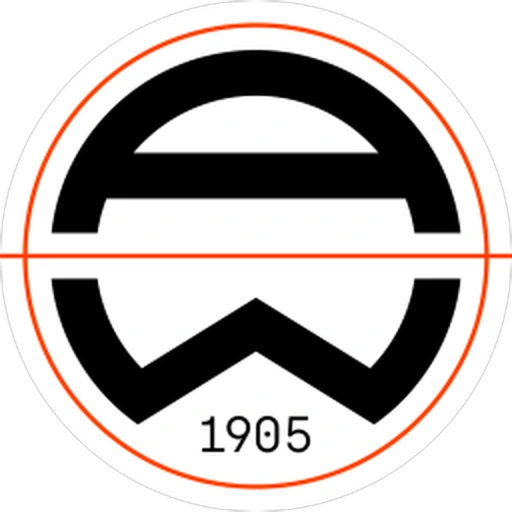
2024-Present
FC Admira Wacker Mödling Crest History
Founded in 1905 as SK Admira Wien, the club's earliest visual identity reflected the traditional black-and-white colours that became synonymous with Admira.
Following a merger with ESV Wien in 1953 and the sponsorship of the Lower Austrian energy companies during the 1960s, the club adopted the distinctive Admira Energie crest. Featuring a bold circular design in blue, yellow, black and white, the badge reflected both the club's new identity as ESV Admira-NÖ Energie Wien and the growing influence of commercial sponsorship in Austrian football.
A major transformation came in 1997, when the club merged with VfB Mödling and became VfB Admira Wacker Mödling. The new crest abandoned the circular design in favour of a traditional shield displaying a prominent griffin, the heraldic symbol of Lower Austria. Combined with the club's name and the black-and-white colours of Admira, the redesign reflected both the club's new home in Mödling and the union of two historic football institutions.
In 2008, following a sponsorship agreement with Trenkwalder, the club introduced another completely new crest. The rectangular badge featured a striking red-and-black diagonal design with a golden griffin and the sponsor's name displayed across the top. Although sponsor branding dominated the emblem, the griffin remained an important link to the club's identity established after the move to Mödling.
The crest was updated once again in 2017 after the naming rights passed to Flyeralarm. The overall composition remained largely unchanged, with the sponsor's name replacing Trenkwalder while the golden griffin and the bold red-and-black colour scheme were retained. The redesign ensured continuity during a period in which the club remained a regular participant in the Austrian Bundesliga.
In 2024, Admira Wacker embarked on a comprehensive rebranding that marked a return to its historic roots. The sponsor-based crest was replaced by a minimalist black-and-white circular emblem featuring a stylised monogram inspired by the club's early identity and the founding year 1905. A thin red ring subtly referenced the club's traditional colours, while the simplified design reflected a modern visual identity focused on heritage rather than commercial branding.
FC Admira Wacker Mödling Club History
Founded in 1905 as SK Admira Wien, FC Admira Wacker is one of Austria's most historic football clubs. Based originally in Vienna, Admira quickly established itself as one of the country's leading teams during the early decades of Austrian football. Before the Second World War, the club enjoyed its golden era, winning multiple Austrian Championships and Austrian Cups, while becoming renowned for its attractive style of play and producing several Austrian internationals.
During the 1930s, Admira emerged as one of the dominant forces in Austrian football. The club won nine Austrian league titles and six Austrian Cups, making it one of the country's most successful teams before the war. Following the Anschluss in 1938, Admira competed in the German football system and reached the 1941 German Championship Final, where it finished runner-up to Schalke 04.
After the war, Austrian football underwent significant restructuring. In 1953, Admira merged with ESV Wien, later adopting the name ESV Admira-NÖ Energie Wien following a sponsorship agreement. The club remained a regular competitor in the Austrian top flight but was unable to replicate the dominance of its pre-war years.
A major turning point came in 1971, when SK Admira Wien merged with SC Wacker Wien to form FC Admira/Wacker Wien. The merger brought together two of Vienna's oldest football clubs, combining their traditions in an effort to remain competitive in an increasingly professional era. The club continued to compete in the Austrian Bundesliga and enjoyed periods of success throughout the 1970s and 1980s.
Another important chapter began in 1997, when Admira/Wacker merged with VfB Mödling and relocated to Mödling, becoming VfB Admira Wacker Mödling. The move marked the end of the club's long association with Vienna and established a new home in Lower Austria, where the club continues to play today.
Throughout the 2000s and 2010s, Admira Wacker remained a familiar presence in the Austrian Bundesliga, developing a reputation for producing talented young players through its academy. The club regularly qualified for the top flight despite operating with one of the league's smallest budgets and participated in several UEFA Europa League qualifying campaigns.
Following relegation from the Bundesliga in 2022, the club began a process of rebuilding both on and off the pitch. In 2024, it returned to its historic identity under the name Admira Wacker, introducing a new heritage-inspired crest that reconnected the club with its origins while looking towards the future.
The club's traditional rivalries stem from its historic roots in Vienna, particularly with Rapid Wien, Austria Wien and First Vienna FC, while more recent rivalries have developed with SKN St. Pölten following the club's relocation to Lower Austria.
FC Admira Pins
Your Dynamic Snippet will be displayed here... This message is displayed because you did not provide enough options to retrieve its content.