Nickname(s):El Rojo(The Red), Los Diablos Rojos (The Red Devils)
Founded:1905
Stadium:Estadio Libertadores de América – Ricardo Enrique Bochini
Capacity:48,069
1905-1907
1907-1911
1911-1912
1912-1920
1920-1930
1930-1940
1940-1950
1950-1977
1977-1983
1983-1987
1987-Present
CA Independiente Crest History
The crest history of CA Independiente reflects the transformation of the club from its early blue-and-white identity to the famous red-and-white colours that eventually became synonymous with El Rojo. While the earliest emblems experimented with several different shapes and monograms, the familiar red shield with the diagonal white band and CAI initials gradually emerged as the club's permanent symbol.
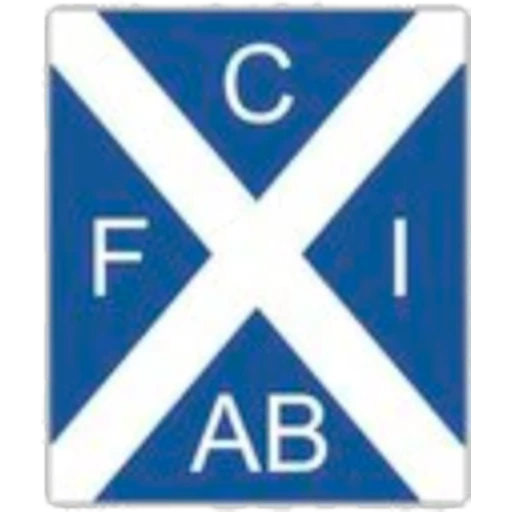
Between 1905 and 1907, Independiente used a rectangular blue badge divided by a large white diagonal cross. The letters C, F, I and AB appeared in the four sections, referring to the club's early name and identity. The design bore little resemblance to the crest associated with Independiente today.
In 1907, the emblem was simplified while retaining the blue-and-white colour scheme. The rectangular form and white diagonal cross remained, but the lettering was reorganised to display the initials IFC, representing Independiente Football Club.
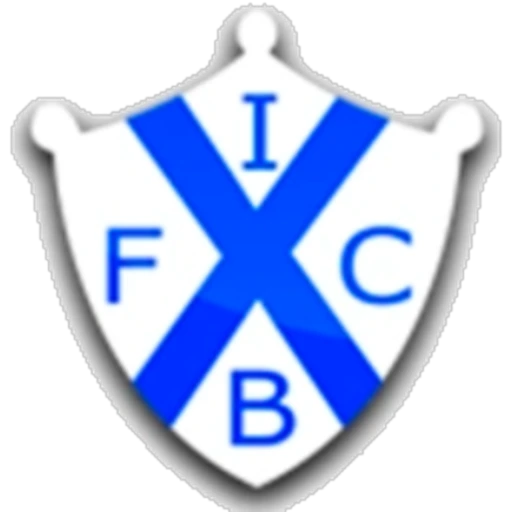
Between 1911 and 1912, the rectangular badge was replaced by a more traditional shield. A bright-blue diagonal cross dominated the white background, with the letters I, F, C and B distributed around it. This was the final major crest based primarily on the club's original blue-and-white identity.
A dramatic transformation occurred in 1912. Independiente had by then adopted red as its defining colour, inspired by the red shirts of English club Nottingham Forest. The new emblem was a horizontal red oval containing the words “Independiente Avellaneda”, with F.B.C. positioned in the centre. This was the first crest to make red the dominant colour.
Between 1920 and 1930, the club experimented with a completely different circular monogram. Large intertwined letters representing CAI appeared in white and black against a dark-red circular background. The design was elegant but quite different from the shield that would soon become permanently associated with Independiente.
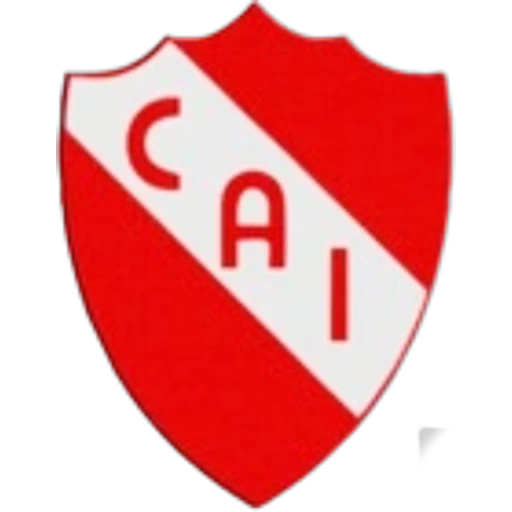
In 1930, the foundations of the modern crest were established. Independiente adopted a red shield crossed by a white diagonal band, with the initials CAI placed across the stripe. The simple combination of red, white and the club initials created an identity that proved remarkably durable.
The 1940–1950 version retained exactly the same fundamental composition but introduced subtle changes to the proportions of the shield and the lettering. The red became darker and the initials were presented more prominently across the white band.
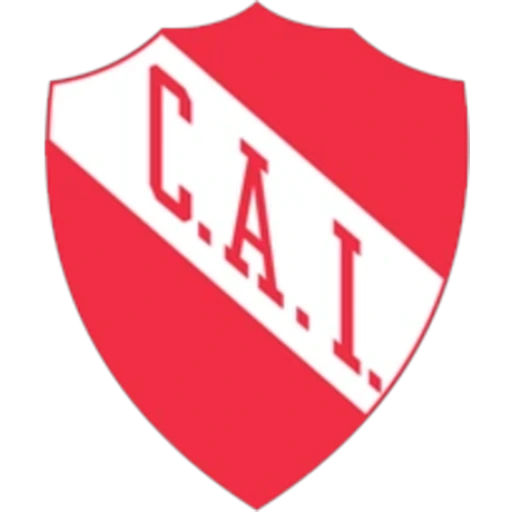
In 1950, the crest was cleaned up considerably. The shield became broader and more symmetrical, the red field brighter and the diagonal white band more precisely defined. The initials C.A.I. were rendered in a distinctive narrow typeface. This version remained in use for more than two decades and firmly established the classic Independiente badge.
A refinement followed in 1977. The shield retained the traditional red-and-white composition but received a lighter outline and slightly altered proportions. The CAB-style typography of earlier decades was replaced by cleaner CAI lettering, improving visibility while preserving the historic design.
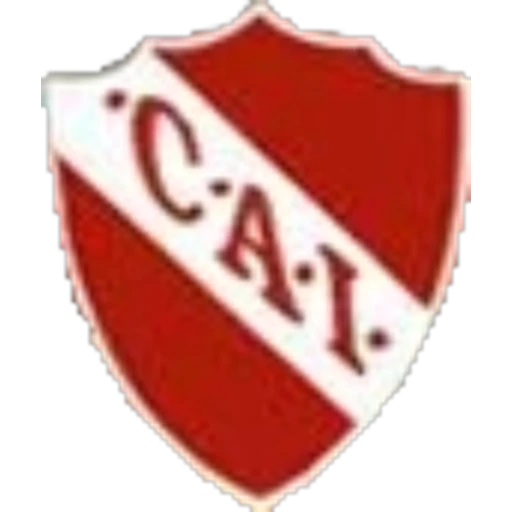
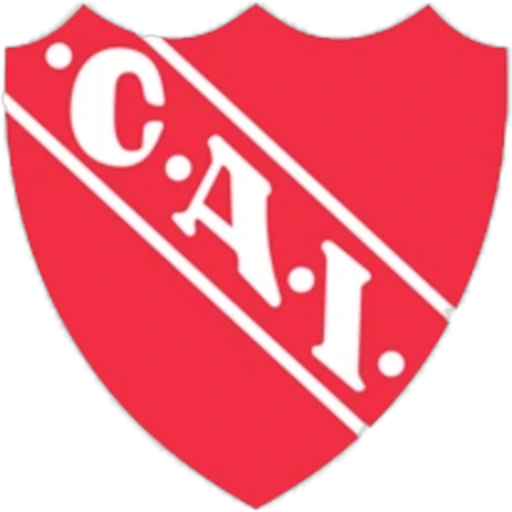
In 1983, another variation appeared. The shield became broader and the diagonal stripe narrower, while the initials were displayed in a more stylised form with punctuation between the letters. The stronger red colouring gave the badge a particularly bold appearance.
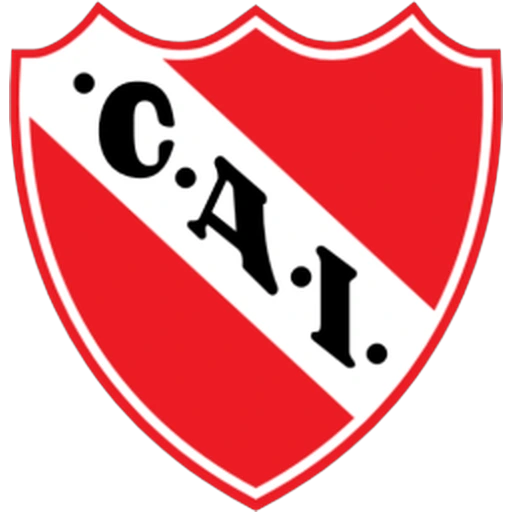
The crest was refined once again in 1987, producing the design that remains in use today. The 1987–Present badge features a bright-red shield surrounded by a clean red-and-white outline. A broad white diagonal band runs from the upper left to the lower right, carrying the black initials “C.A.I.”
The modern crest is deliberately simple. Unlike many major South American clubs, Independiente has generally resisted adding championship stars, trophies or elaborate decorative elements to its regular badge. Instead, the club continues to rely on the three elements that have defined its identity for almost a century: the red shield, white diagonal stripe and CAI initials.
CA Independiente Club History
Founded in 1905, Club Atlético Independiente is one of the most successful and historically important football clubs in Argentina and South America. Based in Avellaneda, immediately south of Buenos Aires, the club is famous as “El Rojo” (The Red) and “Los Diablos Rojos” (The Red Devils) and is particularly renowned for its extraordinary record in the Copa Libertadores.
Independiente was created by a group of young employees from a department store in Buenos Aires who wanted to establish their own football club after being restricted from playing for their employer's team. They declared themselves “independent”, giving the new institution its name. Although the club traces its beginnings to 1904, 1 January 1905 is traditionally recognised as its official foundation date.
The club initially played in blue and white, but soon adopted the red colours that would define its identity. The change is traditionally associated with club president Arístides Langone, who had been impressed by English side Nottingham Forest. Red shirts were adopted in 1908, eventually producing the famous nickname El Rojo.
Independiente moved to Avellaneda, where it developed into one of the major institutions of Argentine football. During the amateur era, the club won important championships and established a reputation for attacking football. The outstanding Independiente teams of the 1920s featured players such as Manuel Seoane and Raimundo Orsi.
The nickname “Los Diablos Rojos” also emerged from this period. Independiente's fast and skilful attacking football led journalists to describe the players as Red Devils, a name that became permanently associated with the club.
With the introduction of professional football in 1931, Independiente became one of Argentina's dominant clubs. The team won professional league championships in 1938 and 1939, led by an exceptional attacking unit that included Arsenio Erico, Vicente de la Mata and Antonio Sastre.
Paraguayan striker Arsenio Erico became one of the greatest figures in Independiente's history. His extraordinary goalscoring record made him a legend of Argentine football and he remains recognised among the greatest goalscorers in the history of Argentina's top division.
Further domestic success followed, but Independiente's identity was transformed during the 1960s and 1970s, when the club became a dominant force in South American football.
In 1964, Independiente became the first Argentine club to win the Copa Libertadores. The club successfully defended the trophy in 1965, establishing itself internationally and beginning a relationship with the competition that would eventually earn Independiente the title “Rey de Copas” (King of Cups).
An even more remarkable period followed during the 1970s. Independiente won the Copa Libertadores in four consecutive seasons — 1972, 1973, 1974 and 1975. No other club has matched this sequence of four consecutive Libertadores championships.
The club also achieved global success. In 1973, Independiente defeated Juventus to win the Intercontinental Cup, becoming world champions for the first time.
Another legendary generation emerged during the late 1970s and 1980s, centred around Ricardo Bochini. A gifted attacking midfielder who spent his entire senior career with Independiente, Bochini became perhaps the greatest symbol of the club and was admired by Diego Maradona, who frequently identified him as one of his footballing inspirations.
One of Independiente's most celebrated domestic triumphs came in the 1977 Nacional championship. In the decisive match against Talleres in Córdoba, Independiente was reduced to eight players but still managed to secure the result required to become champions. The extraordinary performance became part of the club's mythology.
Independiente returned to the summit of South American football in 1984, winning its seventh Copa Libertadores. The club then defeated Liverpool 1–0 in Tokyo to win its second Intercontinental Cup, with José Percudani scoring the decisive goal.
That seventh Libertadores title remains historically significant. Independiente has won the competition seven times and has never lost a Copa Libertadores final, creating one of the most remarkable records in South American club football.
Further international trophies followed. Independiente won the Supercopa Sudamericana in 1994 and 1995, the Recopa Sudamericana in 1995, and later added two Copa Sudamericana titles, in 2010 and 2017. These achievements reinforced the club's historic reputation as the Rey de Copas.
The defining rivalry in Independiente's history is with neighbouring Racing Club. Their stadiums stand only a few hundred metres apart in Avellaneda, creating one of the closest geographical rivalries between major football clubs anywhere in the world.
Matches between the two are known as the Clásico de Avellaneda. The rivalry is one of Argentina's most important, combining neighbourhood identity, sporting competition and generations of supporters from the same community. For Independiente supporters, victory over Racing carries exceptional significance.
Independiente also maintains major competitive rivalries with Boca Juniors, River Plate and San Lorenzo. Together with those three clubs and Racing, Independiente forms Argentina's traditional “Big Five”, reflecting the historical size, sporting success and influence of these institutions.
The twenty-first century brought both success and serious difficulties. After winning the Copa Sudamericana in 2010, financial and sporting problems contributed to a historic low point in 2013, when Independiente was relegated from Argentina's top division for the first time.
The stay outside the Primera División was brief. Independiente achieved promotion in 2014, beginning a gradual recovery that culminated internationally with the 2017 Copa Sudamericana. Under coach Ariel Holan, El Rojo defeated Brazilian side Flamengo in the final, including a memorable second leg at the Maracanã.
The club's stadium has also become an important expression of its history. Its current home, the Estadio Libertadores de América – Ricardo Enrique Bochini, stands on the historic site of Independiente's previous stadium in Avellaneda. Its name combines the club's extraordinary Libertadores heritage with a tribute to its greatest individual icon.