Historical Crests AFC Ajax
Name: AFC Ajax
Nickname(s): Sons of the Gods
Founded: 1900
Stadium: Johan Cruyff Arena (Amsterdam)
Capacity: 54,990
AFC Ajax Crest History
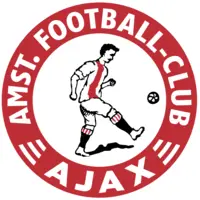
The club's first crest, introduced in 1900, featured a footballer wearing the team's original colours. The circular emblem included the words "Amsterdamsche Football Club Ajax" around the border and reflected the simple style of football badges used during the sport's early years.
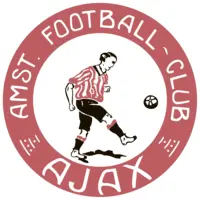
A redesigned crest appeared in 1911, following Ajax's promotion to the highest level of Dutch football and the adoption of the club's famous white shirt with a broad red vertical stripe. The badge was updated to reflect the new identity, although it still focused on football imagery rather than the mythical hero.
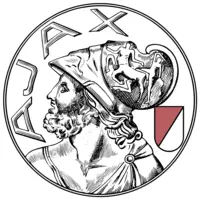
The most important change in the club's visual history arrived in 1928, when Ajax officially adopted the image of Ajax the Great as its crest. The badge featured a detailed black-and-white portrait of the Greek hero wearing a helmet, surrounded by a circular border. This design established the symbol that would become synonymous with the club and accompanied Ajax through many of its greatest achievements, including the rise of Rinus Michels, Johan Cruyff and the era of Total Football.
The classic 1928 crest remained in use for more than sixty years and is still regarded by many supporters as the most beautiful badge in the club's history. It became one of the most recognisable symbols in world football and was closely associated with Ajax's domestic and European dominance during the 1970s.
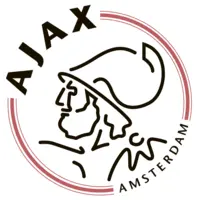
A dramatic redesign arrived in 1991. Seeking a logo that could be more easily trademarked and reproduced commercially, Ajax replaced the detailed portrait with a minimalist interpretation of the same Greek hero. The new emblem depicted Ajax's face using only eleven lines, symbolising the eleven players on a football team. While preserving the mythological figure, the redesign created a much cleaner and more modern appearance.
The 1991 crest quickly became associated with another golden era in the club's history, including the UEFA Champions League triumph of 1995 and the emergence of players such as Edwin van der Sar, Clarence Seedorf, Edgar Davids, Patrick Kluivert and Marc Overmars. Although initially controversial among some supporters, it gradually became one of the most recognisable football logos in the world.
In 2024, Ajax announced that the club would permanently restore the historic 1928 crest. The decision followed years of supporter requests and was presented as a tribute to the club's traditions and identity. The classic emblem officially returned as the club's primary badge from the 2025–26 season, ending thirty-four years of use for the minimalist 1991 design.
AFC Ajax Club History
Founded on 18 March 1900, Amsterdamsche Football Club Ajax is the most successful and internationally renowned football club in the Netherlands. Named after Ajax the Great, the legendary hero of Greek mythology, the club has become synonymous with attacking football, youth development and sporting excellence. Based in Amsterdam, Ajax has played a central role in shaping both Dutch and world football.
After spending its early years in regional competitions, Ajax quickly emerged as one of the strongest clubs in the Netherlands. The club won its first Dutch championship in 1918, marking the beginning of a tradition of domestic success that would continue throughout the twentieth century.
During the interwar period, Ajax established itself as a dominant force in Dutch football under the management of Jack Reynolds, one of the most influential figures in the club's history. Reynolds introduced a philosophy centred on technical ability, attacking football and youth development, principles that would later become fundamental to Ajax's identity.
The club continued to enjoy success after the Second World War, but a new era began in the 1960s with the emergence of a generation of exceptional talents led by Johan Cruyff. Under coach Rinus Michels, Ajax developed the revolutionary style known as Total Football, a tactical philosophy that transformed the sport worldwide.
The late 1960s and early 1970s represent the greatest period in Ajax's history. The club won three consecutive European Cups in 1971, 1972 and 1973, becoming one of the dominant teams in world football. Led by players such as Johan Cruyff, Johan Neeskens, Ruud Krol and Arie Haan, Ajax combined technical brilliance, tactical innovation and attacking football to achieve legendary status.
Following the departure of Cruyff and many key players, Ajax remained successful domestically throughout the 1970s and 1980s. The club continued to produce world-class talents through its academy and maintained its reputation as the Netherlands' premier football institution.
Another golden period arrived in the 1990s under coach Louis van Gaal. Built around a remarkable generation of academy graduates including Edwin van der Sar, Frank de Boer, Ronald de Boer, Edgar Davids, Clarence Seedorf, Patrick Kluivert and Marc Overmars, Ajax once again conquered Europe.
The highlight came in 1995, when Ajax defeated AC Milan to win the UEFA Champions League. The victory made Ajax one of the few clubs to have won Europe's premier competition in multiple eras and confirmed the continued success of the club's youth development model.
Throughout the following decades, Ajax remained the dominant force in Dutch football, regularly winning league titles and producing elite players. The club's academy, known as De Toekomst ("The Future"), became internationally recognised as one of the finest talent-development systems in football.
Many of the world's greatest players emerged from Ajax, including Johan Cruyff, Marco van Basten, Dennis Bergkamp, Frank Rijkaard, Wesley Sneijder, Rafael van der Vaart, Christian Eriksen, Matthijs de Ligt and Frenkie de Jong.
A memorable modern achievement came during the 2018–19 UEFA Champions League, when a young Ajax side captivated Europe by defeating Real Madrid and Juventus on the way to the semi-finals. Led by Matthijs de Ligt, Frenkie de Jong, Hakim Ziyech and Dušan Tadić, Ajax came within seconds of reaching the final before being dramatically eliminated by Tottenham Hotspur.
Domestically, Ajax remains the most successful club in Dutch football history, holding records for league championships, KNVB Cups and numerous other honours. The club's commitment to attacking football and youth development continues to define its identity.
Ajax plays its home matches at the Johan Cruyff Arena, named after the club's greatest player and footballing icon. Opened in 1996, it is the largest stadium in the Netherlands and a symbol of the club's modern ambitions.
Historically, Ajax's fiercest rivalry is with Feyenoord in De Klassieker, the biggest fixture in Dutch football. The rivalry reflects not only sporting competition but also the cultural differences between Amsterdam and Rotterdam. Ajax also shares an intense rivalry with PSV Eindhoven, with the two clubs regularly competing for domestic honours.
Ajax Pins
Your Dynamic Snippet will be displayed here... This message is displayed because you did not provide enough options to retrieve its content.