Chievo Verona Crest History
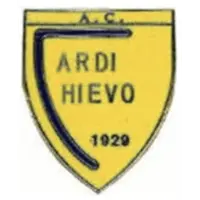
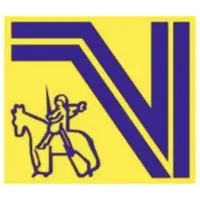
During its early decades, Chievo used relatively simple emblems and lettering-based designs that reflected its status as a local amateur club. For much of its existence, the club remained largely unknown outside the city of Verona and had little need for an elaborate visual identity. The club's colours, yellow and blue, gradually became its most recognisable feature, leading to the nickname Gialloblu ("Yellow and Blues").
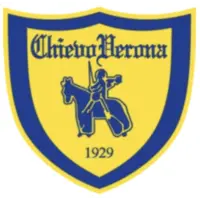
The most significant development in the club's visual identity came with the adoption of the crest featuring Cangrande I della Scala. One of the most famous figures in Verona's history, Cangrande ruled the city during the early fourteenth century and became a symbol of Veronese pride and independence. His inclusion on the crest connected Chievo directly to the broader historical heritage of Verona, allowing the club to represent not only the Chievo district but also the city itself.
The modern badge prominently depicts Cangrande on horseback, creating one of the most distinctive crests in Italian football. The yellow-and-blue colours remain central to the design, ensuring continuity with the club's long-established identity.
Chievo Verona Club History
AC Chievo Verona was one of the most remarkable stories in Italian football history. Based in Chievo, a small suburb of approximately 4,500 inhabitants on the outskirts of Verona, the club rose from amateur football to become a long-standing member of Serie A despite representing one of the smallest communities ever to compete at the highest level of European football.
The club was founded in 1929 and originally operated as a local amateur team representing the Chievo district. For much of its early existence, football was played on a modest scale, with the club competing in regional competitions and lower amateur divisions. The team developed close ties to the local business community and was eventually supported by the bakery company Paluani, whose backing became central to the club's development. For a period, the team was known as Paluani Chievo, reflecting the company's influence and support.
For decades, Chievo remained a small provincial club with little national profile. The idea that a team from such a tiny suburb could one day compete with Italy's footballing giants seemed unimaginable. However, during the 1980s and 1990s, the club began a steady climb through the Italian football pyramid. Through careful management, financial prudence and long-term planning, Chievo achieved a succession of promotions that gradually brought the club closer to professional football.
A transformative period began under the presidency of Luca Campedelli. The club continued its rapid progress through the divisions and eventually reached Serie B for the first time. Few observers expected Chievo's rise to continue, but the club defied expectations once again by securing promotion to Serie A in 2001.
Promotion to the top flight represented one of the most astonishing achievements in Italian football history. A club representing a suburb of only a few thousand residents suddenly found itself competing against teams such as Juventus FC, AC Milan and Inter Milan. The achievement was so unexpected that it gave new meaning to the club's famous nickname, I Mussi Volanti ("The Flying Donkeys"), a term originally coined by rival supporters as a joke.
The nickname originated from supporters of Hellas Verona FC, who mocked the notion that Chievo could ever reach Serie A. The phrase implied that Chievo would only achieve such success when donkeys learned to fly. When promotion finally became reality, Chievo supporters proudly embraced the nickname, transforming a taunt into a symbol of their club's unlikely rise.
Chievo's first Serie A season in 2001–02 became one of the greatest debut campaigns in league history. Under manager Luigi Delneri, the club surprised the entire country by challenging near the top of the table and playing attractive, organised football. Chievo briefly led Serie A during the early stages of the season and eventually qualified for European competition, earning widespread admiration for its achievements.
The club remained in Serie A for most of the next two decades and became a model of stability despite operating with one of the smallest budgets in the division. Chievo regularly secured survival against wealthier opponents and occasionally challenged for European qualification. The club's success was built on intelligent recruitment, disciplined management and a strong collective spirit rather than financial power.
Throughout its professional era, Chievo shared the Stadio Marcantonio Bentegodi with city rivals Hellas Verona FC. Matches between the two clubs became known as the Derby della Scala, named after the medieval Scala family that ruled Verona. The rivalry reflected the contrast between Hellas Verona, one of Italy's more historic clubs, and Chievo, the small suburban team that had risen unexpectedly to compete alongside them.
Although Chievo's achievements on the pitch were extraordinary, the club eventually encountered serious financial difficulties. After spending eighteen seasons in Serie A between 2001 and 2019, Chievo was relegated and struggled to recover. Financial problems intensified in the following years, leading to investigations into the club's accounts and ultimately preventing it from continuing within the professional football system.
In 2021, Chievo was excluded from professional football after failing to meet financial requirements. The decision brought an end to one of the most remarkable chapters in modern Italian football. A club that had risen from a tiny Verona suburb to compete in Serie A and European competition ceased to exist as a professional entity, marking a dramatic conclusion to its improbable journey.
Despite its disappearance from professional football, Chievo Verona's legacy remains secure. The club demonstrated that success at the highest level was possible without a large stadium, a vast fanbase or substantial financial resources. From a small community club supported by a local bakery company to a respected Serie A side, Chievo embodied the spirit of perseverance and ambition. The story of the Flying Donkeys remains one of the most inspiring and unlikely success stories ever seen in European football.