The History of English Football
How a chaotic folk game became the world’s most popular sport
England and the Birth of the Modern Game
Football is played in almost every corner of the world, but the organised game we recognise today took shape in England. It was here that different traditions were brought together, common rules were established and football developed from a rough local pastime into a structured sport followed by millions.
England did not invent the basic idea of kicking a ball. Ball games had existed for centuries in countries such as China, Greece and Italy. England’s decisive contribution was different: it created the framework from which modern association football could grow.
From School Playing Fields to a Recognisable Game
During the nineteenth century, many English public schools developed their own versions of football. Some allowed players to carry the ball, while others focused more heavily on kicking and dribbling. The permitted level of physical contact also differed considerably.
Schools including Eton, Harrow, Rugby and Winchester each followed their own traditions. These written codes brought greater organisation, but they also created a problem. Players from different schools could not easily compete because they disagreed about how the game should be played.
As former pupils moved on to universities, workplaces and newly established clubs, the need for one common set of rules became increasingly urgent.The development of football was no longer simply about playing the game. It was about deciding what the game should be.
1863: The Birth of Association Football
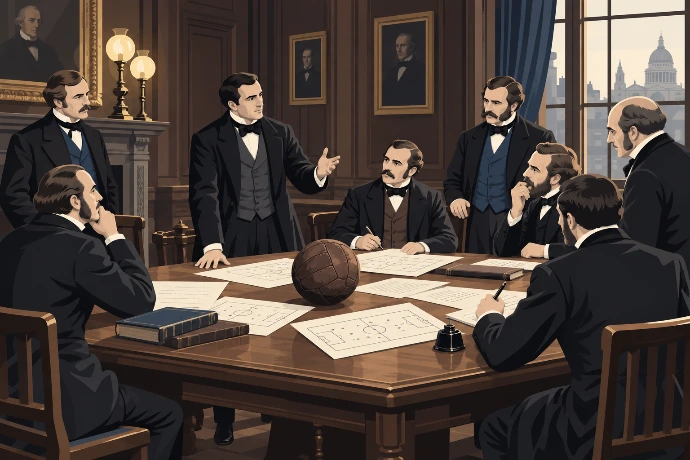
The decisive moment came on 26 October 1863, when representatives of clubs from London and the surrounding area met at the Freemasons’ Tavern in London. Their objective was to form an association and agree on a standard code of rules.
The organisation they created became The Football Association, now recognised as the oldest national football association in the world. Ebenezer Cobb Morley, its first secretary, played a central role in drafting the original laws.
The new rules limited the use of the hands and removed some of the most physical elements found in other versions of the game. This helped establish a clear distinction between rugby football and association football, the sport that would eventually become known simply as football.
The FA’s purpose was not to invent an entirely new game. It was to bring order to existing forms of football and create rules that different clubs could share. For the first time, the game had a common foundation.
Crisis, Tragedy and the Need for Change
By the 1970s and 1980s, many English stadiums had become outdated. Facilities were poor, crowd management was inadequate and football-related violence damaged the reputation of the game.
In 1985, 39 people lost their lives at the Heysel Stadium before the European Cup Final between Liverpool and Juventus. English clubs were subsequently banned from European competitions for five seasons, with Liverpool excluded for an additional year.
Four years later, the Hillsborough disaster claimed the lives of Liverpool supporters during an FA Cup semi-final. The tragedy exposed fundamental failures in stadium safety and crowd management.
The Taylor Report that followed led to major changes, including the replacement of standing terraces with all-seater accommodation in the top two divisions. Stadiums were rebuilt, safety procedures improved and the relationship between clubs and their spectators began to change.
English football entered the 1990s carrying deep scars, but also a determination to rebuild.
Before the Rules
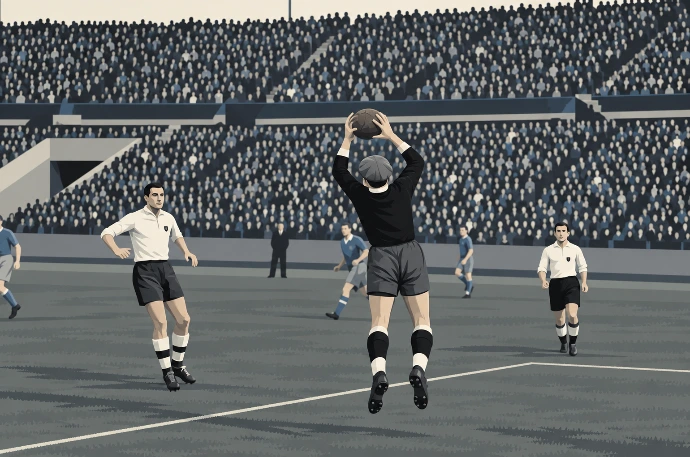
Long before stadiums, leagues and professional clubs, football in England looked very different.
Medieval and early modern communities played large-scale folk games between neighbouring villages and towns. The objectives were often simple, but the games themselves could involve enormous numbers of people. Matches crossed fields, roads and village centres, with few agreed rules and few restrictions on physical contact.
These games were unpredictable, disorderly and sometimes violent. They were also deeply connected to local identity. Even before football became an organised sport, it already carried something that remains essential today: a sense of belonging.
As Britain changed during the Industrial Revolution, these traditional games gradually declined. Expanding cities, fixed working hours and increasingly regulated public spaces made such chaotic contests harder to organise. At the same time, the growing urban population created a demand for structured recreation.
Football was about to enter a new age.
The FA Cup and the First International Match
Once common rules had been established, organised competition followed. The FA Cup was created in 1871 and became the first national football competition of its kind. Its knockout format allowed clubs from different areas and backgrounds to compete against one another, helping the game spread beyond London and the public-school environment.
A year later, on 30 November 1872, England and Scotland played what is recognised as the first official international football match. The game ended 0–0, but its importance went far beyond the result.
Football was beginning to develop an international identity. These early competitions showed what football could become: a sport connecting clubs, communities and nations.
Professionalism Changes Everything
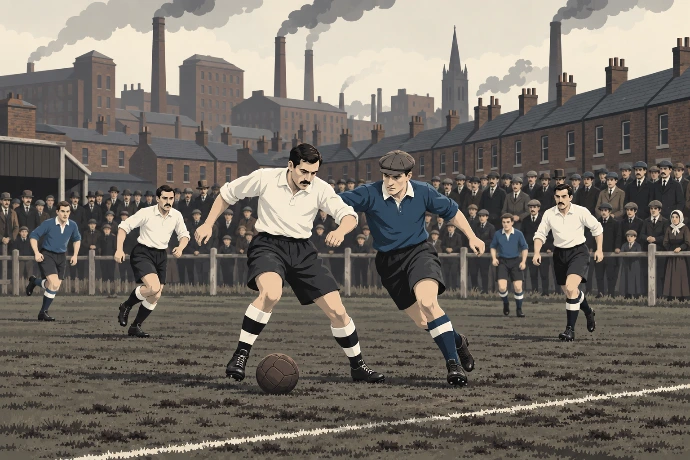
As crowds increased, successful clubs began generating more income. Many northern teams started compensating talented players, particularly those who could not afford to miss work in order to play.
This challenged the amateur ideals still defended by many southern clubs and football administrators. Nevertheless, the growth of paid football became impossible to ignore. In 1885, The FA formally legalised professionalism.
The decision transformed the sport. Players could now build careers around football, while clubs became more organised and commercially ambitious.
In 1888, Aston Villa director William McGregor helped establish The Football League. Its twelve founding clubs played each other through a scheduled season, with results contributing to a league table. It was the first organised league competition of its kind and created the basic structure that domestic football still follows.
Regular fixtures created stronger rivalries, more dependable income and sustained public interest. Football had become a professional spectator sport.
The Rise of the People’s Game
Although many of football’s early administrators came from privileged backgrounds, the sport’s greatest growth took place in industrial towns and working-class communities.
Factories, churches, schools, railway companies and local organisations began forming teams. Many clubs that later became major names grew out of these environments. Manchester United began as a railway workers’ team, Arsenal was founded by workers at the Royal Arsenal and numerous clubs developed around local industries, religious institutions or neighbourhoods.
Saturday afternoons became increasingly important. As working hours gradually changed, football offered workers a shared form of entertainment at the end of the week.
Supporters did not simply watch a team; they saw their workplace, neighbourhood or town represented on the pitch.
England and the International Game
England’s position as an early organiser of football gave it considerable influence, but it also encouraged a degree of isolation.
English administrators sometimes viewed international organisations and competitions with suspicion. While football spread rapidly across Europe and South America, England remained convinced of the strength of its own domestic traditions.
On the pitch, however, the international game continued to grow. England’s greatest national-team achievement came in 1966, when it hosted and won the FIFA World Cup. The final against West Germany at Wembley became one of the defining moments in the country’s sporting history.
At club level, English teams later enjoyed remarkable European success, particularly during the late 1970s and early 1980s.
But serious problems were developing away from the pitch.
Stadiums, Crowds and Football Culture
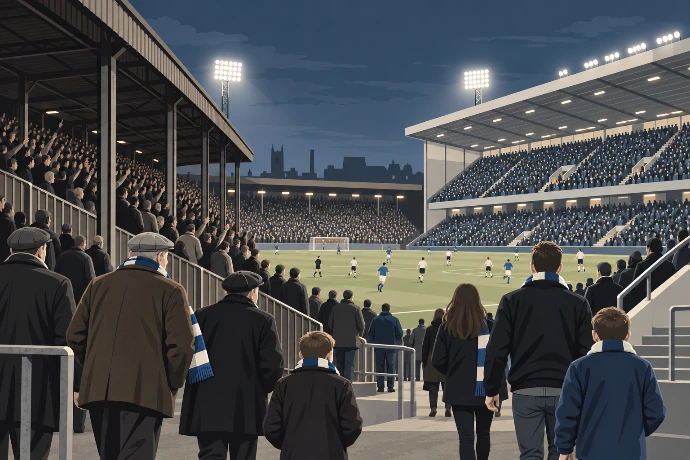
As attendances grew, clubs constructed permanent grounds with terraces capable of holding thousands of spectators. Stadiums became landmarks within their communities and matchday developed its own rituals.
Supporters travelled together, wore club colours, collected programmes and badges and passed their loyalties from one generation to the next. Songs, local humour and shared memories gave each club its own culture.
The FA Cup Final became one of the most important occasions in the British sporting calendar. League championships and local derbies created heroes and heartbreak in equal measure.
Football was now woven into everyday life. A club’s history became inseparable from the history of its town.
The Premier League and a New Global Era
In 1992, the clubs in England’s top division broke away from the Football League to create the Premier League.
Television was central to this transformation. Broadcasting income increased dramatically, matches were presented to new audiences and clubs gained the financial power to attract leading players and coaches from around the world.
English football became faster, more international and more commercial. Traditional grounds were transformed into modern stadiums, merchandising expanded and clubs developed into global brands.
The Premier League’s international reach helped supporters from every continent form connections with English clubs. During the 2024/25 season, Premier League stadiums were reported as 98.8 per cent full, illustrating that its global growth has not removed the intense domestic demand to attend matches.
The journey from local terraces to a worldwide broadcasting phenomenon was complete.
Preserving Football History
At WorldSoccerPins, we believe that football history deserves to be remembered and collected.
Every badge, pin and emblem represents something larger: a club, a community, a moment or a memory. From the earliest days of organised English football to the global game of today, these symbols connect supporters across generations.
They transform history into something tangible, something that can be discovered, collected and held.
English football has travelled an extraordinary path: from chaotic village games to organised competitions, from industrial towns to modern stadiums and from local communities to audiences around the world.
Yet at its heart, the game remains remarkably familiar.
It is still about loyalty, identity and belonging.
And its story is still being written.
More Than Ninety Minutes
The history of English football is not only a history of rules, competitions and famous players.
It is also the history of factory teams, church clubs, railway workers, packed terraces and families returning to the same stadium generation after generation. It lives in old photographs, match programmes, shirts, scarves, tickets, badges and crests.
These objects preserve moments that would otherwise disappear.
A football crest can represent a town’s industry, its landmarks, its legends and its ambitions. Even when a club redesigns its identity, the older versions remain connected to particular teams, seasons and memories.
That is why football history continues far beyond the final whistle.
A Game That Continues to Change
Modern English football is more visible and financially powerful than previous generations could have imagined. Yet its success also creates difficult questions.
Ticket prices, foreign ownership, financial inequality and the distance between elite clubs and their traditional communities remain widely discussed. The growing commercial power of the game can sometimes conflict with the local identities on which clubs were built.
At the same time, English football continues to develop in positive ways. Women’s football is experiencing unprecedented growth, clubs are reaching new international audiences and digital communities allow supporters to connect across borders.
Football has always changed alongside society. The modern game is simply the latest chapter.

Collect a Piece of English Football History
Every football badge tells a story. Discover our collection of English football pin badges, featuring clubs from across the English football pyramid, from famous names to traditional lower-league and non-league clubs.