Historical Crests AS Roma
Name: AS Roma
Nickname(s): I Giallorossi (The Yellow and Reds), I Lupi (The Wolves)
Founded: 1927
Stadium: Stadio Olimpico (Rome)
Capacity: 70,634
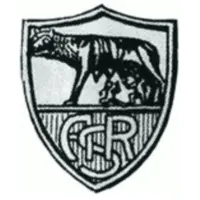
1927-1930
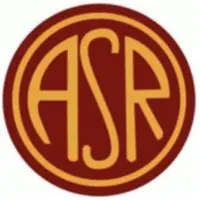
1930-1934
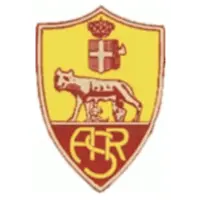
1934-1945
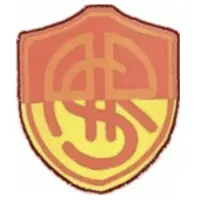
1945-1949
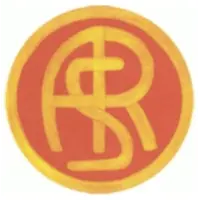
1949-195?
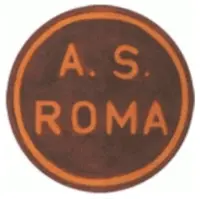
195?-196?
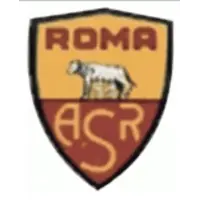
196?-197?
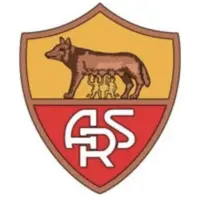
197?-1979

1979-1997
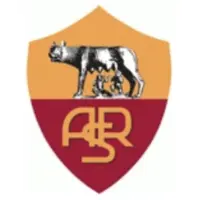
1997-2000
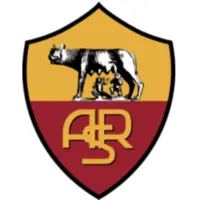
2000-2013
2007
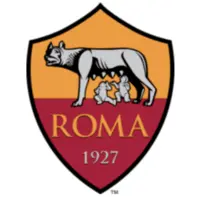
2013-2016
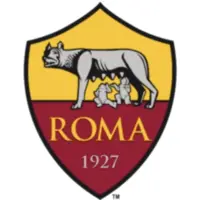
2016-2025
AS Roma Crest History
From its foundation, Roma adopted the colours carmine red and golden yellow, colours traditionally associated with the city of Rome. These colours gave rise to the club's famous nickname, I Giallorossi ("The Yellow and Reds"), and have remained central to every major version of the badge. While various artistic styles have been used throughout the club's history, the red-and-yellow colour scheme has provided continuity and ensured an immediate connection to Rome.
The club's original crest featured the image that would become synonymous with AS Roma: the she-wolf nursing the twin brothers Romulus and Remus. This imagery derives from the ancient Roman myth explaining the foundation of the city. According to legend, the twins, sons of Mars and Rhea Silvia, were ordered to be drowned in the River Tiber by their uncle Amulius. Instead, they were rescued and nurtured by a she-wolf. After later overthrowing Amulius, the brothers quarrelled, and Romulus killed Remus before founding a new city that would bear his name: Rome. The she-wolf, therefore, became one of the most enduring symbols of Roman identity.
This mythical animal also gave rise to one of Roma's most famous nicknames, I Lupi ("The Wolves"). Unlike many football clubs that adopted animal symbols at a later stage, the wolf has been present on Roma's badge in one form or another throughout the club's entire history. The creature represents not only the football club but also the city's origins and cultural heritage.
The original badge placed the she-wolf and twins above a shield divided into golden yellow and dark red sections. This design immediately established a strong visual connection between the club and the city of Rome. The emblem became one of the most distinctive in Italian football and helped create an identity unlike any other club in the country.
Throughout the twentieth century, Roma introduced several variations of the crest while preserving the wolf as its central symbol. During different periods, designers experimented with shield shapes, typography and artistic interpretations of the Capitoline Wolf. Some versions adopted a more detailed and heraldic appearance, while others favoured a cleaner and more modern aesthetic. Despite these changes, the she-wolf and twins always remained the defining feature of the badge.
One of the most recognisable redesigns arrived during the late 1970s when the club introduced the famous "Lupetto" logo. Created by designer Piero Gratton, the emblem featured a highly stylised black wolf's head on a circular yellow-and-red background. The design was revolutionary for its era and became one of the most iconic logos in Italian football. Although it departed from the traditional depiction of Romulus and Remus, it maintained the wolf symbolism that had always defined the club.
For several decades, the Lupetto appeared on kits and club merchandise and became beloved among supporters. However, many fans continued to associate Roma most strongly with the traditional crest featuring the Capitoline Wolf and the founding myth of Rome.
In the 1990s and early 2000s, Roma returned to a more traditional badge structure. The club reintroduced the she-wolf and twins while incorporating modern typography and shield elements. These versions sought to combine historical authenticity with contemporary branding requirements, ensuring that the badge remained recognisable across television broadcasts, merchandise and digital platforms.
A significant redesign occurred in 2013. The club modernised the crest by refining the wolf illustration, simplifying graphic details and replacing the traditional "ASR" monogram with the word "ROMA" above the foundation year, 1927. The redesign aimed to strengthen the club's international identity while preserving the historical symbolism at the heart of the badge.
More recently, Roma has embraced elements of its earlier visual history, including the return of traditional motifs and references to historic crests. The modern badge remains fundamentally faithful to the emblem introduced at the club's founding, featuring the she-wolf, Romulus and Remus on a shield divided between golden yellow and dark red.
AS Roma Club History
Founded on 7 June 1927, the club was created through the merger of three Roman teams: Roman FC, SS Alba-Audace and Fortitudo-Pro Roma SGS. The only major club in the city that remained outside the merger was SS Lazio. The objective of the unification was clear: to create a powerful football club capable of challenging the dominance of the great northern Italian teams, which had largely controlled Italian football during the early decades of the twentieth century.
From its inception, Roma became a symbol of the Italian capital. The club adopted the historic colours of Rome—golden yellow and dark red—which earned the team the nickname I Giallorossi ("The Yellow and Reds"). Another famous nickname, I Lupi ("The Wolves"), derives from the Capitoline Wolf featured on the club crest and the legendary founding myth of Rome.
Roma quickly established itself as one of Italy's leading clubs and won its first Serie A title in 1941–42. This triumph was particularly significant because it interrupted the dominance of northern clubs and made Roma the first team from central and southern Italy to win the national championship under the modern league format. The victory strengthened the club's position as the sporting representative of the capital and remains one of the most celebrated achievements in its history.
Although the club experienced periods of inconsistency during the following decades, Roma remained a major presence in Italian football. Since 1953, the club has played its home matches at the iconic Stadio Olimpico. The stadium is shared with city rivals Lazio and has hosted countless historic matches, domestic finals and international tournaments. It remains one of the most famous football venues in Europe and serves as the heart of Roman football culture.
The 1980s marked one of the most successful eras in Roma's history. Under manager Nils Liedholm and led by legendary captain Agostino Di Bartolomei, Roma won its second Serie A title in 1982–83. The club came agonisingly close to European glory the following season when it reached the 1984 European Cup Final, played at its own Stadio Olimpico. However, Roma suffered a heartbreaking defeat on penalties against Liverpool FC.
Roma continued to compete at the highest level throughout the 1990s and early 2000s. One of the most memorable moments in club history arrived in 2000 when the signing of Gabriel Batistuta complemented a squad already featuring club icon Francesco Totti. Under manager Fabio Capello, Roma captured its third Serie A title in 2000–01. Totti, a lifelong Roman and one-club player, became the symbol of the modern club and remains the greatest figure in Roma's history.
A major European achievement came during the 2017–18 season when Roma reached the semi-finals of the UEFA Champions League. The campaign included one of the greatest comebacks in the tournament's history, overturning a three-goal first-leg deficit against FC Barcelona in front of a jubilant Stadio Olimpico crowd.
Another landmark moment arrived in 2022 when Roma won the inaugural UEFA Europa Conference League under manager José Mourinho. The victory represented the club's first major European trophy and ended a long wait for continental success, providing supporters with one of the most cherished moments in the club's modern history.
Roma is renowned for its intense rivalries. The most important is undoubtedly with SS Lazio. Matches between the two clubs are known as the Derby della Capitale and are widely regarded as among the most emotional and fiercely contested derbies in world football. Sharing the same stadium only intensifies the rivalry, which divides the city of Rome and generates an atmosphere unlike any other in Italian football.
Another historic rivalry exists with SSC Napoli in the Derby del Sole ("Derby of the Sun"), a fixture that traditionally represented the strongest clubs from central and southern Italy. Roma also maintains significant rivalries with Juventus FC, particularly following a series of title battles during the 1980s; with AC Milan; with Atalanta BC; and increasingly with Inter Milan due to their frequent competition for European qualification places.
An important part of Roma's identity is its famous anthem, "Roma (non si discute, si ama)", commonly known as "Roma Roma". The title translates roughly as "Roma is not to be questioned, it is to be loved." Played before every home match at the Stadio Olimpico, it is sung passionately by thousands of supporters and has become one of the most recognisable football anthems in the world.
AS Roma Pins
Your Dynamic Snippet will be displayed here... This message is displayed because you did not provide enough options to retrieve its content.