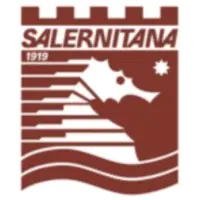
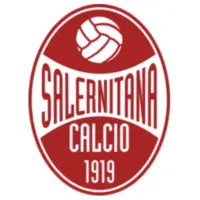
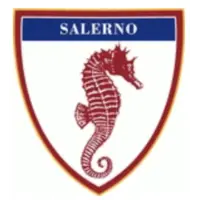
Historical Crests US Salernitana
Name: US Salernitana
Nickname(s): I Granata (The Garnets)
Founded: 1919 (Refounded 2005 and 2011)
Stadium: Stadio Arechi (Salerno)
Capacity: 37,899
US Salernitana 1919 Crest History
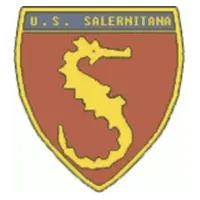
Throughout its history, Salernitana's crest has been defined by one enduring symbol: the seahorse (ippocampo). Few clubs in Italian football are as closely associated with a single emblem. The seahorse has become synonymous with the club and the city of Salerno, earning the team the famous nickname I Granata while providing one of the most recognisable visual identities in southern Italian football.
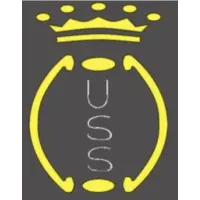
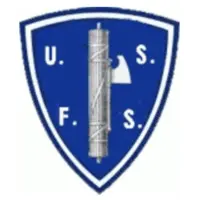
The earliest badges used following the club's foundation in 1919 were relatively simple and often featured monograms or shield designs incorporating the club's traditional granata colours. During these early decades, the visual identity of the club was still evolving and lacked the unified symbolism that would emerge later.
A decisive moment arrived in 1949, when artist Gabriele D'Alma created the famous seahorse emblem. Inspired by the maritime traditions of Salerno, the design featured a stylised seahorse accompanied by waves. The symbol was immediately embraced by supporters and quickly became the defining image of the club. More than any previous badge, it established a unique identity that distinguished Salernitana from every other team in Italy.
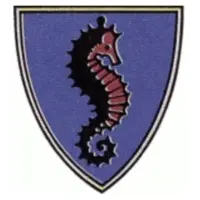
Throughout the 1950s, 1960s and 1970s, various versions of the seahorse appeared on club badges, programmes and merchandise. Although the artistic style evolved, the seahorse remained the constant feature linking every generation of Salernitana supporters.
One of the most recognisable historical crests emerged during the 1980s and 1990s. The badge featured a stylised maroon seahorse placed within a circular or shield-shaped design incorporating the club's colours. This version became closely associated with Salernitana's rise back towards the higher divisions of Italian football.
Following promotion to Serie A in 1998, the club adopted several modernised versions of the seahorse crest. These redesigns generally featured cleaner lines and contemporary typography while preserving the traditional symbol that supporters regarded as sacred.
A significant change occurred in 2005, when financial difficulties and corporate restructuring led to the creation of Salernitana Calcio 1919. The club introduced a revised badge that retained the seahorse but modified its shape and presentation. Although the crest differed from previous versions, the historic symbol remained at its centre.
After the club's bankruptcy in 2011, Salernitana was refounded as Salerno Calcio. For a brief period, the team was unable to use the historic name and symbols tied to the previous company. A temporary crest was introduced featuring alternative designs, making this one of the few periods in the club's history when the traditional seahorse was absent.
The separation proved short-lived. In 2012, the club recovered the historic name US Salernitana 1919 and reintroduced the beloved seahorse to its badge. Supporters welcomed the return as a restoration of the club's true identity.
In 2022, the club unveiled a refined version of the badge. While maintaining the familiar shield and seahorse, the redesign simplified several graphic elements and gave greater prominence to the seahorse itself. The update modernised the emblem while preserving its historical character and connection to the club's traditions.
US Salernitana 1919 Club History
Founded on 19 June 1919, Unione Sportiva Salernitana is the most important football club in the city of Salerno and one of the most historic teams in southern Italy. The club adopted the famous granata (maroon) colours that have remained its defining characteristic for more than a century and earned the team its enduring nickname, I Granata.
A historic breakthrough came in 1947, when Salernitana achieved promotion to Serie A for the first time. The achievement represented a landmark moment for the city and brought top-flight football to Salerno. Although the club's first stay in Serie A lasted only one season, it marked the beginning of Salernitana's ambition to compete among Italy's elite.
One of the defining symbols of Salernitana's identity emerged in 1949 with the adoption of the famous seahorse emblem, which remains the club's most recognisable symbol. The seahorse reflected Salerno's maritime heritage and became inseparable from the club's image.
The 1990s marked a renaissance for Salernitana. Under the presidency of Aniello Aliberti and the management of Delio Rossi, the club assembled one of the strongest teams in its history. This culminated in promotion to Serie A in 1998, ending a fifty-year absence from the top flight.
The 1998–99 Serie A season remains one of the most memorable campaigns in club history. Although relegation followed after a single season, Salernitana competed bravely against Italy's biggest clubs and recorded several famous victories. The season also saw the emergence of talented players who would later enjoy successful careers at national and international level.
Throughout the 2000s, Salernitana continued to alternate between Serie B and Serie C. Despite remaining a major force in southern Italian football, financial instability increasingly affected the club's ability to compete consistently at higher levels.
A major crisis arrived in 2005, when financial difficulties led to the collapse of the existing company. The club was subsequently re-established and continued competing under a new corporate structure while preserving its traditions and colours.
An even more serious setback occurred in 2011, when Salernitana again faced bankruptcy and was excluded from professional football. A new club, Salerno Calcio, was created to ensure football survived in the city. Although temporarily deprived of its historic name and symbols, the club quickly climbed back through the divisions.
In 2012, the historic name US Salernitana 1919 was restored, allowing the club to reclaim its heritage and reconnect fully with its past. Supporters celebrated the return of the name, colours and symbols that had defined Salernitana for generations.
A new period of growth followed under the ownership of Claudio Lotito and Marco Mezzaroma. The club steadily progressed through the divisions and became one of the strongest teams in Serie B.
A historic achievement arrived in 2021, when Salernitana secured promotion to Serie A for the first time in twenty-two years. The promotion sparked enormous celebrations throughout Salerno and represented one of the greatest moments in the club's modern history.
The club plays its home matches at the Stadio Arechi, named after the Lombard Duke of Benevento. Opened in 1990, the stadium is one of the largest in southern Italy and is renowned for its passionate atmosphere.
Historically, Salernitana's fiercest rivalry is with Avellino, a fixture known as the Derby della Campania. Intense rivalries also exist with Benevento, Nocerina, Cavese, Juve Stabia and Napoli, reflecting decades of regional competition throughout Campania.
US Salernitana Pins
Your Dynamic Snippet will be displayed here... This message is displayed because you did not provide enough options to retrieve its content.