Historical Crests US Avellino 1912
Name: US Avellino 1912
Nickname(s): Lupi (Wolves)
Founded: 1912 (Refounded 1944, 2009, 2018)
Stadium: Stadio Partenio (Avellino)
Capacity: 26,308
US Avellino 1912 Crest History
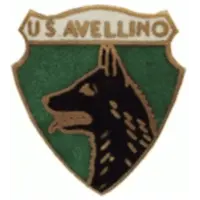
The earliest Avellino crests were relatively simple and generally featured the club's traditional green-and-white colours, often incorporating initials or shield designs. While the styles varied, the wolf gradually became the dominant symbol associated with the club and its supporters.
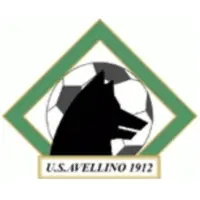
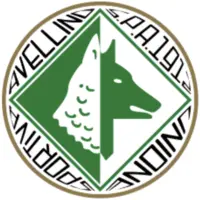
The most famous badge in the club's history was introduced in 1977. Designed by architect Quirino Sgrosso, the crest featured a stylised wolf's head in profile placed inside a diamond divided into green and white halves.
This famous wolf badge accompanied the club during its golden era in the late 1970s and 1980s, when Avellino established itself in Serie A for ten consecutive seasons. As a result, the emblem became closely associated with the greatest period in the club's history.
For the 2000–01 season, the club introduced a more aggressive black wolf variation. Although visually striking, the redesign was relatively short-lived and Avellino soon returned to more traditional interpretations of the symbol.
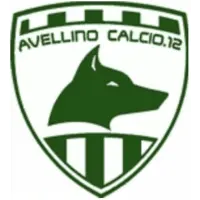
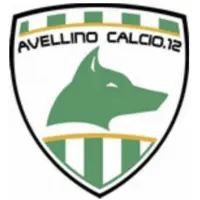
A major break with tradition occurred following the club's bankruptcy in 2009. The historic diamond-shaped badge was abandoned and replaced by a modern shield featuring a dynamic wolf head against green-and-white vertical stripes. The redesign reflected the creation of the new post-bankruptcy club and marked the beginning of a new chapter in Avellino's history.
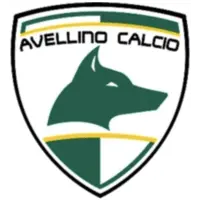
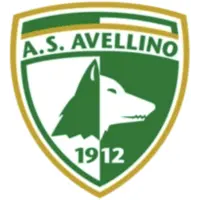
In 2010, the club partially returned to its roots by reintroducing the traditional wolf within a pointed shield. Although different from the original 1977 emblem, the redesign restored many of the visual elements supporters associated with Avellino's identity.
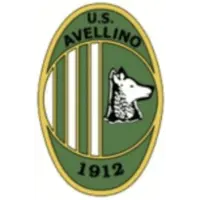
One of the most celebrated moments in the club's visual history arrived in 2015, when Avellino officially restored the historic wolf logo. The classic Quirino Sgrosso design returned to the shirts, albeit with a few modern adjustments. The border became gold rather than green, and the positioning of the lettering around the circular frame was slightly altered. Nevertheless, the return of the legendary crest was warmly welcomed by supporters as a reconnection with the club's heritage.
US Avellino 1912 Club History
Founded in 1912, Avellino is the most important football club in the province of Avellino and one of the most historic teams in southern Italy. The club represents the region of Irpinia, a mountainous area of Campania whose identity is deeply connected to the symbol of the wolf, giving rise to the club's famous nickname, I Lupi ("The Wolves").
During its early decades, Avellino competed mainly in regional and lower-division football. Like many southern Italian clubs of the period, growth was gradual, but the team steadily established itself as the leading football institution in its province.
The club's first major rise began during the 1960s and 1970s, when Avellino climbed through the Italian football pyramid. Promotion to Serie B brought the club into the national spotlight and laid the foundations for the most successful period in its history.
A historic milestone arrived in 1978, when Avellino achieved promotion to Serie A for the first time. The achievement transformed the club and the city, bringing top-flight football to Irpinia for the first time ever.
What followed remains one of the greatest achievements by a provincial club in Italian football history. Despite limited financial resources and operating far from the traditional football powerhouses, Avellino remained in Serie A for ten consecutive seasons, from 1978 to 1988. During this remarkable period, the club regularly defeated some of Italy's biggest teams and established itself as one of the most respected provincial sides in the country.
Following relegation in 1988, the club struggled to maintain its top-flight status and spent the following decades alternating between Serie B, Serie C and, occasionally, lower divisions. Despite the setbacks, Avellino remained one of the most prominent clubs in southern Italy.
The city itself endured a devastating tragedy in 1980, when the Irpinia earthquake struck the region. Football became an important source of unity and pride during the recovery period, further strengthening the bond between the club and its community.
Throughout the 1990s and early 2000s, Avellino experienced several promotions and relegations. The club remained competitive and continued to attract strong support, but financial difficulties increasingly affected its stability.
A major crisis emerged in 2009, when Avellino declared bankruptcy. The collapse forced the club to restart from the amateur divisions under a new corporate structure. Despite the setback, football in the city survived thanks to the determination of supporters and local investors.
The recovery was swift. Avellino quickly climbed back through the divisions and returned to professional football. Promotion to Serie B in 2013 marked the beginning of another positive period, during which the club established itself once again as a competitive force in the second tier.
Financial problems resurfaced in 2018, leading to another exclusion from professional football and forcing Avellino to restart in Serie D. Once again, however, the club demonstrated remarkable resilience. Promotion back to the professional ranks was achieved almost immediately, restoring Avellino to its traditional place within Italian football.
The club plays its home matches at the Stadio Partenio-Adriano Lombardi, named in honour of the president who oversaw much of Avellino's historic success. The stadium remains a symbol of the club's golden years and the passionate support of the Irpinian people.
Historically, Avellino's fiercest rivalries are with fellow Campanian clubs Salernitana, Benevento, Juve Stabia, Casertana and Napoli. Matches against these sides are among the most passionate fixtures in southern Italian football and reflect strong regional identities and historic competition.
US Avellino Pins
Your Dynamic Snippet will be displayed here... This message is displayed because you did not provide enough options to retrieve its content.