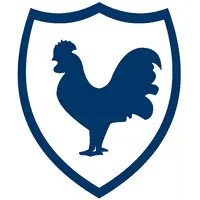
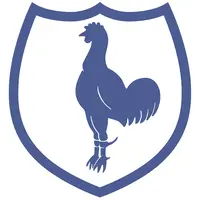
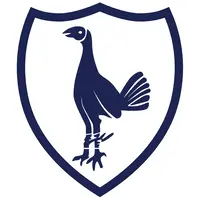
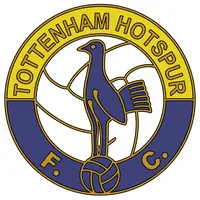
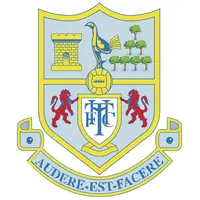
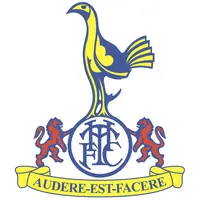
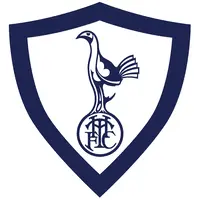
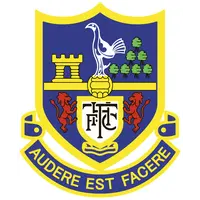
Historical Crests Tottenham Hotspur FC
Name: Tottenham Hotspur FC
Nickname(s): Spurs
Founded: 1882
Stadium: Tottenham Hotspur Stadium (London)
Capacity: 62,214
Tottenham Hotspur FC Crest History
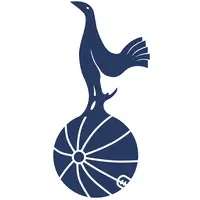
The defining symbol of Tottenham Hotspur the cockerel, an emblem that has been associated with Tottenham for more than a century and remains at the heart of the club’s visual identity today.
The origins of the cockerel symbol are closely linked to Harry Hotspur, the medieval knight from whom the club takes its name. Hotspur was reputed to attach spurs to his fighting cocks, and this connection led Tottenham supporters to adopt the cockerel as the club’s symbol. Over time, the bird became inseparable from the club’s identity and gave rise to the famous nickname, “Spurs.”
Although the cockerel had been associated with Tottenham for many years, it became firmly established as the club’s official emblem following the 1921 FA Cup Final. From that point onwards, the cockerel featured prominently on Tottenham’s badges and club imagery, becoming one of the most enduring symbols in English football.
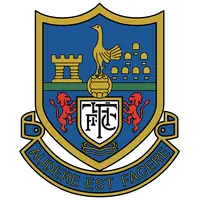
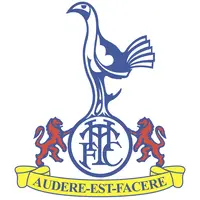
Throughout much of the twentieth century, Tottenham used a variety of crest designs featuring the cockerel. Early versions often showed the bird standing on a football and were sometimes accompanied by heraldic shields, mottos or references to the local area. These designs evolved gradually while maintaining the cockerel as the central element.
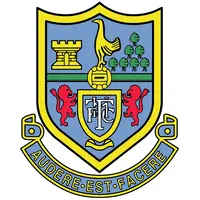
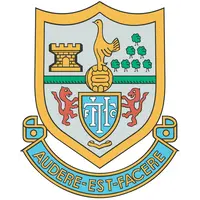
During the 1950s and 1960s, the club introduced more detailed crests incorporating elements associated with the London Borough of Haringey and Tottenham’s local heritage. Various badges included lions, castles and trees derived from civic heraldry, creating a stronger connection between the club and the community it represented.
One of the most familiar versions of the badge appeared during the late twentieth century, featuring the cockerel standing proudly on a football within a shield design. This crest became closely associated with several successful periods in the club’s history and helped reinforce Tottenham’s distinctive identity.
A major transformation came in 2006 when Tottenham undertook a comprehensive rebranding programme designed to modernise the club’s image. The traditional badge and coat of arms were replaced by a professionally designed logo featuring a sleeker and more elegant cockerel standing on an old-style football. The redesign simplified the club’s visual identity and reflected contemporary branding trends while preserving the symbol most closely associated with Tottenham Hotspur.
As part of the rebranding, the club announced that the cockerel logo would stand alone on playing kits without the inclusion of the club name. Tottenham believed that the emblem was sufficiently iconic to be recognised worldwide without accompanying text, a testament to the strength of the club’s global identity.
Since its introduction, the 2006 crest has remained largely unchanged and has become one of the most recognisable badges in world football. Its minimalist design allows the cockerel to take centre stage while maintaining a clear connection to the club’s traditions and heritage.
Tottenham Hotspur FC Club History
Tottenham Hotspur Football Club was founded in 1882 by a group of grammar school pupils from the Hotspur Cricket Club in North London. The founders chose the name “Hotspur” after Sir Henry Percy, better known as Harry Hotspur, a character featured in Shakespeare’s Henry IV. From these modest beginnings, Spurs would grow into one of England’s most famous football clubs.
Tottenham turned professional in 1895 and joined the Football League in 1908. Even before entering the League, the club had already made history by winning the FA Cup in 1901, becoming the only non-League club ever to win the competition since the creation of the Football League. This remains one of the most remarkable achievements in English football history.
Unlike many English clubs that traditionally relied on a direct “long ball” or “kick and rush” style of play, Tottenham developed a reputation for attractive, attacking football. This philosophy became deeply embedded in the club’s identity and helped establish Spurs as one of the most admired teams in the country.
The club moved to White Hart Lane in 1899 and remained there for more than 118 years. The stadium became synonymous with Tottenham and was the stage for many of the club’s greatest triumphs. The famous “Glory Game” philosophy, associated with entertaining football and attacking flair, became particularly prominent from the 1950s onwards and remains an important part of the club’s culture. White Hart Lane was eventually demolished to make way for the modern Tottenham Hotspur Stadium, which opened on the same site in 2019.
The greatest period in Tottenham’s history came under legendary manager Bill Nicholson. In the 1960–61 season, Spurs became the first club in the twentieth century to achieve the League and FA Cup Double. The team’s stylish football captured the imagination of supporters across the country and established Tottenham as one of England’s elite clubs.
Further history was made in 1963 when Tottenham became the first English club to win a major European trophy, defeating Atlético Madrid to lift the European Cup Winners’ Cup. The achievement reinforced the club’s reputation as a pioneer of attacking football and international success.
Success continued throughout the 1970s and 1980s with further FA Cup and UEFA Cup victories. During the 1980s and 1990s, players such as Glenn Hoddle, Steve Archibald, Chris Waddle, Osvaldo Ardiles, Gary Lineker, Jürgen Klinsmann and David Ginola thrilled supporters with their creativity and flair, maintaining Tottenham’s reputation for entertaining football.
While league titles proved elusive in the modern era, Spurs remained a prominent force in English football. The club won the League Cup in 1999 and again in 2008, while regularly competing in European competitions. A modern resurgence under Mauricio Pochettino saw Tottenham become genuine Premier League title challengers and culminated in the club reaching its first UEFA Champions League Final in 2019.
Tottenham’s fiercest rivalry is with Arsenal. Matches between the two clubs are known as the North London Derby and rank among the most passionate and celebrated rivalries in world football. Strong rivalries also exist with Chelsea and West Ham United, reflecting the competitive football landscape of London.
Tottenham Hotspur Pin
Your Dynamic Snippet will be displayed here... This message is displayed because you did not provide enough options to retrieve its content.