Historical Crests Torino FC
Name: Torino FC
Nickname(s): Il Toro (The Bull)
Founded: 1906 (Refounded 2005)
Stadium: Stadio Olimpico Grande (Turin)
Capacity: 27,358
Torino FC Crest History
Throughout its history, Torino's crests have been defined by a single enduring symbol: the rampant bull, taken directly from the coat of arms of the city of Turin. The bull is one of the most recognisable civic symbols in Italy and has appeared in virtually every major Torino badge, creating a visual identity that is inseparable from both the club and the city it represents. Combined with the famous granata colours, the bull has become one of the most iconic symbols in Italian football.
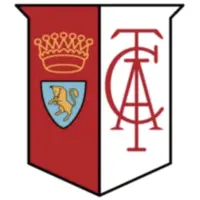
The earliest Torino crests used during the first half of the twentieth century were relatively simple and often incorporated the city's heraldic bull within shield-shaped designs. These badges reflected the traditions of early Italian football and helped establish the connection between the club and Turin's civic identity.
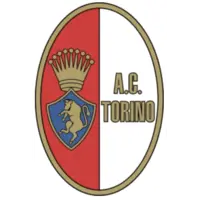
Following the rise of the legendary Grande Torino side during the 1940s, the club adopted crests that increasingly emphasised elegance and tradition. The bull remained the dominant feature, symbolising strength, determination and pride. These badges became associated with the greatest team in the club's history, whose success and tragic loss in the Superga air disaster of 1949 forever shaped Torino's identity.
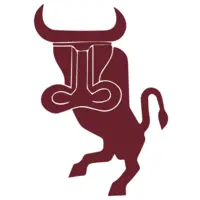
Between 1980 and 1983, Torino adopted a new logo designed by the famous Armando Testa design studio. The badge abandoned the classic heraldic style and introduced a much more modern and graphic interpretation of the club's identity. The bull was redrawn in a highly stylised form, reflecting the design trends of the period and giving the club a contemporary image.
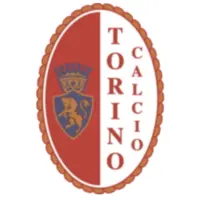
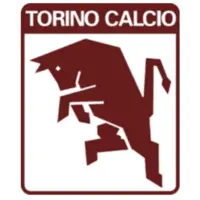
In 1983, Torino introduced one of its most distinctive and beloved crests. The badge adopted a square shape featuring a stylised bull together with the words "Torino Calcio." Modern and minimalist for its era, the design became extremely popular among supporters and remains one of the most admired badges in Italian football history. Its reputation endured long after it disappeared from official use, and in 2013 readers of Guerin Sportivo voted it the most beautiful club logo of all time.
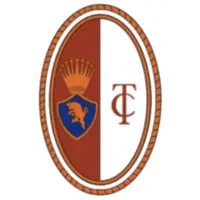
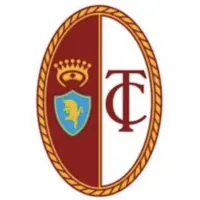
A significant redesign arrived in 1990. The club introduced an oval-shaped crest inspired by the badge used during the era of Grande Torino. The emblem featured the traditional bull and the intertwined initials "T" and "C" representing Torino Calcio. This design closely resembled the historic badge of the 1940s, although the original initials "A.C.T." (Associazione Calcio Torino) were replaced by "T.C." to reflect the club's contemporary name.
The 1990 crest remained in use throughout one of the most turbulent periods in Torino's history. It accompanied the club during its run to the 1992 UEFA Cup Final, as well as through numerous promotions, relegations and financial difficulties.
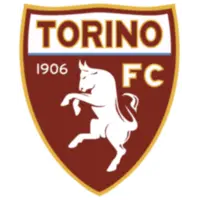
A major turning point arrived in 2005, when Torino Calcio declared bankruptcy. Following the creation of the new club, Torino Football Club, a new badge was introduced for the 2005–06 season. While preserving the traditional bull and granata colours, the crest adopted a more modern shield shape and marked the beginning of a new era.
The redesigned badge maintained continuity with the club's past while signalling a fresh start after the financial collapse. The rampant bull remained at the centre of the emblem, ensuring that the club's most important symbol survived the transition intact.
Shortly afterwards, the club added "1906" to the left side of the shield, commemorating the founding year of the original Foot-Ball Club Torino. This addition strengthened the link between the newly established organisation and the historic club founded nearly a century earlier.
The current crest continues to feature a white rampant bull on a granata shield, accompanied by the club name and the year 1906. The design successfully combines the city's heraldic symbol with the club's historic colours, creating an identity that remains instantly recognisable throughout Italian football.
Torino FC Club History
Founded on 3 December 1906, Torino Football Club was created through the merger of FC Torinese and a group of dissident members from Juventus, led by Swiss entrepreneur Alfredo Dick. From its earliest days, the club adopted the famous granata (maroon) colours that would become one of the most recognisable identities in Italian football.
During its first decades, Torino quickly established itself among the strongest clubs in the country. Success arrived in 1927–28, when the club won its first Italian championship, confirming its place among the elite of Italian football. Around this period, Torino also developed its historic rivalry with Juventus, giving birth to the Derby della Mole, one of the oldest and most important derbies in Italy.
The greatest chapter in the club's history began during the 1940s with the emergence of the legendary Grande Torino. Under president Ferruccio Novo, the club assembled a side that dominated Italian football unlike any team before it. Grande Torino won five consecutive Serie A titles between 1943 and 1949 and became the benchmark for excellence in Europe. At its peak, the team supplied the majority of players to the Italian national team and was widely regarded as the strongest club side in the world.
Tragedy struck on 4 May 1949 when the aircraft carrying the team home from a friendly match in Lisbon crashed into the Basilica of Superga overlooking Turin. All the players, coaching staff, journalists and crew on board lost their lives. The Superga Air Disaster remains one of the most devastating tragedies in football history and forever shaped the identity of Torino Football Club.
In the years that followed, Torino struggled to recreate the dominance of Grande Torino, but the club remained a respected force within Italian football. The memory of the fallen champions became an integral part of the club's culture and continues to define its identity to this day.
One of the most beloved figures of the post-war era was Gigi Meroni, the gifted and charismatic winger who became an icon of the club during the 1960s. His tragic death in 1967 deeply affected both Torino supporters and Italian football as a whole.
A new golden moment arrived during the 1975–76 season, when Torino won its seventh Serie A title under coach Luigi Radice. Led by stars such as Paolo Pulici, Francesco Graziani and Claudio Sala, the club finished ahead of city rivals Juventus to secure its first championship since the Superga tragedy. For many supporters, this remains the most emotional triumph in Torino's history.
Throughout the 1980s and 1990s, Torino remained competitive at both domestic and European level. The club reached the 1991–92 UEFA Cup Final, narrowly missing out on a major continental trophy, and won the Coppa Italia in 1993. During this period, Torino continued to reinforce its reputation as one of Italy's most historic and respected clubs.
However, financial instability increasingly affected the organisation. The situation reached its lowest point in 2005, when Torino Calcio declared bankruptcy. Despite earning promotion to Serie A on the pitch, the club was unable to register and ceased operations.
Football in Turin survived through the creation of Torino Football Club, which inherited the traditions, colours and history of the original club. The rebirth marked the beginning of a new chapter and ensured the continuation of one of Italy's most important football institutions.
Following its re-establishment, Torino gradually rebuilt its position within Italian football. Promotion back to Serie A was secured in 2012, and the club has since established itself as a regular presence in the top division. Under various coaches and ownership structures, Torino has consistently competed in Serie A while maintaining its strong connection to its history and supporters.
The club plays its home matches at the Stadio Olimpico Grande Torino, while the historic Stadio Filadelfia, home of Grande Torino, has been restored and now serves as the club's training centre. Both venues stand as powerful symbols of the club's past and present.
Torino's fiercest rivalry is with Juventus in the Derby della Mole, a fixture that represents more than a century of footballing competition within the city of Turin. The rivalry remains one of the most intense and historically significant in Italian football. Other notable rivalries have developed with clubs such as Genoa, Milan and Inter, although none approach the importance of the derby against Juventus.
Torino FC
Your Dynamic Snippet will be displayed here... This message is displayed because you did not provide enough options to retrieve its content.