Skip to Content

Historical Crests Ternana Calcio

Name: ​Ternana Calcio
Nickname(s): ​​I Rossoverdi (The Red and Greens), Le Fere (The Beasts)
Founded: ​1925 (Refounded 1993)
Stadium: ​​Stadio Libero Liberati (Ternana)
Capacity: ​22,000

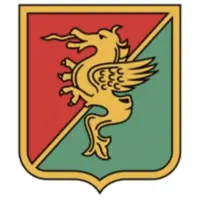
1981-1994
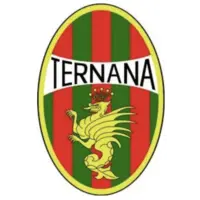
1994-2017
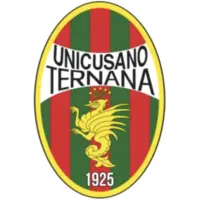
2017-2018
2018-Present

Ternana Calcio Crest History
Throughout its history, Ternana's crests have been defined by two unique symbols: the club's traditional red-and-green colours and the legendary Viverna, also known locally as the Drago Thyrus. The winged dragon, taken from the mythology and civic traditions of Terni, has become one of the most distinctive symbols in Italian football and is closely linked to the club's famous nickname Le Fere ("The Beasts").
The nickname Le Fere emerged during the 1960s and gradually became inseparable from the club's identity. Around the same period, the mythical Viverna began to appear more prominently in club imagery. The creature, often depicted in gold or yellow, represented strength, courage and the industrial spirit of Terni. Over time, it evolved into the central symbol of the club. 
One of the first widely recognised modern crests appeared in 1981. The badge adopted a traditional shield shape featuring the club's red-and-green colours together with the Viverna. This design established the visual identity that supporters would come to associate with Ternana for decades and introduced many of the elements that remain present today.
Following the club's bankruptcy and refoundation in 1993, a new crest was introduced in 1994. While modernised graphically, it retained the traditional ancile-shaped shield, the red-and-green stripes and the famous dragon. The Viverna became larger and more prominent within the design, reinforcing its role as the club's primary symbol. This version accompanied Ternana through much of its modern history and became one of the most recognisable badges in Serie B and Serie C. 
A controversial redesign arrived in 2017 following the takeover by businessman Stefano Bandecchi. The club temporarily rebranded as Unicusano Ternana, and the word "Unicusano" was added to the crest. Although the traditional dragon and colours remained, many supporters objected to the inclusion of a corporate brand within the badge, viewing it as a break from the club's traditions. 
Supporter opposition proved decisive. In 2018, the Unicusano name was removed and the club returned to a more traditional version of the crest. The redesign restored the focus to the Viverna, the red-and-green shield and the historic Ternana identity, reconnecting the badge with the symbols supporters had embraced for generations. 
The current crest retains the classic elements that have defined Ternana for decades. It features an ancile-shaped shield divided into red and green vertical sections, topped by a white banner containing the club name. Dominating the centre is the golden Viverna, the mythical winged dragon that has become one of the most distinctive emblems in Italian football. The design successfully combines local mythology, civic pride and sporting tradition into a single symbol. 

Ternana Calcio Club History
Founded in 1925 as Terni Football Club, Ternana is the most important football club in the city of Terni and one of the most historic teams in Umbria. The club adopted the distinctive red-and-green colours, making it unique within Italian professional football.
The club's nickname, Le Fere ("The Beasts"), reflects the strong industrial character of Terni, a city long associated with steel production and heavy industry. This connection between the club and the city's working-class roots has remained a defining feature throughout its history.
The greatest breakthrough arrived in 1972, when Ternana won promotion to Serie A for the first time in its history. The achievement was historic not only for the club but for the entire region, as Ternana became the first Umbrian club ever to reach Serie A. The promotion remains one of the most important moments in Umbrian sporting history.
Although the first Serie A adventure lasted only one season, Ternana returned to the top flight in 1974. These years established the club among the leading provincial sides in Italian football and created a lasting legacy for generations of supporters.
Throughout the 1970s and 1980s, Ternana alternated between Serie B and Serie C. Despite periods of success, financial difficulties and instability often prevented the club from maintaining a long-term presence at the highest levels.
A major revival arrived during the 1990s. Under the guidance of coach Luigi Delneri, Ternana achieved consecutive promotions from Serie C2 to Serie B between 1996 and 1998. The club quickly established itself as a competitive force in the second division and enjoyed one of the most stable periods in its modern history.
During the late 1990s and early 2000s, Ternana became a respected Serie B side. The club regularly challenged for promotion and developed several talented players while maintaining a strong reputation for organisation and competitiveness.
Following relegation in 2006, Ternana spent several years in the lower divisions before beginning another climb. Promotion back to Serie B was secured in 2012, restoring the club to the second tier after six years away.
One of the most dominant campaigns in the club's history came during the 2020–21 season. Under coach Cristiano Lucarelli, Ternana won Serie C Group C in extraordinary fashion, setting numerous records and playing some of the most entertaining football in the division. The club secured promotion to Serie B with weeks to spare and finished the season as one of the strongest teams ever seen at that level.
The team plays its home matches at the Stadio Libero Liberati, named after the legendary motorcycle world champion from Terni. Opened in 1969, the stadium became the stage for the club's historic Serie A seasons and remains one of the city's most important sporting landmarks.
Historically, Ternana's fiercest rivalry is with Perugia in the Derby dell'Umbria, the most important football rivalry in the region. Matches between the two clubs are among the most passionate fixtures in central Italy and reflect decades of competition for regional supremacy. Rivalries also exist with Ascoli, Pescara, Lazio and several neighbouring clubs encountered throughout the lower divisions.