Historical Crests SS Lazio
Name: SS Lazio
Nickname(s): Le Aquile (The Eagles)
Founded: 1900
Stadium: Stadio Olimpico (Rome)
Capacity: 70,634
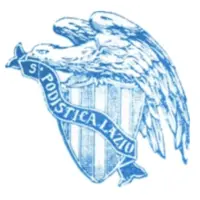
1900-1914
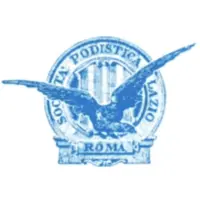
1914-1921
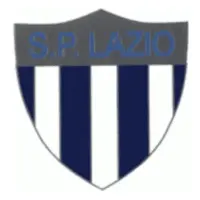
1921-1925
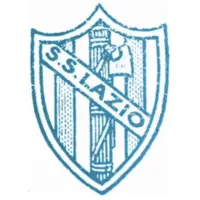
1925-1940
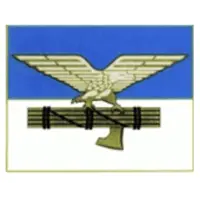
1940-1941
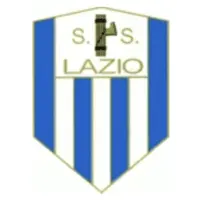
1941-1943
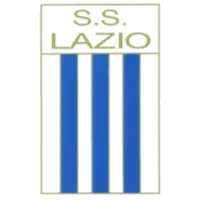
1943-1958
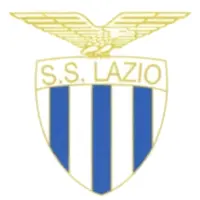
1958-1960
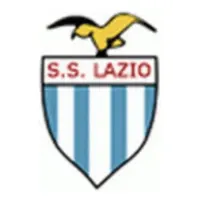
1960-1961
1961-1962
1962-1963
1963-1979
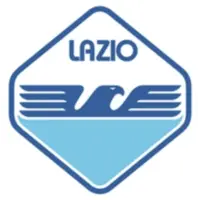
1978-1988
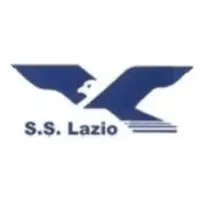
1979-1982

1982-1987
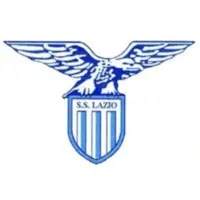
1988-1993
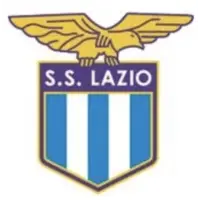
1993-1998
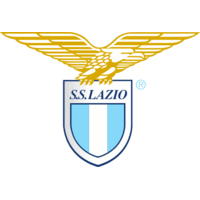
1998-Present
S.S. Lazio Crest History
Throughout its history, Lazio's crests have been defined by two enduring symbols: the club's traditional sky-blue and white colours and the eagle, one of the most iconic emblems in Italian football. The eagle was chosen by founding member Luigi Bigiarelli and represents the bird associated with Zeus, the king of the gods in Greek mythology. Lazio's use of the eagle gave rise to two of the club's most famous nicknames: Le Aquile ("The Eagles") and Aquilotti ("The Eaglets").
The earliest Lazio emblems used during the first decades of the twentieth century were relatively simple and reflected the classical ideals that inspired the club's foundation. The sky-blue colour was adopted in homage to ancient Greece and the Olympic movement, distinguishing Lazio from most Italian clubs of the period.
During the interwar years, Lazio began incorporating the eagle more prominently into its visual identity. Early versions often featured realistic depictions of the bird, emphasising strength, nobility and the club's connection to classical symbolism. These designs helped establish the eagle as the defining image of Lazio.
Throughout the 1950s and 1960s, several badge variations appeared, often combining the eagle with shield-shaped designs featuring the club's colours. While graphic styles changed, the eagle remained the dominant symbol and became increasingly associated with the club's identity both in Rome and throughout Italy.
One of the most recognisable designs emerged during the 1970s, when Lazio adopted a crest featuring a stylised eagle positioned above a shield. The design balanced modern simplicity with traditional symbolism and became closely associated with one of the club's most important eras, including the historic 1973–74 Serie A title, the first Scudetto in Lazio's history.
During the 1980s and 1990s, the crest underwent several refinements. The eagle was modernised and graphic elements were simplified to create a cleaner appearance. Despite these updates, Lazio consistently preserved the symbols that supporters most closely associated with the club: the eagle and the sky-blue-and-white colour scheme.
A significant redesign arrived in the late 1990s, when Lazio adopted a more elegant and heraldic badge. The crest featured a large golden eagle spreading its wings above a shield containing the club's colours and name. This version became closely associated with the most successful period in Lazio's history, including the club's Serie A title in 2000, the UEFA Cup Winners' Cup in 1999, the UEFA Super Cup in 1999, and multiple domestic trophies.
The modern badge retains the same fundamental structure and remains one of the most recognisable crests in European football. It features a golden eagle positioned above a white shield outlined in blue. Within the shield appears the club's name together with a smaller tripartite shield displaying Lazio's traditional colours. The design combines classical symbolism, civic pride and sporting tradition in a single emblem.
S.S. Lazio Club History
Founded on 9 January 1900 as Società Podistica Lazio, Lazio is one of the oldest sporting institutions in Italy and one of the most historic football clubs in Rome. The club was established in the Prati district by a group of young athletes led by Luigi Bigiarelli, initially as an athletics association before expanding into numerous sporting disciplines, including football.
Lazio adopted sky blue and white as its colours in tribute to ancient Greece, the birthplace of the Olympic Games. This decision gave the club one of the most distinctive colour schemes in world football and established an identity that has remained unchanged for more than a century.
One of the most important moments in the club's history occurred in 1927, when the Fascist regime sought to merge Rome's major football clubs into a single organisation that became A.S. Roma. Lazio refused to participate in the merger, largely due to the efforts of army general Giorgio Vaccaro. As a result, Lazio remained independent and became Roma's principal rival, laying the foundations for one of the most intense city rivalries in world football.
Lazio was among the founding members of Serie A in 1929 and has spent the vast majority of its history in Italy's top division. The club's first major trophy arrived in 1958, when Lazio won the Coppa Italia, becoming the first club from Rome to lift a major national football trophy.
The club's first golden era arrived during the 1970s. Led by coach Tommaso Maestrelli and stars such as Giorgio Chinaglia, Luciano Re Cecconi and Giuseppe Wilson, Lazio won its first Serie A title in 1973–74.
Following the triumph, Lazio experienced a difficult period marked by sporting decline and financial problems. The club spent parts of the 1980s in Serie B and faced significant challenges both on and off the pitch. Despite these setbacks, Lazio retained a large and passionate following.
A new era began during the 1990s under the ownership of Sergio Cragnotti. Massive investment transformed Lazio into one of Europe's strongest clubs. World-class players such as Alessandro Nesta, Pavel Nedvěd, Juan Sebastián Verón, Sinisa Mihajlović, Marcelo Salas, Roberto Mancini and Christian Vieri arrived in Rome, creating one of the most talented squads in club history.
The peak of this period came between 1998 and 2000. Under coach Sven-Göran Eriksson, Lazio won the Coppa Italia, the UEFA Cup Winners' Cup, the UEFA Super Cup, and finally captured its second Serie A title in 1999–2000. The Scudetto was secured dramatically on the final day of the season, completing the most successful campaign in Lazio's history.
Financial difficulties following the collapse of the Cragnotti era forced the club to sell many of its star players in the early 2000s. Nevertheless, Lazio remained competitive and continued to challenge for domestic honours.
Under president Claudio Lotito, who acquired the club in 2004, Lazio gradually restored financial stability while remaining a regular participant in European competitions. The club won additional Coppa Italia titles in 2009, 2013 and 2019, as well as multiple Supercoppa Italiana trophies.
One of the most memorable achievements of the modern era came in 2013, when Lazio defeated city rivals Roma in the Coppa Italia Final. It remains the only time the two clubs have met in a major final and is considered one of the most significant victories in Lazio's history.
Lazio plays its home matches at the Stadio Olimpico, which it shares with Roma. With a capacity of over 70,000 spectators, it is the largest stadium in Rome and one of the most famous football venues in Europe.
The club's fiercest rivalry is with A.S. Roma in the Derby della Capitale, widely regarded as one of the most passionate and intense derbies in world football. Other important rivalries have developed with Juventus, Inter, Napoli and Milan through decades of competition at the highest level.
SS Lazio
Your Dynamic Snippet will be displayed here... This message is displayed because you did not provide enough options to retrieve its content.