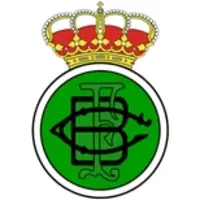
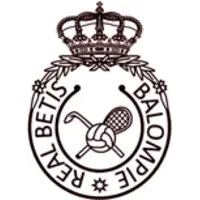
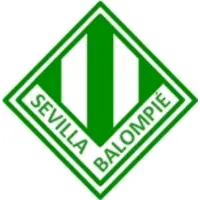
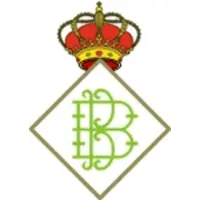
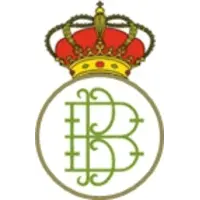
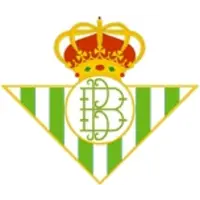
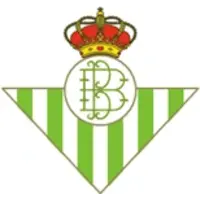
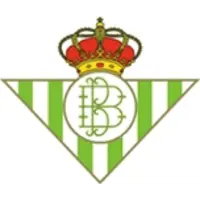
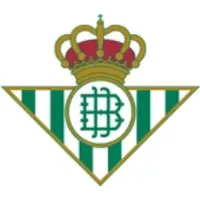
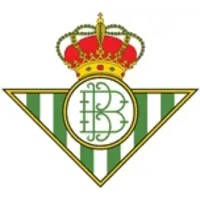
Historical Crests Real Betis Balompié
Name: Real Betis Balompié
Nickname(s): Los Verdiblancos (The Green-and-Whites)
Founded: 1971
Stadium: Estadio Benito Villamarin (Sevilla)
Capacity: 60,720
Real Betis Crest History
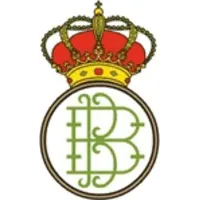
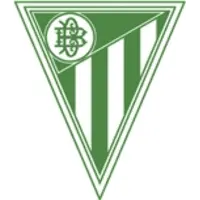
Real Betis Balompié has undergone numerous crest redesigns while maintaining a strong visual connection to its history, traditions and royal heritage. Over more than a century, Betis has developed one of the most distinctive identities in Spanish football, centred around its famous green-and-white colours, royal crown and triangular shield.
The earliest badges used by the club reflected the experimental nature of football branding during the early twentieth century. The first emblem featured a circular design incorporating colours similar to those of the Spanish national flag. During the following years, the club introduced several alternative designs, with significant changes appearing in 1909 and 1910 as new colours, shapes and visual concepts were explored.
An important milestone in the club’s visual history came with the introduction of the royal crown. First incorporated into the crest in 1910, the crown symbolized the club’s royal status and connection to the Spanish monarchy.
A notable transformation came in 1913, when the club adopted the name Sevilla Balompié. The new identity was accompanied by a redesigned circular badge featuring a navy-blue and white colour palette. Over the next few years, the crest continued to evolve, including a brief period in which a bright green-and-white rhombus-shaped design was used. These early experiments helped establish the green-and-white colours that would eventually become synonymous with the club.
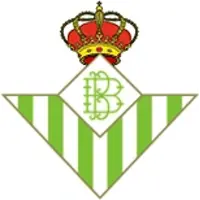
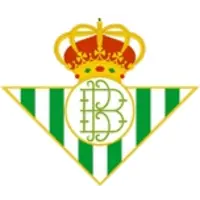
The defining moment in Betis’ crest history arrived in 1931, when the club introduced the iconic triangular badge that remains the foundation of the modern emblem. The design featured green-and-white vertical stripes enclosed within a triangular shield, overlaid by a circular monogram containing the letter “B” for Betis. Topped by the royal crown, the badge created a unique and instantly recognizable identity unlike any other in Spanish football.
During the Spanish Civil War and the political changes that followed, the club’s crest underwent several modifications. Royal symbols temporarily disappeared from many Spanish institutions, but after the war the crown returned to the badge. The post-war redesigns preserved the triangular concept while restoring the club’s traditional royal symbolism.
Throughout the second half of the twentieth century, Real Betis refined its crest on numerous occasions. Changes were made to the proportions of the triangle, the shape of the crown, the typography and the colour palette. While each redesign introduced subtle modernizations, the club consistently preserved the key elements that supporters associated with Betis: the green-and-white stripes, the “B” monogram and the royal crown.
In 2013, the club adopted a bolder and more contemporary visual style. The redesign featured thicker outlines, stronger colours and a cleaner overall appearance. T
In 2022, Real Betis unveiled a further refinement of its historic crest as part of a wider visual identity project called La Vida en Verde. Rather than introducing a completely new badge, the club simplified and modernized key elements of the existing design. The royal crown was streamlined, the central “BB” monogram was redrawn for greater clarity, the green tones were deepened, and the overall construction of the crest was optimized for digital and small-format applications.
Real Betis Club History
Real Betis Balompié was founded in 1907 in Seville. The club’s name reflects its origins: Balompié is the original Spanish term for “football,” while “Betis” derives from Baetis, the Roman name for the Guadalquivir River that flows through Seville and gave its name to the Roman province in the region.
In its early years, the club competed in local and regional competitions before undergoing a significant transformation in 1914, when Sevilla Balompié merged with Betis Football Club. In the same year, King Alfonso XIII granted royal patronage, allowing the club to adopt the title “Real” and become Real Betis Balompié. This royal distinction remains part of the club’s identity today.
One of the greatest achievements in the club’s history came in 1934–35, when Real Betis won its first La Liga title. Under Irish manager Patrick O'Connell, Betis became the first club from Andalusia to win the Spanish championship. The triumph remains one of the most celebrated moments in the club’s history and established Betis among the elite of Spanish football.
The outbreak of the Spanish Civil War and the economic difficulties that followed had a significant impact on the club. In the decades that followed, Betis experienced numerous promotions and relegations, earning a reputation as one of Spanish football’s most unpredictable clubs. Despite these challenges, the club maintained a remarkably loyal support base and developed a unique football culture centred on unconditional devotion.
A major milestone arrived in 1977, when Betis won the Copa del Rey for the first time. The final, played against Athletic Club, was decided by a dramatic penalty shootout and delivered the club’s first major trophy since the league title of 1935. The victory also allowed Betis to participate in European competition for the first time.
Throughout the 1980s and 1990s, the club continued to alternate between periods of success and struggle. Despite occasional relegations, Betis remained one of Spain’s most popular clubs. The construction and expansion of the club’s home ground, now known as the Estadio Benito Villamarín, helped reinforce the club’s position as a major force in Andalusian football.
A new era began in the mid-1990s under president Manuel Ruiz de Lopera. Significant investment brought notable players and improved results. In 1997, Betis reached the Copa del Rey Final and qualified for the UEFA Cup, signaling a return to national prominence. During this period, players such as Finidi George and Alfonso Pérez became symbols of the club’s revival.
Another memorable achievement came in 2005, when Betis won its second Copa del Rey by defeating CA Osasuna in the final. The victory secured qualification for the UEFA Champions League, making Betis one of the few Andalusian clubs ever to participate in Europe’s premier club competition.
The following years brought both highs and lows. Financial difficulties and sporting instability led to another relegation in 2009, but Betis quickly rebuilt and returned to La Liga. The club gradually re-established itself as a competitive force in Spanish football while continuing to attract some of the largest crowds in the country.
A significant revival occurred during the late 2010s and early 2020s. Under managers such as Manuel Pellegrini, Betis developed an attractive and ambitious style of play. This period culminated in 2022, when the club won its third Copa del Rey, defeating Valencia CF on penalties. The triumph marked one of the most successful modern chapters in Betis history and secured another return to European competition.
Today, Real Betis is widely regarded as the sixth most popular football club in Spain, supported by hundreds of thousands of fans and more than 500 official supporters’ clubs. Despite experiencing numerous relegations and setbacks throughout its history, the club remains famous for its enduring motto: “¡Viva el Betis manque (aunque) pierda!” (“Long live Betis even though they lose!”). This phrase perfectly captures the spirit of the Béticos, whose loyalty has become one of the defining characteristics of the club.
The club’s fiercest rivalry is with fellow Seville club Sevilla FC. Matches between the two sides, known as El Gran Derbi, are among the most passionate and intense fixtures in Spanish football. The rivalry divides the city of Seville and represents one of the oldest and most emotionally charged derbies in Europe.
Real Betis Pins
Your Dynamic Snippet will be displayed here... This message is displayed because you did not provide enough options to retrieve its content.