Historical Crests Palermo FC
Name: Palermo FC
Nickname(s): I Rosanero (The Pink and Blacks)
Founded: 1900
Stadium: Stadio Renzo Barbera (Palermo)
Capacity: 36,365
Palermo FC Crest History
A defining part of Palermo's identity emerged in 1905, when the club adopted its famous pink-and-black colours. The choice was suggested by founding member Count Giuseppe Airoldi, who described pink and black as the colours of "the sad and the sweet." In a letter to club official Joseph Whitaker, Airoldi argued that the colours perfectly reflected a team whose results fluctuated dramatically, while also distinguishing Palermo from the many Italian clubs that already used red and blue. The combination would become one of the most unique and recognisable colour schemes in world football.
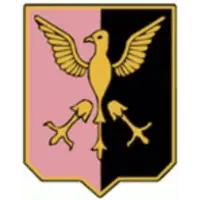
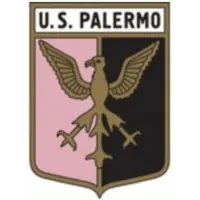
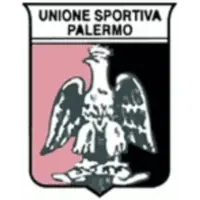
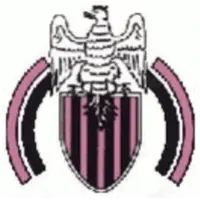
Throughout the first half of the twentieth century, various crests combined the eagle with references to the club's colours and the city's coat of arms. These badges reinforced the connection between Palermo FC and the Sicilian capital while establishing the eagle as the club's principal symbol.
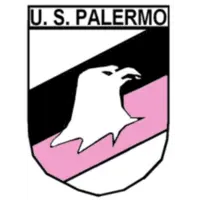
During the post-war period, Palermo adopted several shield-shaped crests that prominently featured the eagle. These designs often incorporated pink and black elements while modernising the heraldic appearance of the bird. The eagle became increasingly associated with the club's famous nickname, Le Aquile ("The Eagles").
A significant redesign arrived during the 1980s, when Palermo adopted a cleaner and more modern shield. The eagle was stylised while remaining instantly recognisable, and the club's colours were incorporated more prominently into the overall design. This version helped establish many of the visual characteristics associated with Palermo's modern identity.
Following the club's bankruptcy and rebirth in 1987, updated versions of the crest were introduced. Although graphic details changed, the eagle remained central to the design, ensuring continuity between the historic club and the new organisation.
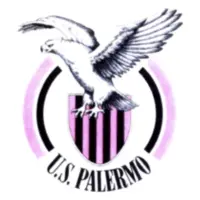
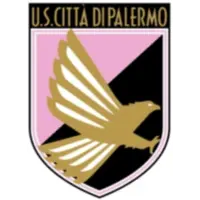
One of the most recognisable crests in Palermo's history emerged during the 1990s and 2000s. The badge featured a large eagle poised for flight within a shield, accompanied by the club's official name, U.S. Città di Palermo, displayed prominently at the top. This design became strongly associated with the club's most successful modern era, including its return to Serie A and qualification for European competitions.
Under the presidency of Maurizio Zamparini, the crest was refined while retaining the traditional eagle motif. The bird became more dynamic and modern in appearance, and the badge accompanied Palermo during a golden period that saw stars such as Luca Toni, Edinson Cavani, Javier Pastore and Paulo Dybala wear the famous pink shirt.
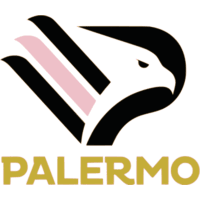
A major turning point arrived in 2019, when Palermo was excluded from professional football and subsequently refounded. The newly established club introduced a completely new crest that represented a radical departure from the traditional shield design. The new badge featured a stylised black letter "P" incorporating a white eagle's head and three pink-and-black feathers. While minimalist and contemporary, the design preserved the eagle as the central symbol of the club and city.
The eagle remains significant because it is also featured in the official coat of arms of Palermo, maintaining a direct link between the football club and the Sicilian capital. The redesign replaced the long-standing crest featuring the eagle within a shield and marked the beginning of a new era following the club's rebirth.
Following the club's acquisition by the City Football Group, the modern crest became an important part of Palermo's international branding. The simplified design works effectively across digital platforms while preserving the key elements that define the club's identity: the eagle and the iconic pink-and-black colours.
Palermo FC Club History
Founded in 1900 as the Anglo Palermitan Athletic and Football Club by English ornithologist Joseph Whitaker and other members of Palermo's British community, Palermo is one of the oldest football clubs in Italy and one of the most historic institutions in southern Italian football.
In 1907, the club adopted the name Palermo Foot-Ball Club and introduced the famous pink-and-black colours that would become one of the most distinctive identities in world football. The unusual colour combination immediately set Palermo apart from other Italian clubs and gave rise to a unique footballing tradition that continues to this day. The club's most famous nickname, I Rosanero ("The Pink and Blacks"), originates from these colours.
The years following the First World War brought significant organisational changes. In 1919, the club was refounded as Unione Sportiva Palermo, reflecting the restructuring of Italian football during the post-war period.
Financial difficulties soon threatened the club's existence. In 1927, Palermo was dissolved because of economic problems. Football in the city survived, however, and one year later the club was re-established following a merger with Vigor Palermo, once again adopting the name Palermo Foot-Ball Club.
Further changes followed during the interwar period. A merger with Unione Sportiva Juventina Palermo led to the creation of Unione Sportiva Palermo-Juventina, continuing the process of consolidation that characterised much of Italian football during the era.
In 1943, following political and organisational changes brought about by the Second World War, the club adopted the name Unione Sportiva Palermo, a title it would carry for several decades.
The club's home is the Stadio Renzo Barbera, one of the largest and most iconic stadiums in southern Italy. Originally opened in 1932, the stadium has hosted some of the greatest moments in Palermo's history and remains one of the most atmospheric venues in Italian football.
One of Palermo's greatest periods arrived during the 2000s under president Maurizio Zamparini. In 2000, the club adopted the name U.S. Città di Palermo, marking the beginning of a new era. Palermo returned to Serie A and quickly established itself as one of the most exciting clubs in Italian football.
The club became renowned for discovering and developing exceptional talent. Players such as Luca Toni, Fabio Grosso, Edinson Cavani, Javier Pastore, Josip Iličić, Paulo Dybala and Andrea Belotti either emerged or flourished while wearing the pink shirt. Palermo regularly challenged for European qualification and enjoyed some of the most successful seasons in its history.
Despite these sporting achievements, financial instability eventually returned. In 2019, Palermo was excluded from professional football due to financial irregularities and was forced to restart under a new corporate structure. The club was subsequently re-established as Palermo Football Club, reviving one of the most historic names in Italian football.
The recovery proved remarkably swift. Palermo quickly climbed back through the divisions and re-established itself within the professional leagues. A major new chapter began with the club's acquisition by the City Football Group, bringing international investment and long-term ambitions for a return to the highest levels of Italian football.
Palermo is one of the most widely supported clubs in Italy. While many supporters come from the city itself and the surrounding province, the club also enjoys a substantial following among Sicilians who migrated to northern Italy and abroad. This has helped Palermo maintain one of the largest fanbases in southern Italian football.
The club's most important rivalry is with Catania. Matches between the two sides are known as the Derby di Sicilia and represent one of the fiercest rivalries in Italian football.
Palermo FC Pins
Your Dynamic Snippet will be displayed here... This message is displayed because you did not provide enough options to retrieve its content.