Skip to Content

Historical Crests Novara FC

Name: ​Novara FC
Nickname(s): ​Gli Azzurri (The Blues/The Light Blues)
Founded: ​1908 (Refounded 2018)
Stadium: ​Stadio Silvio Piola (Novara)
Capacity: ​17,875

1920-1930
1930-1979
1979-1983
1983-2003
2003-2021
2021-Present

Novara FC Crest History
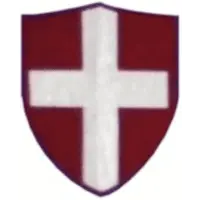
The earliest crest, used by Football Association Studenti Novara following the club's foundation in 1908, was heavily inspired by the city's coat of arms. The design incorporated the civic shield of Novara and emphasised the club's strong connection to the city from its very beginning. 
A refined version appeared during the 1920s. While the overall structure remained similar, the design became cleaner and more balanced. 
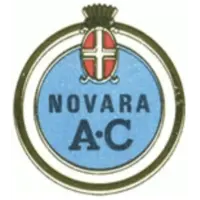
The first major redesign arrived in 1930, when the crest adopted a circular shape for the first time. The club's traditional azzurro colour was introduced as the dominant background, while the city's coat of arms was reduced in size and moved to the upper section of the badge. Below it appeared the inscription "Novara A.C.". This circular design would remain the foundation of the club's visual identity for almost fifty years.
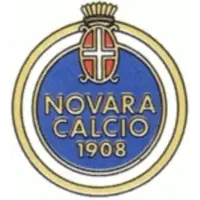
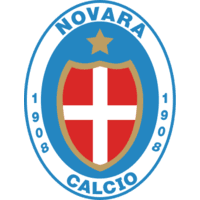
In 1979, the badge underwent another notable update. The circular shape was retained, but the blue background became brighter and closer to the shade associated with the club today. For the first time, the inscription "Novara Calcio 1908" appeared prominently within the design, emphasising the club's heritage and foundation year.
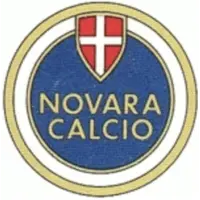
A further redesign arrived in 1983. The club simplified the badge by removing the foundation year and modernising the city's coat of arms. The crown disappeared from the civic shield, while the overall design became cleaner and more contemporary. The circular format was retained, ensuring continuity with previous versions.
One of the most recognisable crests in Novara's history was introduced in 2003. The traditional circular badge was replaced by an elegant oval shield, a shape that immediately distinguished it from earlier designs. The city coat of arms was placed at the centre against a light-blue background and outlined in gold. The club name and foundation year appeared around the border, while a gold star was added above the crest to commemorate the club's Stella d'Oro al Merito Sportivo, awarded in 1975 for sporting achievement. This badge accompanied Novara through one of the most successful modern periods in its history, including its memorable return to Serie A in 2011.
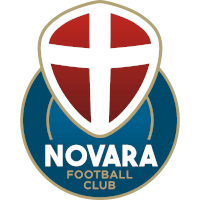
Following the financial collapse of Novara Calcio in 2021, football in the city continued through the creation of Novara Football Club. A new crest was introduced as part of the rebirth. While modernised in style, the badge deliberately retained the historic coat of arms of Novara and the traditional light-blue colours, ensuring continuity with more than a century of footballing history.

Novara FC Club History
Founded in 1908 as Football Association Studenti Novara, Novara FC is one of the oldest football clubs in Piedmont and one of the most historic provincial clubs in Italian football. The club represents the city of Novara and is traditionally associated with its distinctive light-blue colours, earning the nickname Gli Azzurri. Throughout its history, Novara has been known for its strong local identity, resilient spirit and ability to compete above its weight against larger and wealthier clubs.
A central figure in the club's early history was Silvio Piola, widely considered one of the greatest Italian footballers of all time. Piola began his professional career with Novara before becoming the all-time leading goalscorer in Serie A history. His legacy remains deeply connected to the club, and Novara's stadium today bears his name.
The club spent many seasons competing in Serie A during the interwar years and established itself as one of the strongest provincial teams in northern Italy. While major trophies remained elusive, Novara earned widespread respect for its organisation, competitiveness and ability to develop talented players.
Following the Second World War, Novara enjoyed one of the most successful periods in its history. Between 1948 and 1956, the club spent eight consecutive seasons in Serie A. Led by Silvio Piola during the latter stages of his career, Novara became a stable top-flight side and recorded some of the best league finishes in its history.
After relegation in 1956, the club entered a long period spent largely between Serie B and Serie C. Although promotion back to Serie A proved difficult, Novara remained an important institution within Italian football and maintained a loyal supporter base throughout the region.
The club's home ground is the Stadio Silvio Piola, named in honour of its most famous player
A remarkable revival arrived at the beginning of the twenty-first century. After spending many years in the lower divisions, Novara began a steady climb through the Italian football pyramid. Under coach Attilio Tesser, the club achieved back-to-back promotions and secured a return to Serie B.
The greatest modern achievement came in 2011, when Novara won the Serie B promotion play-offs and returned to Serie A for the first time in fifty-five years. 
Although the Serie A adventure lasted only one season, Novara earned national attention with memorable performances and demonstrated that a provincial club could still reach the highest level of Italian football through intelligent management and strong team spirit.
A major turning point arrived in 2021, when Novara Calcio was excluded from professional football due to financial problems. To preserve football in the city, a new club, Novara Football Club, was established. The successor organisation inherited the traditions, colours and sporting heritage of the historic club and was admitted to Serie D.
The rebuilding process proved successful. Novara immediately secured promotion back to professional football and re-established itself within the national league system, ensuring continuity for one of Piedmont's most historic football institutions.
Historically, Novara's most important rivalry is with Pro Vercelli. Matches between the two clubs form the Derby del Riso, one of the oldest rivalries in Italian football, reflecting the agricultural traditions of the rice-growing plains of eastern Piedmont. Strong rivalries also exist with Alessandria, Casale and other historic clubs from the region.
 

Novara FC Pins

Your Dynamic Snippet will be displayed here... This message is displayed because you did not provide enough options to retrieve its content.