Skip to Content

Historical Crests Newcastle United FC

Name: ​​ ​Newcastle United FC
Nickname(s): ​The Magpies
Founded: ​​1892
Stadium: St. James' Park (Newcastle-upon-Tyne)
Capacity: ​​52,354

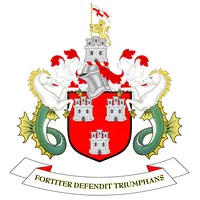
1969-1976
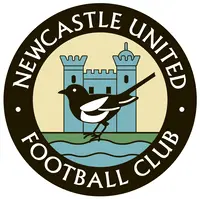
1976-1983
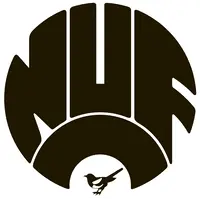
1983-1988
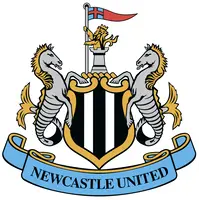
1988-Present

Newcastle United FC Crest History
The visual identity of the Newcastle United FC badge has always been closely linked to the city of Newcastle upon Tyne. The club’s modern crest draws heavily on the city’s civic heritage and incorporates symbols that reflect Newcastle’s history, geography and maritime traditions.
A significant development came in 1969 when Newcastle began wearing the coat of arms of the City of Newcastle upon Tyne on its shirts. The civic crest featured several important local symbols, including a castle representing Newcastle’s historic Norman keep and two sea horses reflecting Tyneside’s long-standing connection with the sea and maritime trade. A scroll beneath the shield carried the city’s Latin motto, “Fortiter Defendit Triumphans,” which translates as “Triumphing by Brave Defence.” The city coat of arms remained on the club’s shirts until 1976.
In 1976, Newcastle introduced its first purpose-designed football badge to replace the civic coat of arms. The new crest adopted a circular format and featured the club’s full name surrounding a magpie standing beside the River Tyne, with Newcastle’s historic Norman castle in the background. The magpie, derived from the club’s black-and-white colours, had long been associated with Newcastle United and became one of the club’s most recognisable symbols.
A further redesign followed in 1983. This version featured a much simpler and more modern appearance, consisting primarily of the initials “NUFC.” The small magpie from the previous crest was incorporated within the horizontally positioned letter “C,” creating a distinctive logo that reflected contemporary design trends. Despite its uniqueness, the badge proved relatively short-lived and was discontinued after only five years.
The current Newcastle United crest was introduced for the 1988–89 season and remains in use today. The design marked a return to a more traditional heraldic style and drew heavily upon elements of the city’s coat of arms. At its centre is a shield featuring black-and-white stripes, topped by a castle representing Newcastle’s Norman heritage. Flanking the shield are two sea horses, symbolising Tyneside’s strong maritime connections and the importance of the River Tyne to the city’s development.
Beneath the crest is a scroll displaying the club’s name, while the overall design successfully combines civic heritage with football identity. The badge restored many of the traditional elements supporters associated with Newcastle and has become one of the most recognisable crests in English football.


Newcastle United FC Club History
Newcastle United Football Club was founded in 1892 through the merger of Newcastle East End and Newcastle West End, bringing together the city’s two leading football clubs under a single banner. Since its formation, Newcastle United has played at St James’ Park, one of the most iconic stadiums in English football and a venue that has become synonymous with the club’s identity.
The club quickly established itself as a major force in English football. Newcastle’s most successful period came during the early twentieth century, particularly between 1904 and 1910. During this golden era, the Magpies won three First Division titles and an FA Cup, cementing their status as one of the leading clubs in the country. Further success followed in subsequent decades, helping Newcastle build a proud tradition as one of England’s most historic football institutions.
In total, Newcastle United has won four League Championships, six FA Cups and a Charity Shield, placing the club among the most decorated teams in English football history. 
Although major trophies became less frequent after the mid-twentieth century, Newcastle remained one of England’s best-supported clubs. A new period of excitement arrived during the 1990s under manager Kevin Keegan. Backed by increased investment, Keegan assembled one of the most entertaining teams in Premier League history, featuring stars such as Alan Shearer, David Ginola and Les Ferdinand. The side became famous for its attacking football and came close to winning the Premier League title, finishing runners-up to Manchester United in both 1995–96 and 1996–97.
Despite not securing the championship during that period, Keegan’s “Entertainers” remain one of the most celebrated teams in Newcastle’s history and helped re-establish the club among the leading sides in English football.
Throughout the twenty-first century, Newcastle has experienced a mixture of successes and setbacks, including relegations, promotions and changes in ownership. Despite these fluctuations, the club has retained its position as one of the most passionately supported teams in the country. 
The loyalty of Newcastle supporters is legendary; for many years, average attendances at St James’ Park have exceeded 40,000, placing the club among the best-supported in England. A 2011 study even found that Newcastle supporters travelled the equivalent of circling the globe over the course of a season to follow their team’s away matches, underlining the extraordinary dedication of the fanbase.
Newcastle United’s fiercest rivalry is with Sunderland. The Tyne-Wear Derby, first contested in 1898, is one of the most intense rivalries in English football and reflects the historic competition between the neighbouring cities of Newcastle and Sunderland. Matches between the two clubs are among the most eagerly anticipated fixtures in the football calendar.

Newcastle United FC Pin

Your Dynamic Snippet will be displayed here... This message is displayed because you did not provide enough options to retrieve its content.