Skip to Content

Historical Crests L.R. Vicenza

Name: L.R. Vicenza
Nickname(s): I Biancorossi (The White and Reds)
Founded: 1902
Stadium: ​Stadio Romeo Menti (Vicenza)
Capacity: ​12,000

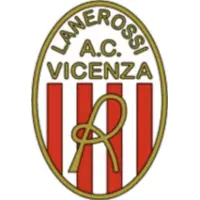
1953-1990
1953-1990 (2)
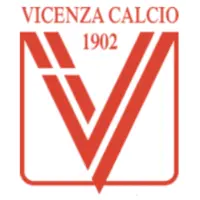
1990-2018
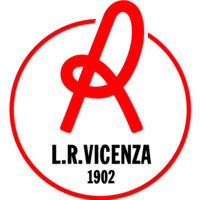
2018-Present


L.R. Vicenza Crest History
The earliest crests, used from the club's foundation in 1902, reflected the civic identity of Vicenza. 
A transformative moment arrived in 1953, when the textile company Lanerossi acquired the club. Vicenza became, to all intents and purposes, the professional football team of the textile manufacturer. The traditional civic crest was gradually replaced by the famous knotted "R", the symbol of the Lanerossi brand. This emblem appeared on the club's shirts and crests and soon became inseparable from the team's identity.
During the following decades, the Lanerossi "R" became one of the most distinctive symbols in Italian football. While many clubs used corporate sponsorships, few became so closely associated with a company as Vicenza did with Lanerossi. The symbol accompanied the club through some of its most successful years and became beloved by generations of supporters.
Throughout the 1960s, 1970s and 1980s, various versions of the crest were used, but the R remained the dominant element. The logo was instantly recognisable and helped create a unique visual identity that distinguished Vicenza from every other club in Italy.
The Lanerossi era came to an end in 1989, when the textile company was acquired by the Marzotto Group. The football club was sold and renamed Vicenza Calcio. For the first time in more than three decades, the famous Lanerossi symbol disappeared from the official crest.
A completely new badge was introduced. The crest featured a white background dominated by a large stylised "V", incorporating references to the city's historic cross. The words "Vicenza Calcio 1902" appeared above the design. The new emblem represented a return to the club's civic roots and remained in use for nearly thirty years.
This crest accompanied one of the most successful periods in the club's modern history, including the memorable Coppa Italia triumph of 1997 and the run to the UEFA Cup Winners' Cup semi-finals in 1998. As a result, it became closely associated with one of the strongest generations in Vicenza's history.
The Vicenza Calcio badge remained largely unchanged until 2018, when the club found itself on the brink of bankruptcy. A new chapter began when the club was rescued by Renzo Rosso, founder of Diesel and a native of the Vicenza area. Rosso immediately sought to reconnect the club with one of the most iconic periods of its past.
The club was renamed Lanerossi Vicenza Virtus, and the famous Lanerossi "R" returned as the centrepiece of the visual identity. For Rosso, the return of the symbol was not simply a nostalgic gesture but a recognition that the letter had become inseparable from the club itself. What had once been a corporate logo had long since evolved into a football symbol recognised throughout Italy.
Modern versions of the crest combine contemporary design with the historic Lanerossi emblem. The iconic R once again occupies a central place, linking the present-day club to the traditions established during the Lanerossi era while preserving one of the most distinctive identities in Italian football.

L.R. Vicenza Club History
Founded in 1902 as Associazione del Calcio in Vicenza, L.R. Vicenza is the oldest football club in the Veneto region and one of the most historic clubs in Italian football. Throughout its long history, the club has become synonymous with the city of Vicenza, its traditional white-and-red colours, and the famous Lanerossi "R" that would later become one of the most recognisable symbols in Italian sport.
A transformative chapter began in 1953, when the textile company Lanerossi acquired the club. The team was renamed Lanerossi Vicenza, beginning a unique relationship between football and industry that would define the club for more than three decades. Under Lanerossi ownership, Vicenza became one of the most stable and respected provincial clubs in Italy, while the famous R logo became inseparable from the club's identity.
The Lanerossi years produced some of the most memorable moments in the club's history. During the late 1970s, Vicenza emerged as one of the strongest teams in Italy under the guidance of Giovan Battista Fabbri. The club achieved a remarkable second-place finish in Serie A during the 1977–78 season, one of the greatest achievements ever recorded by a provincial Italian club.
That team was led by a young Paolo Rossi, who became a national sensation while wearing the white-and-red shirt. Between 1976 and 1980, Rossi developed into one of the finest forwards in Europe and would later win the Ballon d'Or following Italy's triumph at the 1982 FIFA World Cup. His rise remains one of the defining chapters in Vicenza's history.
The club also played a crucial role in the development of another Italian football legend. In 1982, a teenage Roberto Baggio made his professional debut for Vicenza, beginning a career that would eventually make him one of the greatest players in football history. The emergence of both Rossi and Baggio cemented Vicenza's reputation as a club capable of discovering and nurturing exceptional talent.
In 1989, the Lanerossi era came to an end when the textile company was sold to the Marzotto Group. The football club was subsequently renamed Vicenza Calcio in 1990, marking the beginning of a new chapter. Although the famous Lanerossi name disappeared, the club continued to compete at a high level and remained one of the most respected provincial sides in Italy.
The greatest achievement of the Vicenza Calcio era arrived during the 1996–97 season, when the club won the Coppa Italia, the only major trophy in its history. Led by coach Francesco Guidolin, Vicenza defeated Napoli in the final and secured qualification for European competition for the first time.
The following season brought another unforgettable adventure. Vicenza reached the semi-finals of the UEFA Cup Winners' Cup, defeating several prestigious opponents before eventually being eliminated by Chelsea. This remains one of the finest European campaigns ever achieved by a provincial Italian club.
The decades that followed were more difficult. Financial problems and sporting instability gradually pushed the club down the Italian football pyramid. Despite periods of recovery, the situation worsened until 2018, when Vicenza Calcio declared bankruptcy, bringing an end to more than a century of continuous history.
Football in Vicenza survived thanks to the intervention of Renzo Rosso, founder of the fashion brand Diesel. Rosso merged his club Bassano Virtus with key assets and traditions of Vicenza Calcio, creating L.R. Vicenza Virtus. While the new organisation continued to represent the city of Vicenza and inherited the club's sporting legacy, both organisations initially maintained separate youth systems before the project was fully consolidated.
The return of the Lanerossi name and identity under Rosso was welcomed by many supporters. It reconnected the club with one of the most successful and iconic periods in its history while preserving the traditions that had made Vicenza one of Italy's most respected provincial football institutions.
Vicenza plays its home matches at the Stadio Romeo Menti, named after the legendary Italian footballer who was born in the city. The stadium has hosted generations of players and remains one of the most historic venues in Italian football.
The club's principal rivalry is with Hellas Verona, with matches between the two sides often regarded as the most important derby in the Veneto region. Strong rivalries also exist with Padova, Venezia and Treviso, reflecting decades of regional competition.
 

LR Vicenza Pins

Your Dynamic Snippet will be displayed here... This message is displayed because you did not provide enough options to retrieve its content.