Skip to Content

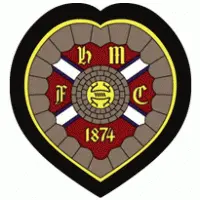
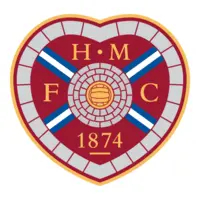
Historical Crests Heart of Midlothian FC

Name: ​​Heart of Midlothian FC
Nickname(s): ​The Jam Tarts
Founded: 1874
Stadium: Tynecastle Stadium (Edinburgh)
Capacity: ​19,852

1940
1950
1960s
1970s
1975s
1977-Present

Heart of Midlothian FC Crest History
Heart of Midlothian Football Club, commonly known as Hearts, possesses one of the most distinctive and meaningful crests in Scottish football. Hearts’ emblem is directly inspired by a historic landmark in the city of Edinburgh and reflects the club’s deep connection to its local heritage.
The origins of the club’s identity can be traced to the Heart of Midlothian mosaic located on Edinburgh’s Royal Mile. This heart-shaped stone mosaic marks the site of the Old Tolbooth, a historic building that served as Edinburgh’s administrative centre, prison and courthouse before its demolition in 1817. The Tolbooth was commonly known as the “Heart of Midlothian,” a name that later inspired both Sir Walter Scott’s famous novel and the football club founded in 1874.
The mosaic became a powerful symbol of Edinburgh’s history and civic identity. When Heart of Midlothian FC adopted the heart motif, it created one of the most unique and locally significant badges in football. The emblem established a direct visual connection between the club and the city it represents.
Throughout much of the club’s history, the crest has remained remarkably consistent. The central feature has always been the stylised heart shape based on the Royal Mile mosaic, usually displayed in the club’s traditional maroon and white colours. Unlike many clubs that have frequently redesigned their badges, Hearts has largely preserved the core elements of its identity for generations.
Various refinements have been introduced over the years to modernise the artwork and improve presentation, but the fundamental concept has remained unchanged. The heart shape itself has become instantly recognisable and is regarded as one of the most iconic symbols in Scottish football.
The modern crest features a detailed interpretation of the Heart of Midlothian mosaic, rendered in maroon, white and black. The design balances tradition with contemporary presentation while remaining faithful to the historic landmark that inspired it. Its simplicity and strong connection to Edinburgh have helped make it one of the most respected badges in British football.
The club’s colours, maroon and white, are also an important part of the crest’s identity. These colours have been associated with Hearts since the club’s earliest years and remain central to the visual image of the club.
The badge also reflects the club’s long-standing place within Edinburgh’s sporting culture. Hearts has contested a fierce rivalry with Hibernian FC since the nineteenth century, with the Edinburgh Derby becoming one of Scotland’s most celebrated football rivalries. The heart emblem has become a symbol not only of the club itself but also of the pride and tradition associated with football in the Scottish capital.

Heart of Midlothian FC Club History
Heart of Midlothian Football Club, affectionately known as Hearts, is one of Scotland’s oldest and most historic football clubs. Founded in 1874, the club has played a central role in the sporting and cultural life of Edinburgh for more than 150 years and is widely regarded as one of the most important institutions in Scottish football.
The club’s origins are closely tied to Edinburgh’s literary and cultural heritage. Hearts takes its name from Sir Walter Scott’s famous novel The Heart of Midlothian, published in 1818. Scott remains one of Scotland’s most celebrated writers, and his influence can still be seen throughout Edinburgh, from the imposing Scott Monument on Princes Street to numerous cultural landmarks across the city.
Heart of Midlothian FC traces its roots to the Heart of Midlothian Dancing Club. Members of the social club developed an interest in football and gradually shifted their focus towards the rapidly growing sport. In 1874, they adopted the Football Association rules and formally established a football club, creating what would become one of Scotland’s most enduring sporting institutions.
Hearts quickly became one of the pioneers of Scottish football. The club was among the founding members of the Scottish Football Association and played a significant role in the development of organised football in Scotland. Throughout the late nineteenth century, Hearts established itself as one of the country’s strongest teams and built a loyal following across Edinburgh and beyond.
Since 1886, the club has played its home matches at Tynecastle Park. The stadium has become one of the most iconic venues in Scottish football and remains at the heart of the club’s identity. Known for its passionate atmosphere, Tynecastle regularly attracts some of the largest crowds in Scotland outside Glasgow, with Hearts traditionally recording the third-highest attendances behind Celtic and Rangers.
The club enjoyed considerable success during the early twentieth century, winning multiple Scottish Cups and establishing itself as a major force in domestic football. One of the most significant periods in Hearts’ history came during the 1950s and early 1960s. Led by legendary players such as Dave Mackay, Jimmy Wardhaugh, Willie Bauld and Alfie Conn Sr., Hearts became one of the strongest teams in Scotland and won several league titles and cup competitions.
Heart of Midlothian has won the Scottish League Championship on four occasions and has lifted the Scottish Cup multiple times, with memorable triumphs spanning different eras of the club’s history. The club remains one of the most successful teams outside the traditional Old Firm dominance of Celtic and Rangers.
A defining aspect of Hearts’ identity is its rivalry with Hibernian FC. The Edinburgh Derby, first contested in the nineteenth century, is one of the oldest and most celebrated rivalries in world football. Rooted in local pride and the history of Scotland’s capital city, matches between Hearts and Hibernian remain among the highlights of the Scottish football calendar.
The club has also demonstrated remarkable resilience during difficult periods. Financial challenges in the early twenty-first century threatened Hearts’ future, but strong supporter involvement ultimately helped secure the club’s survival. In 2014, the Foundation of Hearts supporter group played a crucial role in rescuing the club, creating one of the most successful fan-led ownership stories in British football.

Heart of Midlothian Pins

Your Dynamic Snippet will be displayed here... This message is displayed because you did not provide enough options to retrieve its content.