Historical Crests Frosinone Calcio
Name: Frosinone Calcio
Nickname(s): I Canarini (The Canaries)
Founded: 1906
Stadium: Stadio Benito Stirpe (Frosinone)
Capacity: 16,227
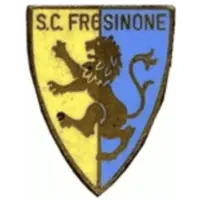
1963
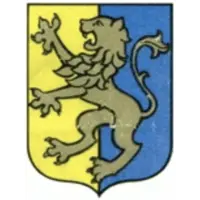
1963-1972
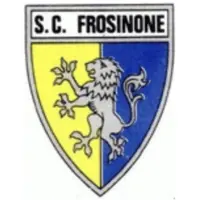
1972-1990
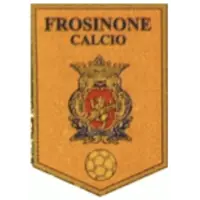
1990-1997
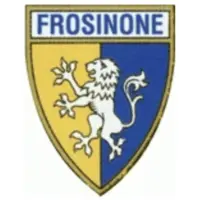
1997-1999
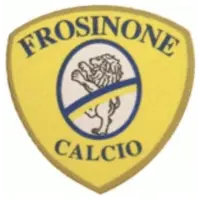
1999-2004
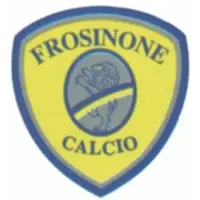
2004-2006
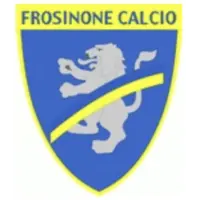
2006-2011
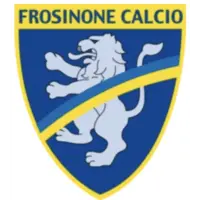
2011-Present
Frosinone Calcio Crest History
The earliest known crests used by Frosinone during the mid-twentieth century were relatively simple and reflected the style of lower-division Italian football. A revised crest appeared during the 1960s, introducing a more structured shield and placing greater emphasis on the club's yellow-and-blue colours. These colours soon became firmly established as the defining elements of Frosinone's identity and remain synonymous with the club today.
The 1972 redesign marked an important stage in the evolution of the badge. The crest adopted a cleaner appearance and strengthened its connection with the city of Frosinone. During this period, the lion increasingly emerged as the central figure within the design, reflecting its importance within local heraldry and helping create a unique visual identity.
Following organisational changes and the club's refoundation in 1990, a new crest was introduced. The redesign sought to preserve continuity with previous badges while modernising the club's image. The lion remained at the centre of the composition, while the yellow-and-blue palette became even more prominent. This version reflected the club's determination to rebuild and establish itself within professional football.
Throughout the 1990s, Frosinone experimented with several variations of the badge. Different shield shapes, typography and artistic interpretations of the lion appeared as the club climbed through the Italian football pyramid. Despite these adjustments, the lion consistently remained the focal point and became increasingly associated with the nickname I Leoni ("The Lions").
A significant redesign arrived in 1999, producing a more modern and professional appearance. The crest featured a stronger heraldic style, with the lion depicted more prominently against a yellow-and-blue background. This badge became closely associated with Frosinone's rise through Serie C and the beginning of the most successful period in the club's history.
Further refinements followed during the 2000s as the club consolidated its position within the professional leagues. These updates simplified certain graphic elements while preserving the traditional symbolism. The lion became more stylised and dynamic, reflecting contemporary football branding trends while maintaining a clear connection to the city's coat of arms.
In 2006, following the club's historic promotion to Serie B, Frosinone introduced a modern shield-shaped crest featuring a dark blue background and a large silver lion derived from the city's coat of arms. A diagonal yellow-and-blue ribbon crossed the lion, while the club's name appeared on a yellow banner at the top of the badge. The redesign created a cleaner and more professional identity and became closely associated with Frosinone's rise within Italian football
In 2011, Frosinone refined its visual identity with a modernised version of the 2006 crest. The lion, shield and diagonal yellow-and-blue ribbon were retained, but the artwork became cleaner and more dynamic. Improved typography and proportions gave the badge a more contemporary appearance while preserving its connection to the city's heraldry. This crest accompanied the club through the most successful era in its history, including its historic promotions to Serie A, and remains the foundation of Frosinone's visual identity today
Frosinone Calcio Club History
The origins of the club date back to 1906, when Unione Sportiva Frusinate was founded. However, 1928 is generally regarded as the beginning of the club's organised competitive history following its reorganisation and entry into official championships. The club experienced several interruptions and refoundations, notably in 1945, 1959 and 1990, but football in the city always survived and continued to grow.
For much of the twentieth century, Frosinone was a regular presence in Serie C and Serie D. The club achieved important successes by winning the Serie D championships of 1965–66 and 1970–71.
The modern rise of Frosinone began during the 1980s and accelerated under the leadership of the Stirpe family, who transformed the club through long-term planning, financial stability and investment in infrastructure. Success followed with victories in Serie C2 in 1986–87 and 2003–04, helping the club climb steadily through the Italian football pyramid.
A historic breakthrough arrived in 2006 when Frosinone secured promotion to Serie B for the first time in its history. The achievement marked the club's arrival on the national stage and established Frosinone as the third major football force in Lazio behind Rome's two giants. The Canaries would spend the following years consolidating their position in the second tier and developing a reputation as one of Italy's best-run provincial clubs.
The greatest moment in the club's history arrived in 2015. Under coach Roberto Stellone, Frosinone achieved its first-ever promotion to Serie A. Although the club was relegated after its debut Serie A season, Frosinone quickly proved that its success was no accident. In 2018, the club returned to Serie A after winning the promotion play-offs.
Another landmark achievement followed in 2023, when Frosinone won the Serie B title for the first time in its history under coach Fabio Grosso. The club secured a third promotion to Serie A and earned widespread praise for its attractive football and strong emphasis on developing young talent.
By finishing runners-up in the 2025–26 Serie B season, Frosinone secured an immediate return to Serie A and continued one of the most impressive growth stories in modern Italian football.
The club plays its home matches at the Stadio Benito Stirpe, which opened in 2017 and replaced the historic Stadio Matusa. The modern stadium symbolises the club's transformation from a provincial side into a stable and ambitious professional organisation.
Frosinone's most important rivalry is with Latina Calcio 1932, a fixture often referred to as the Derby del Basso Lazio. The rivalry reflects the competition between the two largest footballing centres in southern Lazio. Other notable rivalries have developed with Benevento Calcio, US Lecce and several clubs encountered during their rise through the lower divisions.
Frosinone Calcio Pins
Your Dynamic Snippet will be displayed here... This message is displayed because you did not provide enough options to retrieve its content.